
.webp)


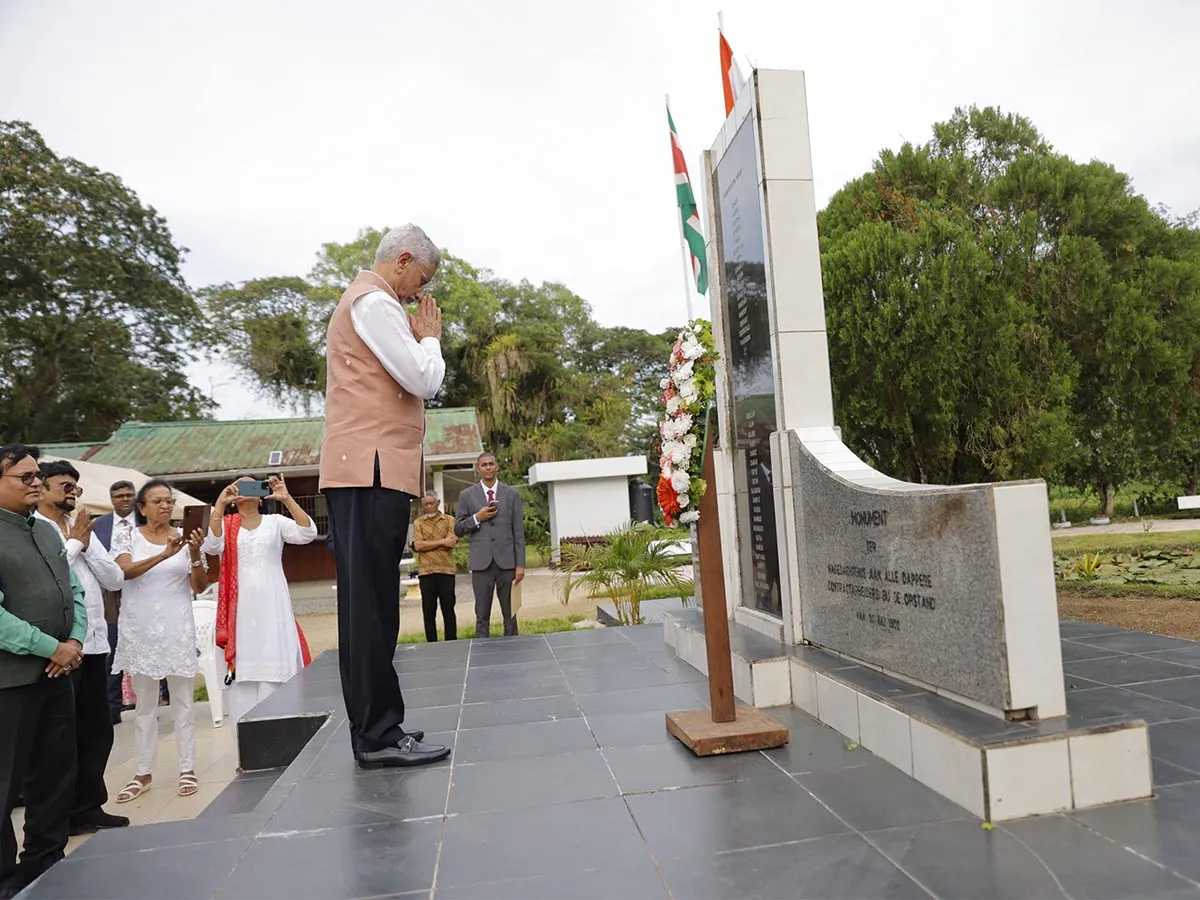
External Affairs Minister honors Indian heritage and colonial resistance.
External Affairs Minister S Jaishankar visited the 'Monument for the Fallen Heroes' in Mariënburg, Suriname, to honor workers who died during the 1902 uprising. This solemn act highlighted the shared history of colonial resistance between India and the Caribbean nation. Jaishankar noted that the sacrifices made over a century ago remain a powerful inspiration for those seeking liberty and justice today.
Indian laborers, known as Girmityas, faced immense hardships after arriving in Suriname to work on plantations. The 1902 incident at the Mariënburg plantation saw several contract workers lose their lives while fighting for dignity and fair treatment. Jaishankar emphasized that their struggle for freedom abroad mirrored the independence movement happening simultaneously within India. He stressed the necessity of retelling these stories to preserve the global narrative of human rights.
Diplomatic discussions in Paramaribo extended beyond historical tributes. During the 9th Joint Commission Meeting, the Minister engaged with Surinamese officials to expand cooperation in digital technology, defense, and healthcare. India remains a significant partner for Suriname, particularly through developmental assistance and capacity-building programs that benefit the local Indian diaspora. Suriname is home to one of the largest Indian-origin populations in the world, stemming from the late 19th-century migration of indentured laborers.
Meetings with President Jennifer Geerlings-Simons and Foreign Minister Melvin Bouva focused on diversifying trade and energy investments. Jaishankar remarked that in a volatile global climate, the enduring friendship between these two nations provides essential stability. This visit serves as a cornerstone of India's broader outreach to Jamaica and Trinidad and Tobago.
Inputs from Agency Threads and Photo Courtesy: ANI
.webp)