

Washington and Tehran sign historic diplomatic pact at Versailles
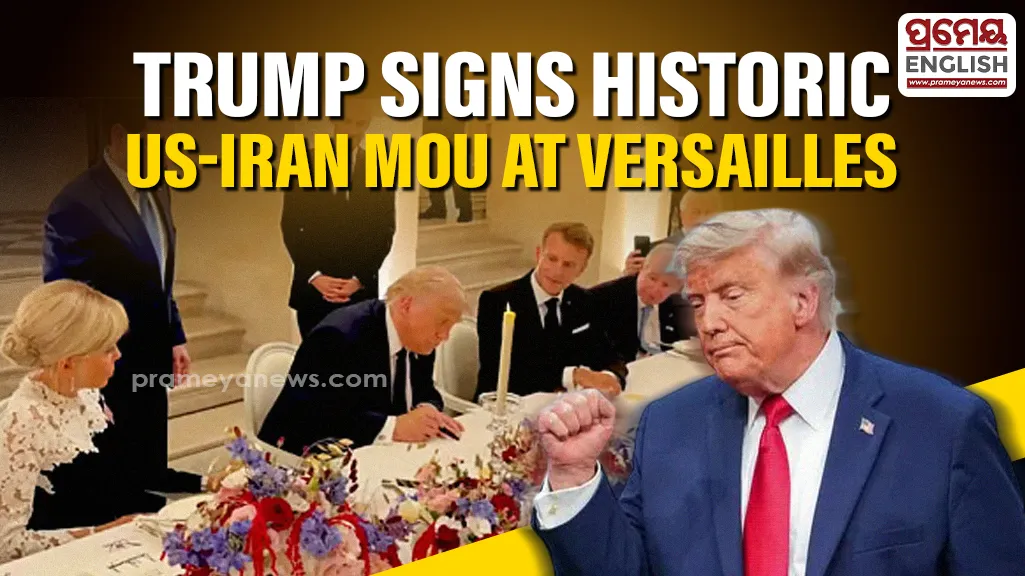
United States President Donald Trump and Iranian President Masoud Pezeshkian have signed a historic 14-point diplomatic agreement to halt long-standing hostilities and immediately reopen the strategically critical Strait of Hormuz. Trump finalized the Islamabad Memorandum of Understanding (MoU) during a high-profile dinner meeting at the Palace of Versailles in France. French President Emmanuel Macron warmly welcomed the unexpected virtual signing, describing it as an essential move toward securing lasting global peace and lowering volatile oil prices.
Versailles Diplomatic Breakthrough
Both leaders executed the agreement separately to bring its stabilizing terms into immediate action. Oman and other regional partners acted as vital intermediaries during the quiet consultations that preceded this sudden breakthrough. This newly signed document establishes a strict 60-day timeline for both sides to negotiate a permanent, final diplomatic settlement. Furthermore, the terms mandate an immediate cessation of all military operations across the region, including active conflict zones located in Lebanon.
Strategic Impact on Global Energy
This sudden diplomatic shift holds profound implications for international trade and maritime safety. For energy-dependent nations like India, stable oil passages through the Persian Gulf remain absolutely crucial to curbing domestic inflation. Reopening the Strait of Hormuz promises to ease volatile fuel costs that directly impact transportation networks and essential commodity pricing within developing domestic markets like Odisha very soon.
Washington has formally committed to removing its naval blockade, enabling the safe passage of commercial vessels. The deal initiates a phased economic relief plan, which includes releasing frozen Iranian assets and introducing a US-backed development fund worth 300 billion dollars to rebuild its infrastructure. Tehran has reaffirmed that it will not develop or acquire nuclear weapons, placing its enriched uranium stockpiles under strict International Atomic Energy Agency supervision.
Image Courtesy: ANI