
.webp)


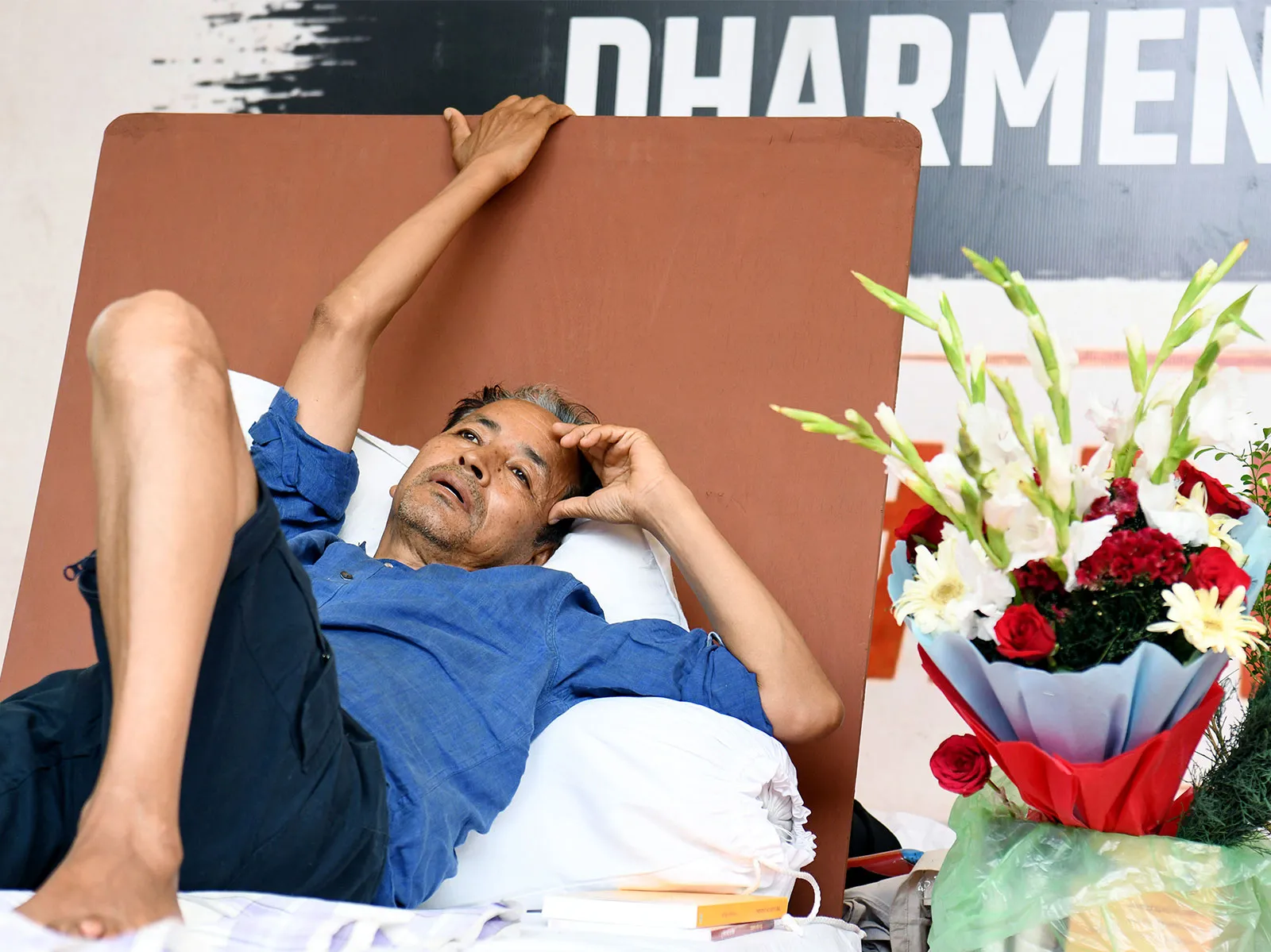
New Delhi, July 15: The Delhi High Court on Wednesday sought responses from the Centre and the Delhi Government on a public interest litigation (PIL) seeking urgent medical intervention for climate activist Sonam Wangchuk, who has been on an indefinite hunger strike at Jantar Mantar since June 28. The matter has been listed for further hearing tomorrow.
A Division Bench of Justice Devendra Kumar Upadhyay and Justice Tejas Karia heard submissions made by petitioner Rakesh Kumar Saini, who appeared virtually as petitioner-in-person.
During the hearing, Saini urged the Court to treat the matter as urgent, submitting that Wangchuk's health had deteriorated considerably owing to the prolonged fast and that immediate judicial intervention was necessary to safeguard his life.
After hearing the submissions, the Bench noted the urgency involved and issued notice to the Additional Solicitor General, the Union Government and the Delhi Government, directing them to clarify their stand on the issues raised in the petition. The Court posted the matter for further hearing tomorrow.
The Bench also recorded that no counsel appeared on behalf of the respondents as lawyers of the Delhi High Court were abstaining from work pursuant to the Delhi High Court Bar Association's call to boycott court proceedings in protest against the proposed enhancement of the pecuniary jurisdiction of district courts. Consequently, no law officer or government counsel was available to assist the Court.
The PIL seeks directions to the Union Government and the Delhi Government to immediately provide appropriate medical treatment and life-saving intervention to Wangchuk, besides initiating dialogue with him over the issues raised during his protest. It also seeks directions to ensure that all necessary medical support, including emergency care and nutritional assistance, is made available to protect his life.
According to the petition, Wangchuk has reportedly lost around 8.25 kilograms since beginning his hunger strike and is suffering from recurrent episodes of low blood sugar, dizziness, severe weakness and muscle loss.
Referring to reports about his deteriorating condition, the petitioner has contended that the State cannot remain a passive spectator when the life of a citizen is at imminent risk.
The plea further argues that while a peaceful hunger strike is a constitutionally protected form of protest, the government has a corresponding constitutional obligation to safeguard the life and health of every citizen and take timely measures to prevent avoidable loss of life. (ANI)
.webp)