

Mandi (Himachal Pradesh), April 23: Researchers at the Indian Institute of Technology (IIT) Mandi are leveraging artificial intelligence to address the increasing threat of landslides in the Himalayas, a region facing intensified rainfall patterns due to climate change. The result of their efforts is a low-cost, AI-driven early warning system designed to predict landslides before they strike, potentially saving lives and preventing destruction.
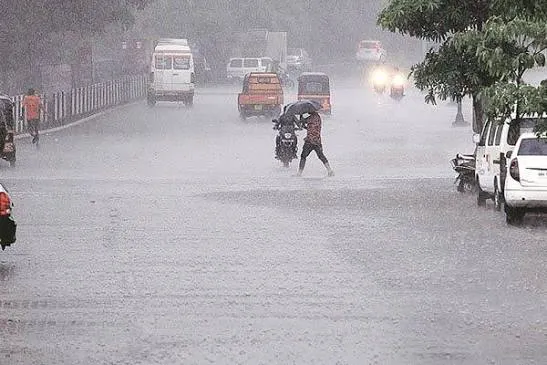
The system, developed by IIT Mandi's faculty and students, integrates sensor networks with advanced machine learning algorithms to monitor soil conditions in real-time. This innovative technology can forecast the likelihood of slope failure up to three hours in advance, allowing time for evacuation and preparation. "Climate change is shifting rainfall patterns," explains Kala Venkata Uday, Associate Professor of Geotechnical Engineering at IIT Mandi. "Previously, rainfall was lighter and more spread out, allowing water to seep into the soil gradually. Now, intense downpours over short periods increase the risk of landslides, as the soil cannot absorb the water quickly enough."
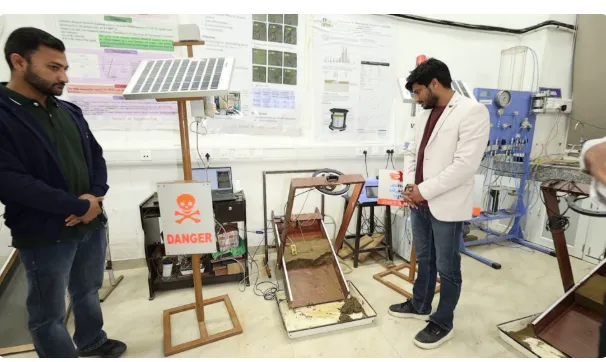
 Known as the Flume Test Bed Setup, the system uses sensors to measure key parameters such as soil moisture, temperature, and micro-movements in the earth. These data points are analyzed by AI models trained on both historical and real-time information, providing predictions with over 90% accuracy. "We've developed a model that evaluates both current activity and historical events," says Varun Dutt, Dean at IIT Mandi. "It can forecast ground movement for the next 10, 20, or 30 minutes, or even one to three hours."
What makes this innovation particularly noteworthy is its affordability. Traditional early warning systems often come with high implementation costs, limiting their use in vulnerable areas. IIT Mandi’s model is not only accurate but also scalable and cost-effective, making it an ideal solution for widespread deployment. The system is already operational in over 60 high-risk locations across Himachal Pradesh, where it continuously monitors conditions and sends alerts to authorities and local communities.
The project’s student researchers are also using AI to simulate future rainfall scenarios, helping predict potential landslide zones well into the future. "We use AI to model rainfall patterns based on past data, which allows us to map landslide risks for 2050, 2070, and beyond," explains Tanvi, a student involved in the project. This data-driven approach also takes into account changes in land use and land cover over time, providing a long-term outlook on landslide risks.
PhD scholar Shubham Kumar highlights the importance of ground-level analysis in identifying the most vulnerable areas. "Once we pinpoint a landslide-prone location, we conduct detailed studies, including soil sampling and movement pattern analysis. Based on this, we determine the optimal placement for the system," Kumar explains.
In addition to the early warning system, some students are developing virtual reality tools that simulate disaster scenarios, such as floods, to help communities prepare for emergencies. These immersive experiences aim to equip residents with the knowledge needed to make quick, informed decisions during a disaster.
For people living in mountainous regions, where moments can mean the difference between safety and tragedy, IIT Mandi's cutting-edge technology promises to be life-saving. By integrating AI with real-world applications, this initiative underscores the potential of technology not just to advance research but to protect lives and communities from the growing threat of natural disasters. ( With Agency Input)