

.webp)


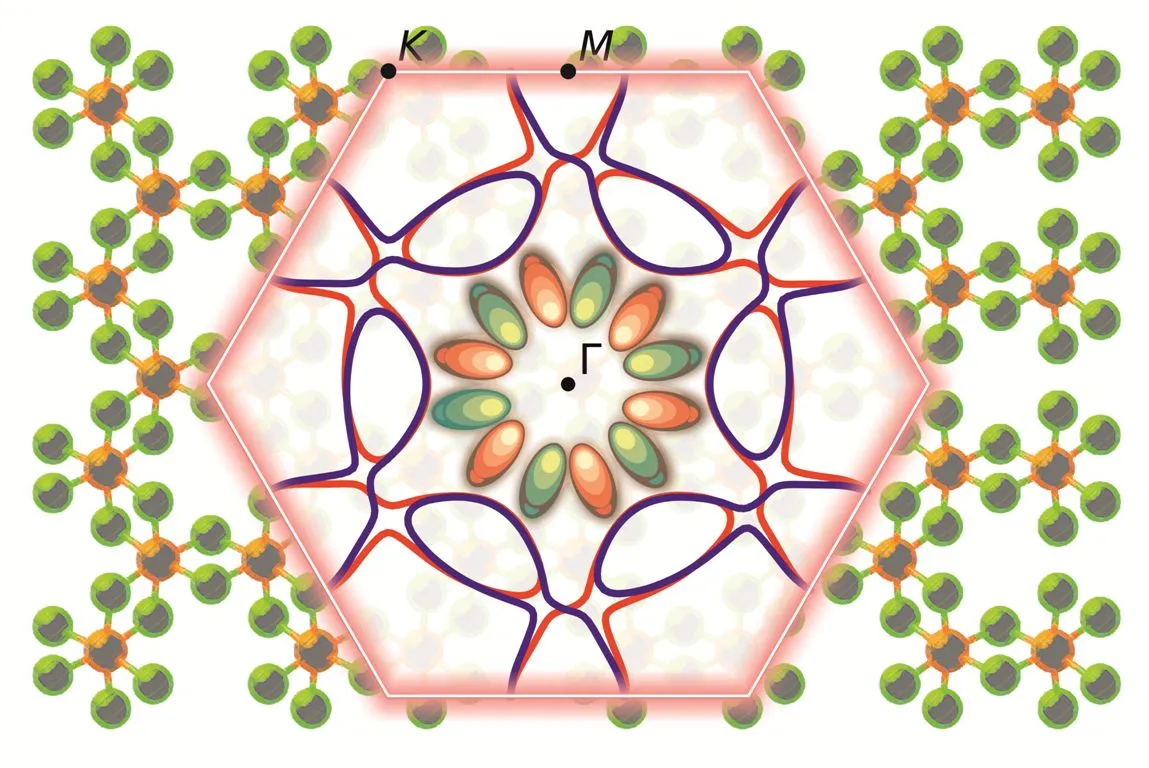
Bhubaneswar, Aug 11: Researchers from the Department of Physics, Indian Institute of Technology (IIT) Bhubaneswar, in collaboration with Virginia Commonwealth University, USA, have theoretically predicted a new two-dimensional material exhibiting i-wave altermagnetism, one of the rarest forms of the recently discovered magnetic phase known as altermagnetism.
The finding could open new possibilities for developing faster, more compact and energy-efficient electronic devices, with potential applications in high-density memory, spin-based transistors, terahertz communication and future quantum technologies.
The study, led by Dr. Manish Kumar Mohanta, ANRF Ramanujan Faculty, Department of Physics, IIT Bhubaneswar, has been published in Nano Letters, a leading international journal in nanoscience and nanotechnology.
Altermagnetism has emerged as an important area of research in condensed matter physics as it combines useful characteristics of conventional magnets and antiferromagnets. Unlike ordinary magnets, altermagnetic materials produce virtually no stray magnetic fields. This means electronic components could potentially be placed closer together without causing magnetic interference.
At the same time, these materials can generate and manipulate spin-polarized electrical currents, an important requirement for next-generation spintronics. Unlike conventional electronics, which primarily uses the electric charge of electrons to process information, spintronics also uses the electrons' intrinsic spin, creating opportunities for faster and more energy-efficient devices.
The IIT Bhubaneswar-led research predicts that a three-atom-thick FeCl₃ monolayer exhibits rare i-wave symmetry altermagnetism. This highly complex magnetic state could enable precise control over electron spins and provide a promising platform for developing ultrafast, low-power electronic technologies.
The predicted material also exhibits significant spin Hall and anomalous Hall effects, properties that are important for efficient spin transport and information processing in advanced electronic circuits.
With the growing demand for faster computing systems that consume less energy, the discovery provides a new direction for designing future electronic devices with improved speed, efficiency and reliability. Such advances could eventually contribute to technologies ranging from data storage and artificial intelligence hardware to wearable electronics, terahertz devices and quantum information systems.
Commenting on the significance of the work, Dr. Manish Kumar Mohanta said that the discovery expands the growing family of altermagnetic materials and provides a promising platform for exploring practical spintronic devices that could be faster, more compact and significantly more energy-efficient than existing technologies.
.webp)