


Bhubaneswar/ Kolkata, April 30:The recent West Bengal Assembly elections witnessed an extraordinary voter turnout, with East Burdwan setting a remarkable record of over 93%. This achievement is a direct result of the rigorous enforcement of the Election Commission of India's (ECI) Seven Cardinal Principles for Free and Fair Elections.
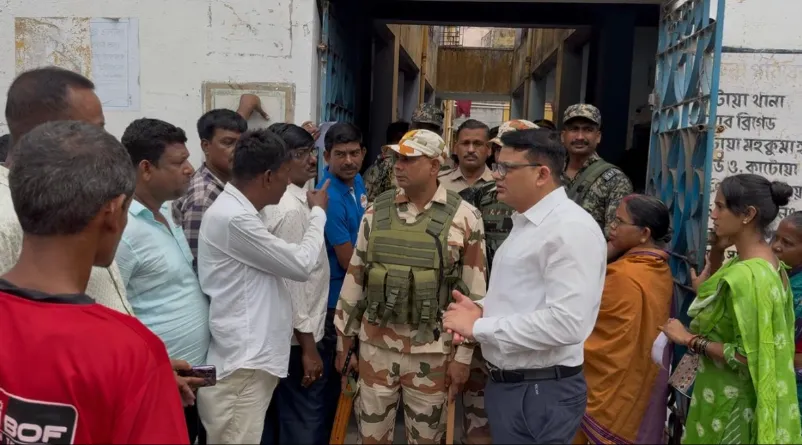
 Dr. Satyajit Naik, the Inspector General of Police (IGP) for Central Range, Cuttack, who is currently serving as the Police Observer for East Burdwan district, was tasked with overseeing the area's police arrangements during the election. His leadership was crucial in ensuring the smooth conduct of the elections.
The 2026 West Bengal Assembly elections saw a landmark overall voter turnout of 92.9%. The first phase, held on April 23, recorded an impressive 93.19%, while the second phase, held on Wednesday, achieved a turnout of 92.59%, as per official ECI data.
Female voters led the turnout, achieving an impressive 93.24% participation across both phases, surpassing their male counterparts, who recorded 91.74%. In the first phase, female participation was 94.10%, compared to 92.34% for males. In the second phase, women continued to lead with a turnout of 92.28%, while male participation was slightly lower at 91.07%.
The second-phase turnout of 92.59% eclipsed the previous record of 84.72% set during the 2011 assembly elections, underscoring the significant impact of the Election Commission’s guidelines on voter engagement and participation.
 The success of this record-breaking turnout was largely attributed to the stringent law enforcement and vigilant monitoring implemented under the direction of the ECI. The robust surveillance and patrolling systems played a key role in creating a secure and conducive environment for voting.
Leading up to the 2026 West Bengal Legislative Assembly elections, the Election Commission outlined seven non-negotiable principles to be strictly adhered to by all enforcement agencies across the state:
 These principles were fully embraced by all District Election Machinery, police personnel, and the Central Armed Police Forces (CAPF). Any violations would result in stringent actions under the Indian Penal Code (IPC), the Representation of the People Act, 1951, and ECI guidelines, reinforcing the commitment to free, fair, and secure elections in the state.