

Human Cost of Conflict Through Haunting Visuals
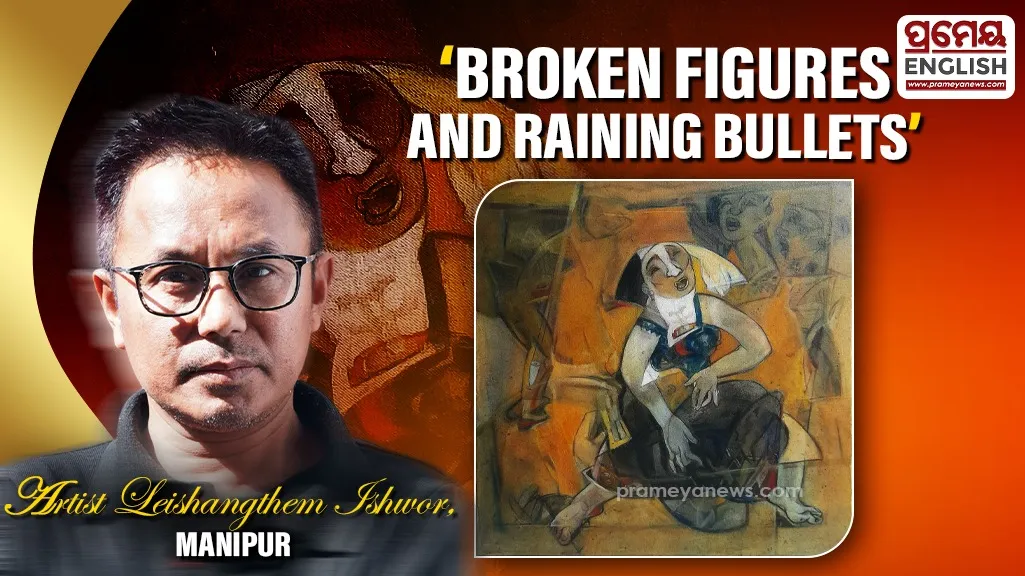
Manipur’s internal struggles find a haunting, universal voice through the brush of Leishangthem Ishwor. His work transcends regional boundaries to speak a language of collective human trauma. When viewing this piece, one immediately encounters the visceral weight of conflict-ridden societies. Ishwor utilizes distorted faces and sharp, angular lines to mirror the psychological fragmentation that occurs when violence becomes a daily reality. This is not merely a depiction of a specific geographical crisis; it is an international testament to how innocent civilians are caught in the crossfire of systemic power dynamics.
Shades of red bleed across the canvas, serving as a dual symbol of life force and inevitable bloodshed. The artist captures the specific vulnerability of womenfolk, whose bodies and minds often become the primary battlegrounds in protracted wars. By stripping away realistic proportions, Ishwor forces the viewer to confront the raw emotion of anguish rather than the aesthetic of the human form. The raining bullets depicted in the background are not just physical projectiles; they represent the constant, oppressive atmosphere of fear that paralyzes a community.
This painting challenges the global observer to look beyond the headlines of geopolitical strife. It demands an acknowledgment of the "unseen victims" whose stories are frequently lost in the noise of political discourse. The distorted expressions echo the silent screams of those whose agency has been stripped by endless cycles of aggression. Ishwor’s mastery lies in his ability to make the viewer feel the heat of the fire and the coldness of the steel. His work acts as a mirror for any society where peace has been sacrificed for ideology. Ultimately, this masterpiece serves as a bridge between the localized suffering of Manipuri women and the global struggle for dignity. It is a loud, uncompromising cry for empathy, proving that art remains the most potent tool for documenting the scars left on the human soul by the machinery of war.