



Bhubaneswar, September 27: Following the landfall of the deep depression between the night of September 23 and 24 and its subsequent movement towards Chhattisgarh, heavy rainfall was recorded in the upper Mahanadi basin in last two days – Friday and Saturday. The basin received an average rainfall of 39.14 mm on Friday (September 25) and 71.66 mm on Saturday (September 26), said an official release.
According to the release, widespread heavy rainfall across various sub-basins of the Mahanadi river system resulted in increased inflows into the Seonath, Jonk and other tributaries of the Mahanadi. Consequently, a significant rise in water levels and discharge was observed in various rivers.
Also Read: Odisha: Mahanadi braces for fourth minor flood of the year, four districts on alert
Meanwhile, heavy rainfall in the catchment of the Ravishankar Sagar (Gangrel Dam) led to increased inflows into the reservoir, resulting in the release of around 2.50 lakh cusecs of water into the downstream basin.
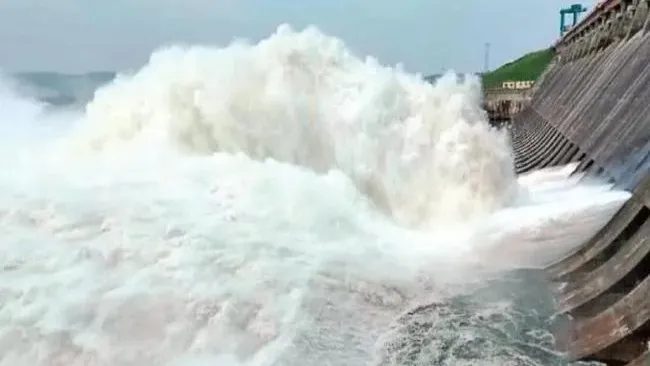
To regulate the increasing inflows into the Hirakud Reservoir and create the required flood cushion for accommodating additional inflows, 20 gates of Hirakud Dam were opened on September 26.
Subsequently, inflows at the Seorinarayan and Saradih gauge sites increased further. As the discharge at Saradih gauge site crossed 7 lakh cusecs, an additional 8 gates were opened. Consequently, a total of 28 gates of Hirakud Dam are presently being operated to regulate the rising inflows and maintain the reservoir level in a safe and controlled manner.
Hirakud Dam gates are being operated keeping in view both the safety of the dam and the need to minimise the impact of flooding in the downstream delta region. At present, the water level of Hirakud Reservoir stands at 628.35 feet, with 4,56,792 cusecs of water being released through 28 gates. The Water Resources Department is continuously monitoring the inflow and reservoir conditions and taking necessary measures for regulated discharge and water management as required.
The Water Resources Department has undertaken continuous monitoring and coordinated measures to ensure effective management of the increased inflows and minimise the possible impact of flooding.
Water levels, inflows and the status of gauge sites across various rivers and reservoirs are being monitored round the clock. Field-level engineers and officials remain alert and are operating the gates of dams and barrages as required.
The Department is closely monitoring the changing hydrological situation and taking all necessary measures, with public safety and flood management accorded the highest priority.