

.webp)

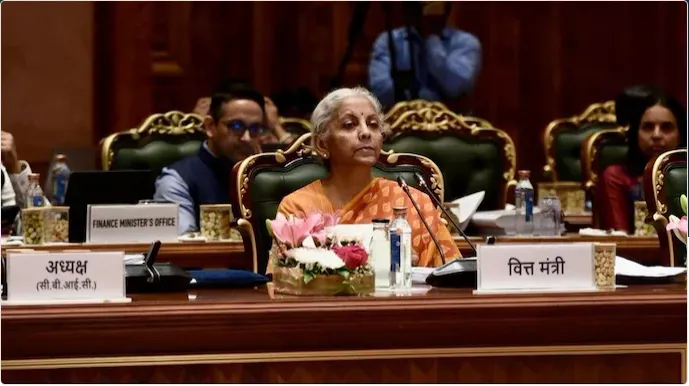
New Delhi, Oct 8: The Goods and Services Tax (GST) Council will consider changes in GST rates only once a year, with any such decisions taking effect from April 1, Union Finance Minister Nirmala Sitharaman said on Thursday, signalling greater predictability in the indirect tax regime.
Addressing a press conference after the 57th GST council meeting, Sitharaman said the council would take up rate changes annually and make them effective from April 1. "No GST rates were changed at Thursday's meeting," she said, adding that the meeting primarily focused on process reforms aimed at simplifying compliance, easing tax procedures and reducing disputes.
The council recommended several measures to provide relief to taxpayers, including removing arrest powers from the hands of GST officers and raising the threshold for criminal prosecution from Rs 1 crore to Rs 5 crore. "When we say arrest has been taken out, taken out from a tax officer's hands," ANI reported Sitharaman as saying, while clarifying that criminal prosecution would continue to be available in cases involving criminality under the GST law.
Also read:RBI rate hike: What it means for your pocket this festive season
The council also recommended reducing the general penalty from Rs 25,000 to Rs 10,000 and removing minimum punishment provisions, leaving sentencing to judicial discretion. In another relief measure, GST notices involving amounts below Rs 10,000 will not be issued, while pending notices below the threshold will also be withdrawn.
The council further recommended expanding input tax credit (ITC) eligibility to certain additional business expenses, including employee health and life insurance, telecom towers and pipelines laid outside factories. ITC would also be available on free samples and expired stock that is required to be destroyed under law, benefiting sectors including pharmaceuticals and Fast-Moving-Consumer-Goods (FMCG).
On refunds, the Council recommended reducing the acknowledgement period from 15 days to 10 days and introducing automated sanction of 90 per cent of eligible claims after risk assessment. The measures are aimed at improving working capital availability for businesses. Refund eligibility will also be expanded to input services for eligible credits availed from November 1, 2026, and to plant and machinery for eligible credits availed from April 1, 2027.
For small businesses, the Council gave in-principle approval to an optional scheme under which taxpayers with turnover of up to Rs 5 crore and supplying only to consumers can file annual returns and pay taxes quarterly. Meanwhile, a proposal to protect genuine buyers from losing ITC due to defaults by suppliers elsewhere in the supply chain has been referred to an officers' committee for further examination.
Sitharaman said the process reforms are targeted for implementation from April 1, 2027, with issues referred to committees expected to be finalised before then. (With ANI inputs)
.webp)