

.webp)


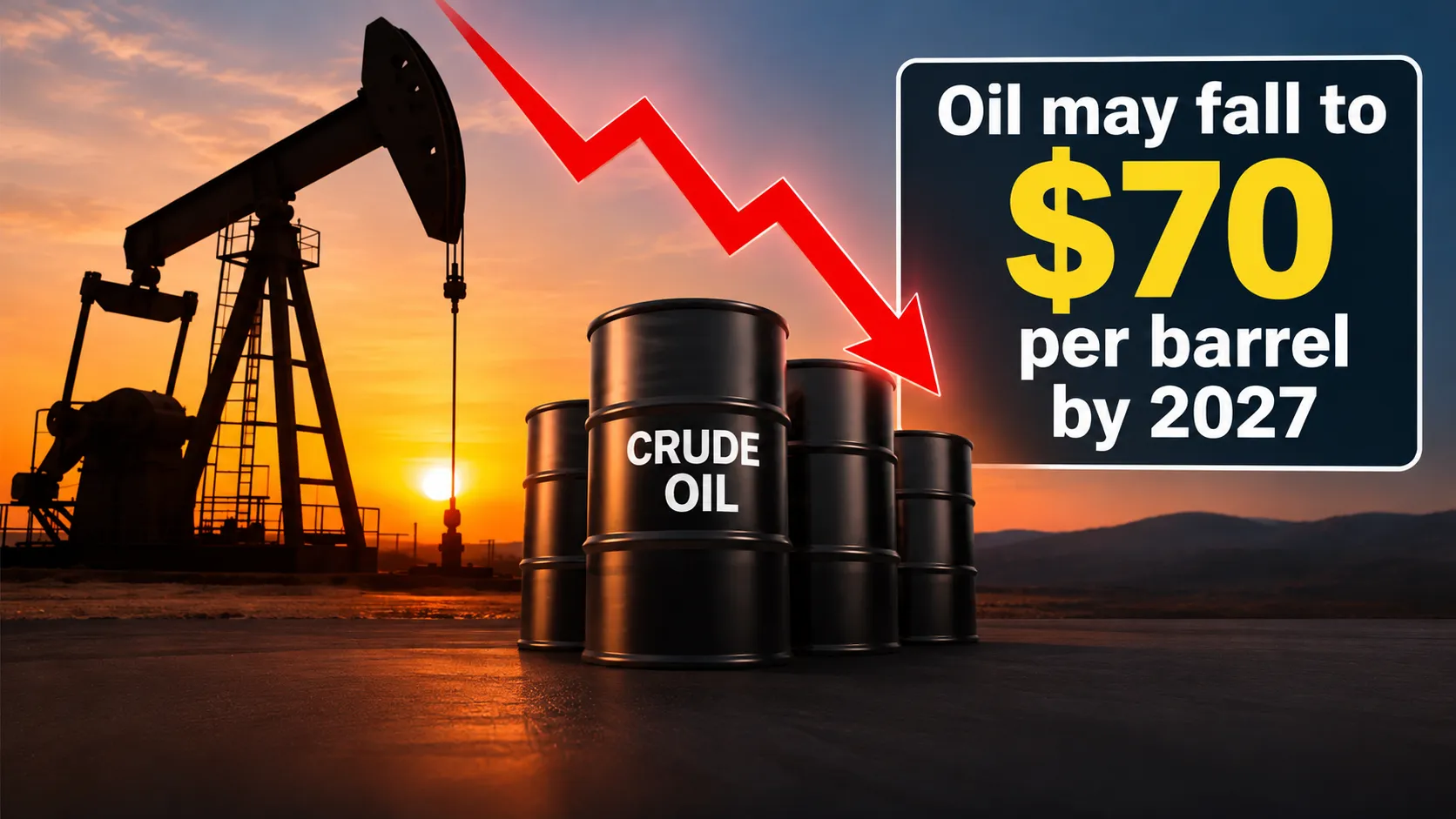
New Delhi, Nov 21:India could see significant relief on its crude oil import bill if global oil prices moderate towards USD 70 per barrel by the end of 2027, with rising supplies from non-OPEC+ producers and weakening Chinese demand expected to push the international oil market into a surplus, according to a JM Financial report.
Based on an expert session with Iman Nasseri, Senior Vice President for Middle East and Asia at FGE Nexant, the report said Brent crude prices could remain elevated and volatile in the near term before gradually easing as global supply-demand conditions improve.
The projected moderation could have important implications for India, which remains heavily dependent on overseas crude supplies to meet its energy requirements.
India imported 146.6 million tonnes of crude oil between April and October 2026, up 2.7 per cent from the corresponding period last year, according to provisional data from the Petroleum Planning and Analysis Cell (PPAC).
However, the country's crude import expenditure surged 53.5 per cent to USD 111 billion during the seven months, compared with USD 72.3 billion a year earlier, highlighting the impact of elevated international prices on India's energy bill.
In October alone, India's crude oil imports stood at 23.31 million tonnes, while the import bill climbed to USD 19.5 billion, nearly 88 per cent higher than the corresponding month last year.
The potential savings from a moderation in prices could therefore be substantial. SBI Research has projected India's crude oil import volume at 265 million tonnes for FY 2026-27. Based on this estimate, every USD 10 per barrel reduction in the average price of crude imported by India could translate into annual savings of approximately USD 19.4 billion, assuming import volumes remain unchanged.
However, the projected USD 70 price level refers to Brent crude towards the end of 2027 and should not be interpreted as the average price for the entire financial year.
The expected shift towards a supply surplus will primarily be driven by increasing production from countries outside the OPEC+ alliance and a decline in China's oil consumption. The possibility of a sharp inventory-restocking rally supporting prices is also considered limited. China's crude purchases are expected to increase gradually once prices fall below USD 70 per barrel. At the same time, the United States is unlikely to replenish its Strategic Petroleum Reserve under the current administration.
Geopolitical uncertainties, meanwhile, could continue to influence prices in the near term. A US-Iran agreement remains unlikely in the immediate future, although the possibility of a resolution could improve by mid-2027 as economic pressure on Iran intensifies.
Nasseri said an agreement would be difficult without a change of regime in either country, adding that Iran's Islamic Revolutionary Guard Corps (IRGC) continued to exercise considerable control despite the country's economic difficulties.
Meanwhile, crude shipments through the Strait of Hormuz and the Red Sea have recovered to around 90 per cent of their pre-war levels. The recovery has been supported by vessels willing to undertake higher risks, exemptions for Iraqi and select Chinese cargoes, and transit payments made by Gulf countries to secure safe passage.
While crude prices could gradually ease, refined petroleum product markets could remain relatively tight in the near term.
Diesel supply constraints are likely to support refining margins and product cracks for longer, with normalisation expected only towards the end of 2027.
Global refinery operations in October 2026 were approximately five million barrels per day below February levels, reflecting reduced processing activity in the Middle East, Russia and China.
Global liquefied natural gas (LNG) markets are also expected to remain tight through the 2026-27 winter, keeping prices elevated. However, additional export capacity from the United States and Qatar could push the market into surplus and moderate prices from the second half of 2027.
For India, a sustained decline in crude prices would offer relief not only to its import expenditure but also to its external balances and inflation outlook. However, the actual gains would depend on the extent of the price correction, the rupee-dollar exchange rate, and domestic demand. (With ANI inputs)
.webp)