
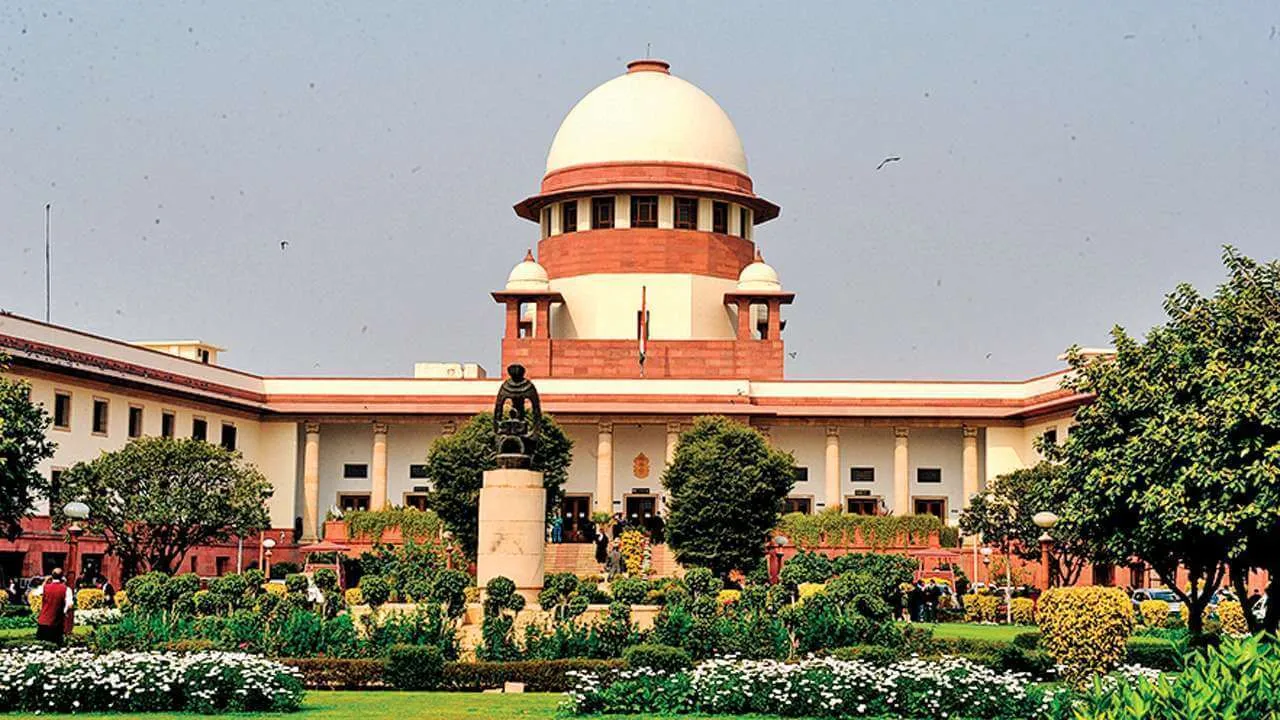

.webp)
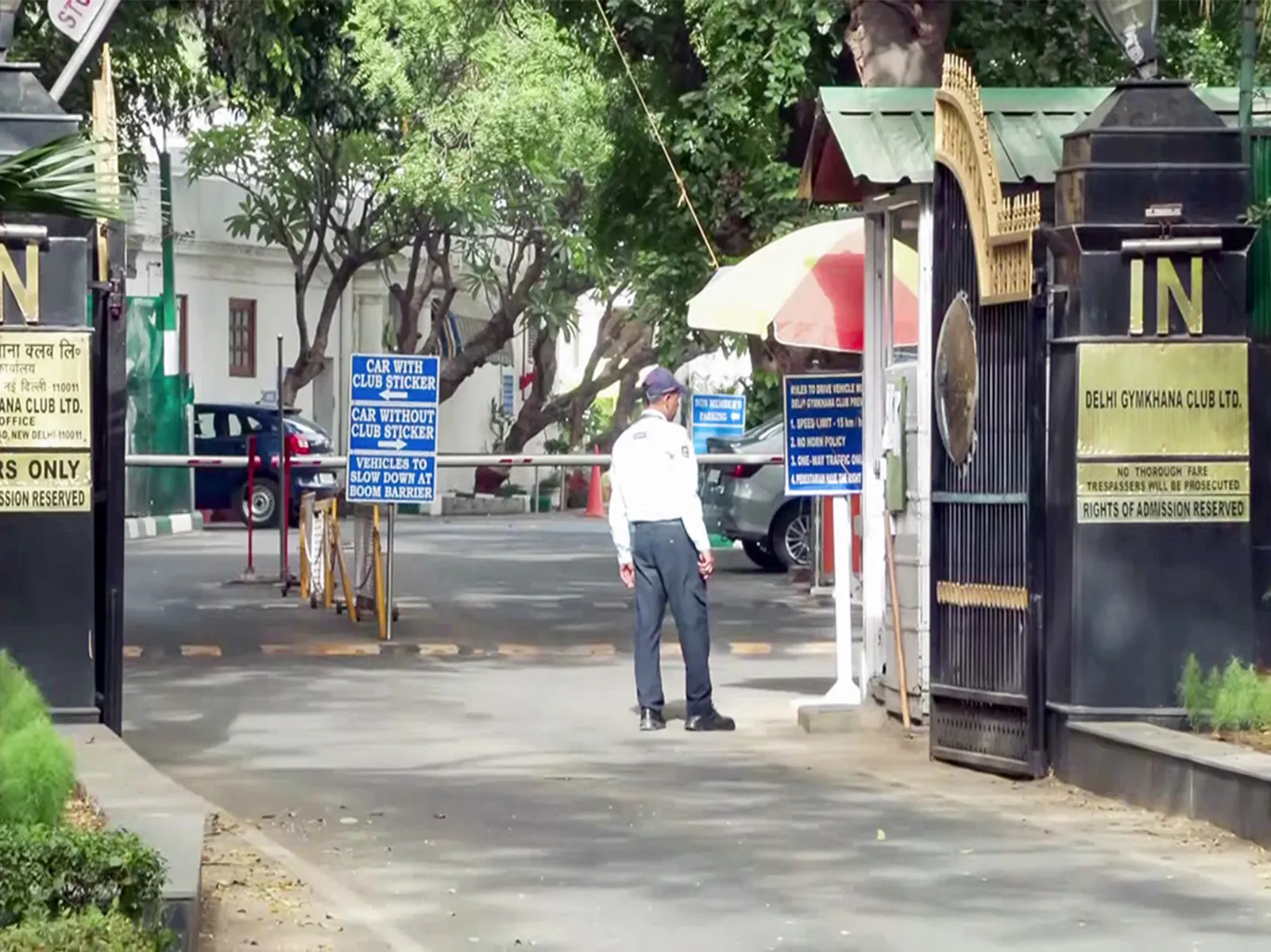
New Delhi, May 26: The Delhi High Court on Tuesday issued summons to the Centre and the Delhi Gymkhana Club management on civil suits filed by Club members, the Staff Welfare Association and others challenging the Union government's move to reclaim the Club premises at Safdarjung Road in New Delhi.
During the hearing, Solicitor General Tushar Mehta clarified before the Court that the Centre's May 22 communication merely terminated the perpetual lease and sought re-entry into the Gymkhana land under Clause 4 of the lease deed. Along with SG Tushar Mehta, ASG Chetan Sharma and CGSC Ashish Dixit appeared for the Centre Government in the matter.
He submitted that the communication was not an order for immediate eviction and assured the Court that any eviction proceedings, if undertaken, would only be carried out in accordance with law after issuing due notice.
Recording the statement made by the Solicitor General, the High Court declined to pass any further interim directions at this stage. The Bench observed that in view of the Centre's assurance that eviction, if any, would follow due process and prior notice, no interim protection was required at present.
The Court also recorded the Centre's reliance on Paragraph 7 of the impugned communication, which states that in the event of non-compliance, possession would be taken "in accordance with law".
The Bench directed the defendants to file written statements within eight weeks and listed the matters before the Joint Registrar for completion of pleadings.
The dispute arises from the Centre's May 22 communication directing the Delhi Gymkhana Club to hand over peaceful possession of the premises by June 5. The communication invokes Clause 4 of the perpetual lease deed executed in 1928, which permits re-entry by the lessor if the premises are required for a "public purpose".
The Court noted that the land had been granted to the Club under a perpetual lease nearly a century ago and that there had been previous rounds of litigation between the parties, including proceedings over alleged violations of lease conditions which were later settled.
The Bench further took note of proceedings initiated by the Union government before the NCLT alleging mismanagement by the Club's governing body. In those proceedings, the NCLT appointed a 15-member committee nominated by the Centre to oversee the day-to-day functioning of the Club. The order was later upheld by the NCLAT.
Appearing for Club members, Senior Advocate Abhishek Manu Singhvi argued that a perpetual lease is nearly equivalent to a transfer of title and that re-entry cannot be enforced through mere executive action. Relying on the Express Newspapers case, Singhvi submitted that such action must be backed by proper legal proceedings.
Singhvi further contended that Supreme Court judgments require "public purpose" to be specifically spelt out and demonstrated. According to him, the impugned communication was vague and failed to disclose any clear public purpose, while the reasons cited by the Centre were contradictory. He also argued that the action suffered from legal mala fides and that no prior notice had been issued before the decision to terminate the lease and seek re-entry.
Senior Advocate Kapil Sibal, appearing for the last elected body of the Club, argued that even an unauthorised occupant cannot be dispossessed without notice and due process. He submitted that Clause 4 of the lease deed, having been incorporated prior to the Constitution coming into force, must now be tested on constitutional principles.
Sibal further argued that a show-cause notice for eviction or re-entry cannot be issued post facto after the government has already entered the premises. During the hearing, the Bench questioned how the last elected body could intervene in the proceedings. In response, Sibal argued that the applicants were entitled to maintain a derivative action as members of the Club.
Senior Advocate Jayant Mehta, appearing for the Staff Welfare Association, submitted that the Delhi Gymkhana Club is a Section 8 company and its members are akin to shareholders who are entitled to pursue legal remedies. He argued that there was no allegation of any violation of the lease deed.
Mehta also expressed apprehension that the committee presently managing the Club, being nominees of the Union government, may not adequately safeguard the interests of the Club while dealing with the impugned communication.
However, the Court noted the Centre's submission that the governing committee itself had already approached authorities objecting to the May 22 communication. The Bench observed that the apprehension that the Club management may hand over possession to the Centre was contrary to the stand taken by the Club itself.
In its order, the High Court observed that issues relating to the validity of Clause 4, whether the impugned communication conforms to the lease deed, and whether the stated grounds genuinely constitute a "public purpose" need not be examined at the present stage. The Court also noted that the suits do not specifically challenge the constitutional validity of Clause 4.
The Bench further held that in light of the statement made on behalf of the Centre, the grievance regarding the absence of prior notice before eviction does not survive at this stage. However, it clarified that the issue relating to notice before termination of the lease deed may be considered at an appropriate stage during the proceedings.
The Court also rejected arguments concerning possible proceedings under the Public Premises Act as premature, noting that no action under the statute had yet been initiated. It clarified that the plaintiffs would be free to avail legal remedies in accordance with the law if such proceedings are commenced in future. (ANI)
.webp)