
.webp)


By JANAKI BALLAV DASH
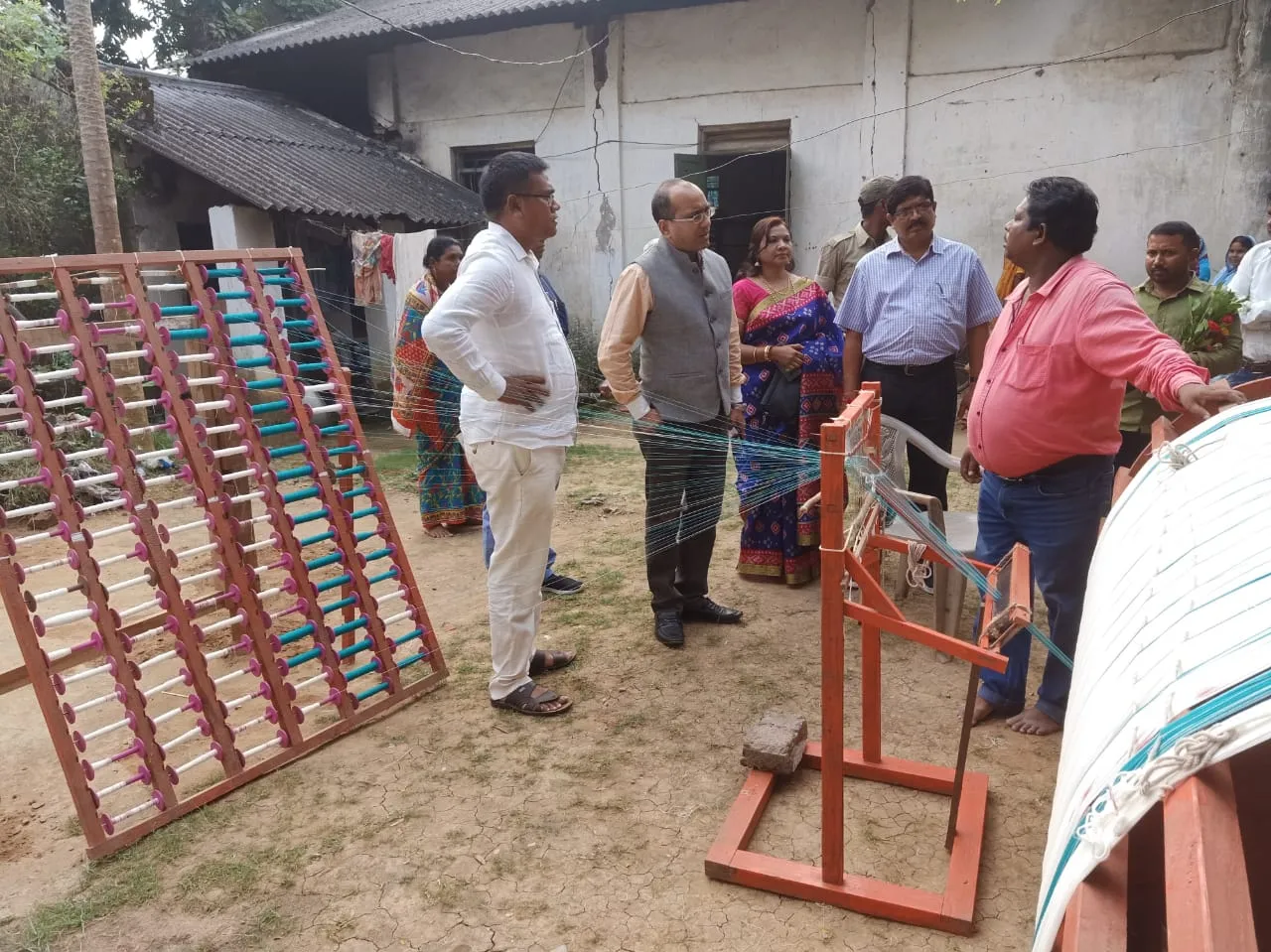
CHANDANPUR (BARIPADA): THE looms that once made Chandanpur in Baripada, Mayurbhanj district, famous are now gathering dust. For a long time, weaving sustained the village’s economy and took its distinctive handloom products to markets across the country and overseas. Today, years of neglect have pushed this once-thriving craft towards decline.
In Chandanpur, handloom has long been more than an occupation. It was the foundation of the local economy, with almost every household once owning a handloom. But that legacy now lies in disrepair, with the village's weavers' cooperative and its traditional skills facing years of neglect.
“Every household once had a loom of its own. Today, many of them lie in ruins,” says Hemendra Panda, a textile dealer. Panda adds that Chandanpur’s traditional weaving skills have considerable potential and could benefit from renewed attention through skill-development and employment initiatives.
The village has a distinctive social and economic history. Predominantly inhabited by the Behera weaving community, Chandanpur built its prosperity around handwoven textiles. Recognising the potential of its craftsmen, Maharaja Pratap Chandra Bhanj Deo established the Chandanpur Weavers’ Cooperative Society in 1949 with 112 workers and an initial royal contribution of Rs 100.
Also Read: Students step in to restore power and water supply in Cyclone-hit Ganjam
The initiative soon grew into a thriving enterprise. At its peak, the society had 58 affiliated sub-societies across the district and reportedly earned a monthly profit of Rs 70,000. Demand for its products was so strong that the cooperative sometimes struggled to keep pace with orders.
Chandanpuri bedsheets, towels, shawls and dhotis developed a distinct identity in the handloom market. But the success did not last. The cooperative’s fortunes began to decline in the mid-1980s, with exploitation, bureaucratic hurdles and prolonged apathy gradually weakening the institution.
A retired textile official, who did not wish to be named, said the society’s growing commercial success had made it vulnerable to competing interests. Over the years, mismanagement and neglect took their toll on an institution that had once supported hundreds of weaving families. There are, however, some signs of renewed interest. Government agencies, including the Integrated Tribal Development Agency (ITDA), the state Textile Department and the Odisha Rural Development and Marketing Society (ORMAS), have begun extending support to the struggling weavers.
Ganapati Jena, an ITDA official, said efforts were under way to renovate the society’s dilapidated buildings. ORMAS has also agreed to help market Chandanpur’s handloom products at state-and district-level fairs and exhibitions. Such efforts could help revive Chandanpur’s handloom sector. Sustained institutional support, better market access and skill-development programmes will be crucial to strengthening weavers’ livelihoods and encouraging younger generations to carry the traditional craft forward.
“The legacy of Chandanpur’s handloom tradition may have weakened, but our craft still has the potential to flourish again,” says a local weaver, expressing hope for the village’s revival. For Chandanpur, the task is not just to preserve a centuries-old tradition but to breathe new life into its economy, create fresh opportunities for its weavers and bring renewed recognition to a craft that once made the village famous. With sustained support, better market access and renewed interest, the village can reclaim its place on Odisha’s handloom map.
.webp)