
.webp)
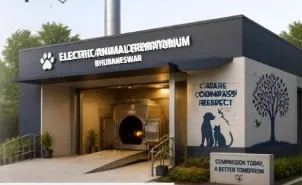
Bhubaneswar, August 18: Bhubaneswar is set to get its first dedicated electric animal crematorium, with the facility at Palasuni expected to become operational next month. The initiative aims to introduce a more scientific, hygienic and environmentally responsible system for the disposal of animal carcasses in the city.
The facility has been constructed at an estimated cost of ₹1.12 crore and will feature an electric incinerator for the cremation of animal remains.
Why Is Bhubaneswar Getting an Animal Crematorium?
Bhubaneswar reportedly sees the death of around 20 to 30 animals every day, creating a need for a dedicated system to handle carcasses.
In the absence of such infrastructure, animal remains have often been disposed of in open areas, raising concerns over sanitation, hygiene, foul odour and public health.
The new crematorium is expected to provide a designated facility where animal carcasses can be handled and disposed of in a controlled manner.
What Will the Facility Offer?
The Palasuni facility will use an electric incinerator to ensure controlled cremation and reduce the need for open disposal.
Once operational, the facility will allow authorities and animal owners to opt for a cleaner and more organised method of carcass disposal.
The system is also expected to improve the overall management of dead animals within the urban area.
A Long-Pending Project Finally Completed
The project had reportedly been announced around three years ago, but implementation was delayed for various reasons.
With construction now completed at Palasuni, the facility is expected to begin operations next month.
Its commissioning could address a long-standing urban management challenge while strengthening Bhubaneswar’s focus on cleaner and more sustainable civic practices.
How Could It Benefit the City?
The electric animal crematorium is expected to reduce the practice of leaving carcasses in open spaces and help maintain cleaner surroundings.
It could also contribute to better urban sanitation, environmental management and public hygiene, particularly in densely populated parts of the city.
The Palasuni facility represents a shift towards more organised and scientific handling of animal remains in Bhubaneswar.
Once operational, it could become an important part of the city’s sanitation infrastructure and set a new model for responsible animal carcass disposal and cleaner urban living.
.webp)