
.webp)


Sculpted Earth on Faith and Gender Dynamics
Deep within the heart of Kalahandi, artist Bana Rana shapes raw earth into profound stories of human faith. Earth itself becomes a universal canvas for exploring devotion, social structures, and gender fluidity. Rana brings ancestral pottery techniques inherited from his traditional family into sharp contemporary focus. His hands bridge generations of village craft with refined modern ceramic training. These intricate terracotta sculptures transcend regional folklore to speak a global language of cultural endurance. Raw clay transforms into a powerful testament to the enduring human spirit.
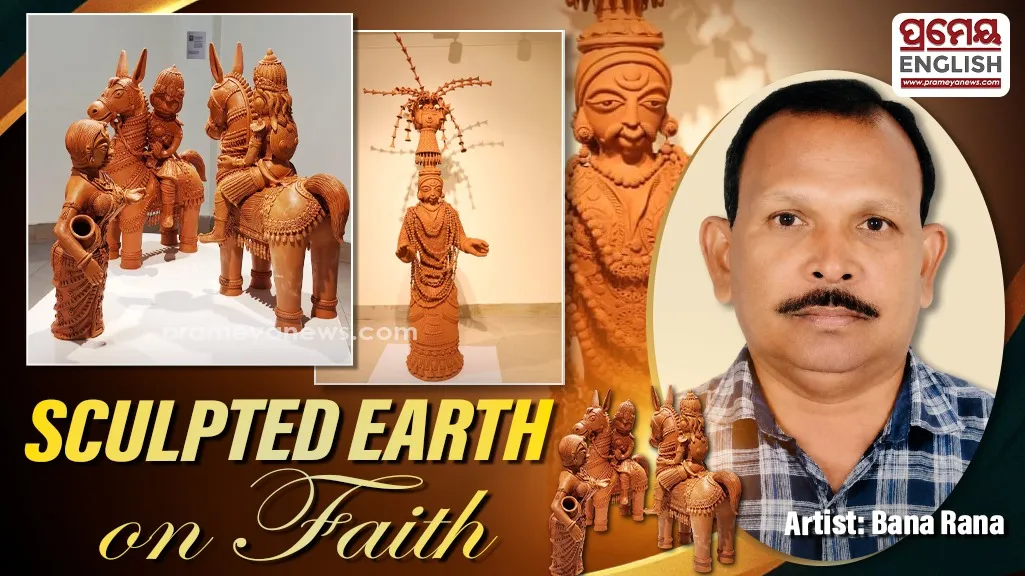
Looking closely at theGhanta Patua sculpture, viewers witness a fascinating exploration of spiritual gender dynamics. Traditional male performers assume feminine forms to channel the divine energy of the Mother Goddess. This ancient ritual mirrors modern international conversations surrounding fluid gender roles within sacred spaces. Elaborate headpieces and layered terracotta ornaments demand immediate attention from observers. They represent the heavy but sacred burdens carried by spiritual messengers across diverse cultures. Rana captures this rhythmic devotion flawlessly in solid clay, preserving the ritualistic energy.

Ghanta Patua
Switching focus to theKanchi Abhijan masterpiece, another deeply human theme emerges naturally. This dynamic sculpture illustrates the collective human craving for a direct connection with divine forces. Supreme deities ride majestic horses while pausing for a humble village woman selling curd. Grand architecture of organized religion fades away in this intimate roadside encounter. Divine grace chooses to reveal itself in the most ordinary, working-class moments. This powerful visual narrative resonates with global audiences, crossing cultural boundaries. True spiritual power often bows to genuine devotion.
Rana elevates marginalized indigenous knowledge directly onto the high-art global stage. His mastery over terracotta actively preserves fading rural rituals while challenging international art establishments. Folk traditions possess a profound structural sophistication that deserves widespread recognition. Earth-born artistry holds timeless relevance in our rapidly modernizing world. These striking clay masterpieces force a crucial re-evaluation of fine art boundaries. Rana reminds the world that raw clay can hold the most elevated human truths.

Kanchi Abhijan
Structural Audit
With additional Inputs from: Sarveswar Biswal
.webp)