



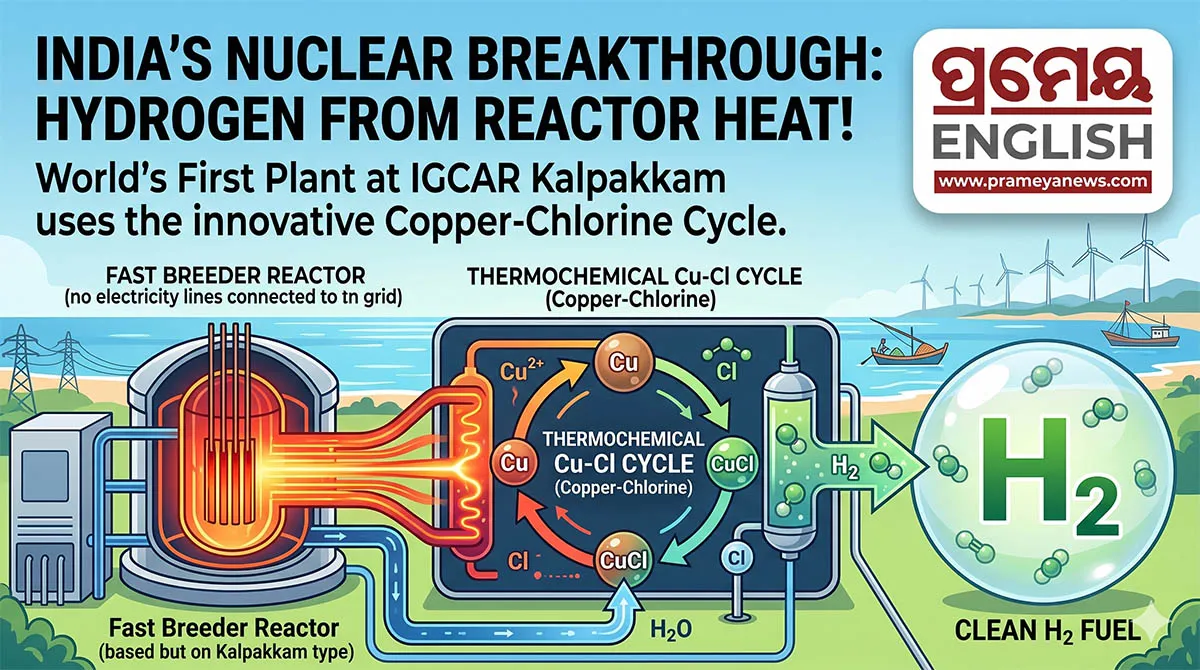
Kalpakkam facility directly uses nuclear heat for green hydrogen
Scientists at the Indira Gandhi Centre for Atomic Research in Kalpakkam have successfully produced green hydrogen using direct heat from a nuclear reactor. This world-first achievement bypasses the traditional, power-hungry method of electricity-based electrolysis. India recently launched this technology demonstrator plant on the Tamil Nadu coast to prove that heat-driven hydrogen production works safely outside a laboratory. This innovative breakthrough fundamentally shifts how the global energy sector views atomic capabilities.
How heat replaces electricity
Most current green hydrogen facilities require vast amounts of electricity to split water into hydrogen and oxygen. Kalpakkam takes a smarter route by utilizing a copper-chlorine cycle. This thermochemical water-splitting process relies primarily on heat to break chemical bonds. Water reacts with reusable copper and chlorine compounds in multiple gentle stages. At the end of the loop, hydrogen and oxygen separate cleanly, leaving the chemical helpers fully intact for the next cycle. This method dramatically saves energy.
Why reactors make perfect partners
Traditional electrolysis demands either heavy electrical power or extreme temperatures above eight hundred degrees Celsius. However, the copper-chlorine cycle operates comfortably between four hundred fifty and five hundred fifty degrees Celsius. The Fast Breeder Test Reactor at Kalpakkam easily supplies this exact temperature range. By feeding process heat directly into the chemical loop, engineers avoid the energy loss that typically occurs when converting heat into electricity first. India aggressively aims to become a global exporter of green hydrogen to reduce international reliance on fossil fuels, making this efficiency gain highly strategic for the national economy.
Scaling up clean industrial fuel
Researchers at the Bhabha Atomic Research Centre spent years perfecting this chemistry on paper. Connecting that complex science to a live, liquid-sodium-cooled reactor required overcoming difficult physical engineering hurdles. The Kalpakkam reactor has operated as a reliable research tool since the nineteen eighties. Now, it proves that atomic energy can do more than generate steady electricity for the grid. Unlike solar or wind power, nuclear reactors run constantly regardless of daily weather conditions. This constant operation means reactors could eventually supply endless clean hydrogen to decarbonize heavy industries like steelmaking, fertilizer production, and oil refining.