


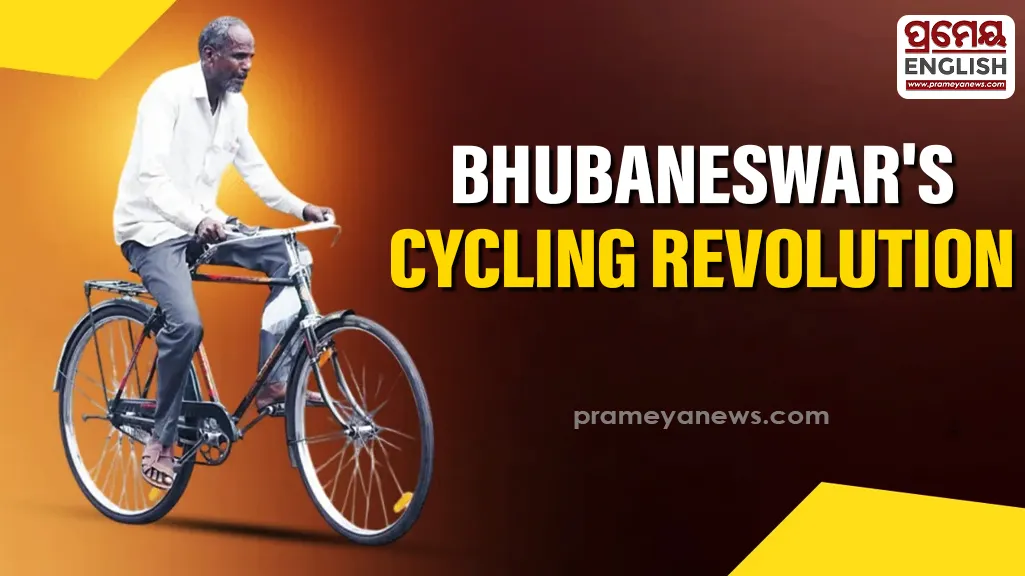
Bhubaneswar, June 3: Once the pride of every household, the humble bicycle was the primary mode of transport for everyone—from postmen and school teachers to traders and daily wage earners. Equipped with a dynamo-powered light for night rides and a ringing bell that signaled a visitor’s arrival, bicycles were an inseparable part of everyday life. In earlier days, cyclists even had to pay taxes to ride on public roads.
Over the decades, bicycles became accessible to all sections of society. Government schemes further boosted their popularity by distributing cycles to school students. Today, however, the bicycle has undergone a dramatic transformation. The traditional cycle has given way to sleek, high-performance machines designed for fitness, adventure, and lifestyle.
In Bhubaneswar, four major categories of bicycles dominate the market—city bikes, mountain bikes, road bikes, and battery-powered e-bikes. While bicycles once cost between Rs 4,000 and Rs 7,000, modern models now range from Rs 10,000 to as high as Rs 2 lakh. Equipped with gears, advanced braking systems, LED lights, and ergonomic designs, these bicycles cater to riders of all age groups.
For many, cycling is no longer just a means of transportation. It has become a fitness activity, a recreational pursuit, and even a fashion statement. City bikes are designed for urban commuting and are priced between Rs 10,000 and Rs 20,000. Road bikes, popular among long-distance riders, start at around Rs 50,000. Mountain bikes, capable of handling rough terrain and city roads alike, are available from Rs 10,000 to over Rs 1 lakh. Meanwhile, e-bikes, increasingly used for office commutes, feature pedal-assist and automatic drive systems, making cycling easier and more convenient.
Technology has changed the way bicycles are built and used. Dynamos have been replaced by LED lighting systems, many riders now wear helmets, and bicycle sizes are measured with greater precision. Yet, despite these advancements, one critical question remains unanswered: where can cyclists ride safely?
Where Will Cyclists Ride?
Cycling in Bhubaneswar has become increasingly risky. Cyclists face daily threats from speeding vehicles, traffic congestion, reckless driving, and growing encroachment on road space. Ironically, while bicycle ownership is rising, dedicated cycling infrastructure continues to decline.
The issue was recognized as far back as 2005, when the Indian Roads Congress meeting held in Bhubaneswar approved proposals for dedicated cycling tracks along city roads. Subsequently, the Works Department, Bhubaneswar Municipal Corporation (BMC), and Bhubaneswar Development Authority (BDA) planned separate cycle corridors across major roads.
A dedicated cycling track was eventually developed from the Airport Square through Capital Hospital Square, AG Square, Raj Bhavan Square, and up to Nandankanan. Patel Marg also received a designated cycling corridor. However, much of this infrastructure gradually deteriorated. Portions of the tracks were dug up for utility cable installations, damaged by broken drainage slabs, or obstructed by bollards and roadside encroachments.
Several roads were later marked with red-painted bicycle lanes, but these too failed to remain obstruction-free. Vehicles began parking on them, roadside vendors occupied sections, and in many places motor vehicles routinely used the lanes meant for cyclists. As a result, cyclists either became victims of accidents or abandoned cycling due to safety concerns.
The situation is particularly worrying for school-going children. Many parents hesitate to allow their children to cycle to school because of the unsafe road conditions. Wrong-route driving, speeding vehicles, and the absence of protected crossings further increase the danger.
In 2023, the BDA announced plans to develop smart footpaths and cycling tracks along nearly 100 km of roads in the city. Officials from the Works Department have also stated that newly constructed roads are being designed with dedicated cycling corridors. Some of these facilities have already been incorporated into newly developed parallel roads. However, cycling enthusiasts argue that unless these corridors are protected and maintained, they will remain ineffective.
For Many, the Bicycle Is Still a Lifeline
While premium bicycles are becoming symbols of fitness and lifestyle, for many people the cycle remains a tool of survival.
Seventy-year-old Arakshita Prusti from Paikarapur village on the outskirts of Bhubaneswar has spent the last four decades selling puffed rice from his bicycle. Every day, he loads nearly 40 kilograms of puffed rice onto his ageing cycle and travels through Unit-8 and nearby localities. Despite suffering from paralysis nearly two decades ago—which left one of his legs severely swollen—he continues to cycle through scorching summers, heavy rains, and winter cold to earn a living.
His daughters are married, and he now lives only with his wife. Selling puffed rice remains his sole source of income. The bicycle he purchased nearly 50 years ago still serves him faithfully. Unable to walk long distances due to his health condition, Arakshita says the bicycle is his greatest strength and companion.
Another inspiring example is 64-year-old Babuli Behera, originally from Alatalanga near Niali and now residing in Sailashree Vihar. A traditional milk seller, Babuli cycles nearly 30 kilometres every day delivering milk to households across the city. From transporting cattle feed to purchasing household supplies and visiting relatives, his bicycle remains indispensable.
Babuli learned cycling at the age of ten and even received a Raleigh bicycle as part of his wedding dowry. He has completed countless journeys between Bhubaneswar and Jagatsinghpur on a bicycle. Although his family now owns a motorcycle, he continues to rely on cycling.
“I remain healthy because I cycle every day,” he says with pride.
More Than a Vehicle
The bicycle’s journey in Bhubaneswar mirrors the city’s own transformation—from simplicity to modernity, from necessity to lifestyle. Yet amid rising prices, advanced technology, and changing trends, one reality remains unchanged. For thousands of residents, the bicycle is still not merely a vehicle—it is a livelihood, a fitness partner, and a symbol of resilience.
As cycling gains renewed popularity, the future of bicycle culture in the capital will depend not only on better bicycles but also on safer roads and dedicated infrastructure that allows cyclists to ride without fear.