

Washington, D.C, June 23: US President Donald Trump has said that Iran's willingness to show "respect" toward the United States will be a key factor in preserving peace following the end of the recent Iran-Israel conflict. He also expressed confidence that the eventual full reopening of the Strait of Hormuz could significantly boost global oil supplies.
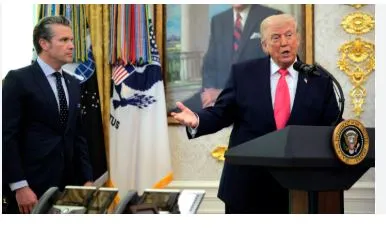
Speaking to reporters in the Oval Office on Monday, Trump stressed that mutual respect, rather than fear, would help prevent future tensions between Washington and Tehran.
"As long as they respect us, I don't want to use the word fear because that's an inappropriate word, but as long as they respect us, we're not going to have any trouble,"Trump said.
The Strait of Hormuz, one of the world's most important oil shipping routes, was effectively closed by Iran after joint US-Israeli military strikes on February 28. The disruption sent fuel prices sharply higher across international markets.
Although an interim agreement has since halted hostilities and facilitated limited maritime traffic, the main shipping channel remains obstructed by mines. Nevertheless, dozens of vessels successfully navigated the area over the weekend.
Iranian Parliament Speaker and chief negotiator Mohammad Bagher Ghalibaf reiterated on Monday that Iran would continue to oversee the strategic waterway while adhering to international regulations.
"Hopefully, we can activate the strait again, in terms of passage, and bring prosperity back to the regional and global economy,"Ghalibaf told Iranian state media while returning from Switzerland.
Ghalibaf and Iranian Foreign Minister Abbas Araghchi arrived in Oman on Monday evening for talks with Omani Foreign Minister Badr al-Busaidi. Discussions focused on ongoing peace efforts and ensuring safe navigation through the Strait of Hormuz.
As part of the temporary agreement, the US Treasury Department issued a 60-day sanctions waiver on Monday, allowing Iranian oil exports to continue. The measure also permits Iranian oil imports into the United States, marking a significant shift given that the US has imported little Iranian oil since the 1990s.
Shipping activity in the strait has gradually recovered. According to data from analytics firm Kpler, 71 confirmed vessel transits were recorded over the weekend, including 35 crossings on Saturday alone. Before the conflict, daily traffic typically ranged between 100 and 130 vessels.
To avoid the mined central passage, many ships have been using alternative routes through Iranian territorial waters to the north or Omani waters to the south.
Global energy markets responded positively to signs of improving stability. Brent crude oil prices fell 3.2 percent to USD 77.52 per barrel, moving closer to pre-conflict levels of around USD 70 per barrel.