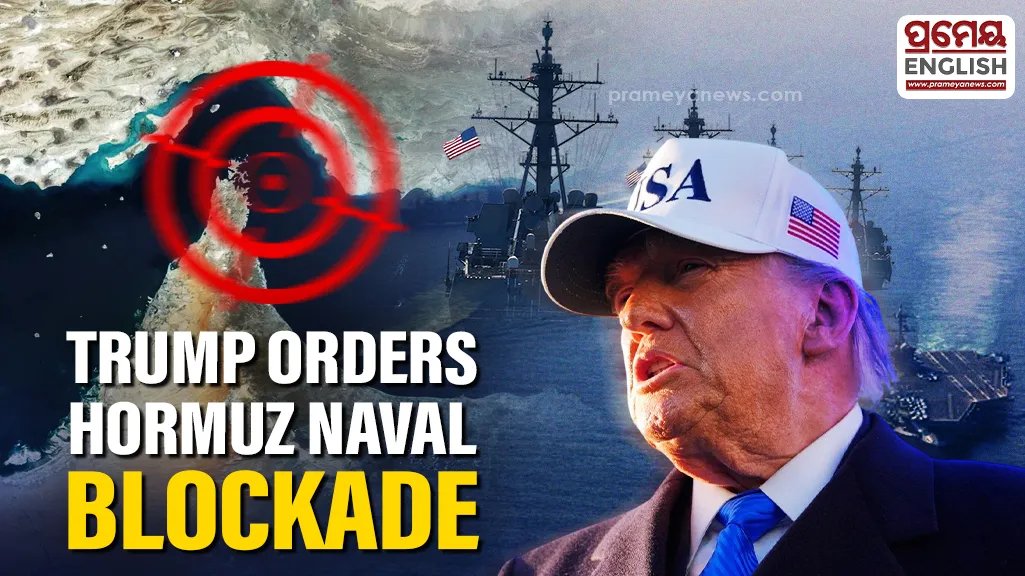
Trump Orders Naval Blockade on Strait Of Hormuz After Diplomatic Talks fail
Naval forces under President Trump have initiated a blockade of the Strait of Hormuz after failed peace talks. Energy markets are reacting sharply as the US moves to stop Iranian oil exports and illegal maritime tolls.
Published By : Satya Mohapatra
| April 13, 2026 10:55 AM
Trump orders US Navy blockade on Iranian maritime trade
United States Navy forces are beginning a rigorous naval blockade of the Strait of Hormuz following the breakdown of high-stakes negotiations between Washington and Tehran.President Donald Trump confirmed the military action on Sunday, asserting that the American fleet will now obstruct all maritime traffic entering or exiting Iranian ports.This escalation effectively terminates a brief two-week ceasefire that had momentarily calmed a six-week conflict involving the US, Israel, and Iran.
Crude oil prices surged past $100 per barrel immediately following the announcement, reflecting deep anxiety within global energy markets.The US Central Command (CENTCOM) specified that while freedom of navigation remains for vessels traveling to non-Iranian ports, any ship suspected of paying "illegal tolls" to Tehran will be intercepted. Trump further warned that US forces are prepared to neutralize any Iranian threats to shipping, including the destruction of naval mines.
Strategic vulnerabilities have left the American economy exposed to such disruptions.Earlier this year, China leveraged its monopoly on rare earth minerals to pressure Washington during trade disputes, a tactic now mirrored by Iran’s grip on the world’s most vital energy artery. For India and other Asian economies, this blockade is particularly concerning given their heavy reliance on Persian Gulf crude. Historical data shows that nearly 20% of the world’s petroleum liquids pass through this narrow waterway, making any prolonged closure a threat to global food security and industrial output.
Energy Security Crisis
Energy analysts warn that choking off Iranian flows could remove two million barrels of oil per day from the market.This move seeks to dismantle the "petroyuan" system, where nations use Chinese currency to bypass American sanctions.
Future of Global Trade
Washington now faces a dual challenge from Beijing and Tehran, both of which are increasingly using economic interdependence as a weapon. While the White House claims the US is self-reliant, the rising cost of transportation and fertilizers suggests a difficult road ahead for domestic consumers.


.webp)


.webp)