


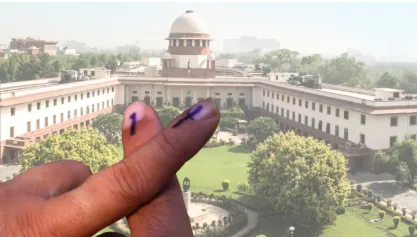
New Delhi, April 11: The Supreme Court of India reaffirmed that the right to vote and the right to contest elections are statutory entitlements, not fundamental rights, as reported byLive Law. This clarification means that these rights are governed solely by the provisions set out in law.
A bench of Justices BV Nagarathna and R Mahadevan explained that these rights are separate from each other. The right to contest an election is particularly subject to stricter regulations, including qualifications, disqualifications, and institutional requirements.
The court was reviewing a case concerning election rules for the District Milk Producers' Co-operative Unions in Rajasthan. A petition had challenged certain bye-laws established by these unions, which imposed specific qualifications for candidates running for the board of directors. The Rajasthan High Court had previously deemed these provisions ultra vires, or outside the legal authority.
In response, the petitioners approached the Supreme Court, which overturned the High Court’s ruling and allowed the appeal. The Court underscored that it is "well settled" that neither the right to vote nor the right to contest an election is a fundamental right.