


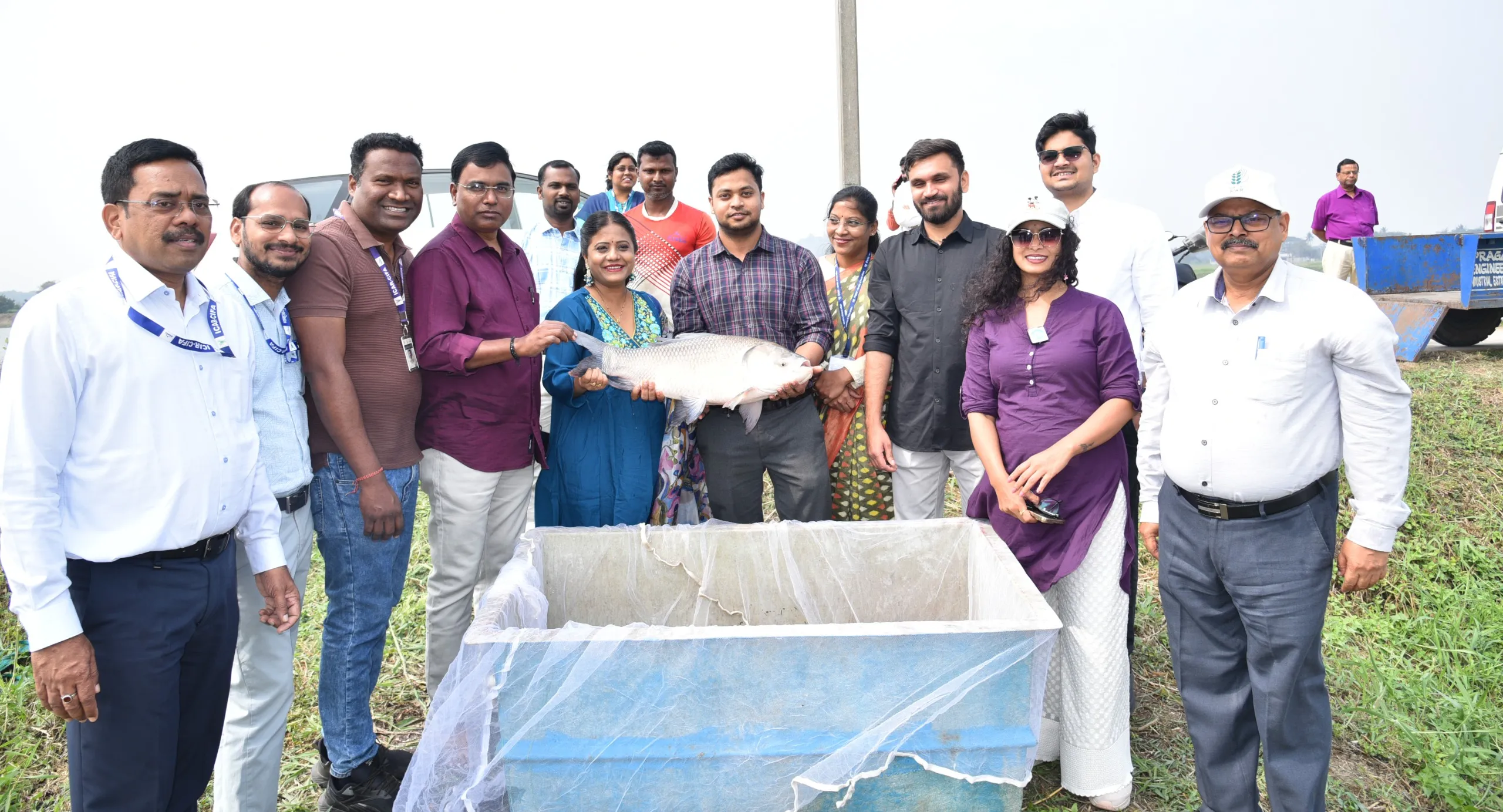
Bhubaneswar, February 4: A media delegation from Telangana visited the Central Institute of Freshwater Aquaculture (CIFA) on Wednesday as part of their press tour. The delegation was warmly welcomed by CIFA Director Dr. Pramoda Kumar Sahoo, who briefed them on the institute’s mandate, research activities, and significant contributions to India’s freshwater aquaculture sector.
During the visit, the media representatives interacted with CIFA scientists and received detailed information on the institute’s achievements, particularly in disease-resistant breeding programmes, genetic improvement, and sustainable aquaculture technologies. The delegation was taken on a guided field tour, where they witnessed the complete breeding and rearing processes, gaining valuable first-hand exposure to ongoing scientific work.
The team also visited the Biofloc unit, ornamental fish hatchery, and air-breathing fish hatchery complex. Scientists explained modern hatchery management practices, water-efficient farming systems, and livelihood-oriented technologies developed by the institute. They highlighted how Biofloc technology helps improve fish health, reduce feed costs, and enhance farm productivity, while climate-resilient practices support sustainable aquaculture.
Established under ICAR, CIFA plays a vital role in developing improved freshwater fish varieties, fish health management protocols, and farmer-friendly technologies across the country. The institute has been instrumental in promoting sustainable aquaculture through capacity building, field demonstrations, and technology transfer to stakeholders, thereby contributing to farmers’ income enhancement and nutritional security.
The visit was successfully coordinated by Dr. J. K. Sundaray, Head of the FGB Division, and Dr. P. C. Das, Head of the APE Division.
The visit was accompanied by PIB officials Mahendra Prasad Jena, Assistant Director, PIB Bhubaneswar, and Bikash Ranjan Dalai, Information Assistant, PIB Bhubaneswar. The media delegation appreciated CIFA’s scientific initiatives and their impact on strengthening India’s freshwater fisheries sector, noting that such exposure programmes help bridge the gap between scientific research and public awareness.