


Bhubaneswar, Jul 1: Once celebrated as one of the finest symbols of the ancient urban civilisation of Shishupalgarh, the historic Rani Pokhari has all but vanished under the relentless march of urbanisation. The disappearance of the centuries-old water reservoir has raised fresh concerns over the shrinking heritage of Odisha's 2,000-year-old archaeological site.
Located at the south-western corner of the ancient fortified city, Rani Pokhari was believed to have been an exclusive royal bathing tank adjoining the queen's palace. Historical accounts describe the serene water body adorned with blooming lotuses and graceful swans, where the queen is said to have spent her mornings watching birds glide across the crystal-clear waters before taking a ceremonial bath with her companions. The pond was fed by the fragrant waters of the Gandhavati River through an advanced stone-built water supply system, reflecting the remarkable engineering skills of ancient Kalinga.
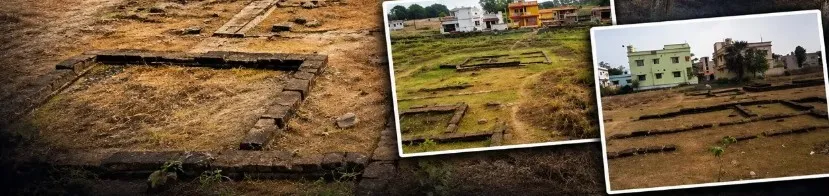
Renowned archaeologist B.B. Lal documented the remains of the pond during his exploration of Shishupalgarh in 1948. Despite being surrounded by dense vegetation, the square-shaped reservoir, measuring nearly 30 metres on each side, still retained water. Stone steps, a crocodile-mouth drainage outlet, and an intricate inlet and outlet system connected to the Gandhavati River were visible. Stone grilles shaped like crocodile mouths reportedly prevented reptiles and other animals from entering the royal bathing tank, while swans and lotus flowers enhanced its beauty.
However, decades of unchecked encroachment and rapid urban expansion gradually erased one of Shishupalgarh's most significant heritage structures. While traces of the pond survived until around 2000, the past decade witnessed its near-complete disappearance beneath residential buildings, roads and boundary walls. Today, only a few scattered ancient stones hint at the location where the historic pond once stood.
The disappearance has become so complete that even officials entrusted with protecting the monument reportedly struggle to identify the exact location of Rani Pokhari. Local researchers claim it took them nearly two days to locate the site using scattered stone remains after an Archaeological Survey of India marker identifying the pond was allegedly removed.
The loss of Rani Pokhari has intensified concerns among historians and conservationists, who warn that several invaluable remains of the ancient fortified city continue to face similar threats from illegal encroachments and unplanned development. Although efforts are underway to remove encroachments from parts of Shishupalgarh, experts fear that the Queen's Pond—buried beneath layers of concrete—may never be restored to its original glory.
When contacted regarding the issue, officials of the Archaeological Survey of India reportedly declined to comment, stating that they had been instructed by higher authorities not to speak to the media on the matter.