
.webp)

By Mehboob Mahtab
Rourkela: In heart-wrenching news for Tribal youth residing in and around Rourkela belonging to Sundargarh District, SAIL, Rourkela Steel Plant (RSP) on Saturday signed a tripartite MoU with NSIC and NSTFDC for the skill development and sustainable livelihood opportunities of residents in the area.
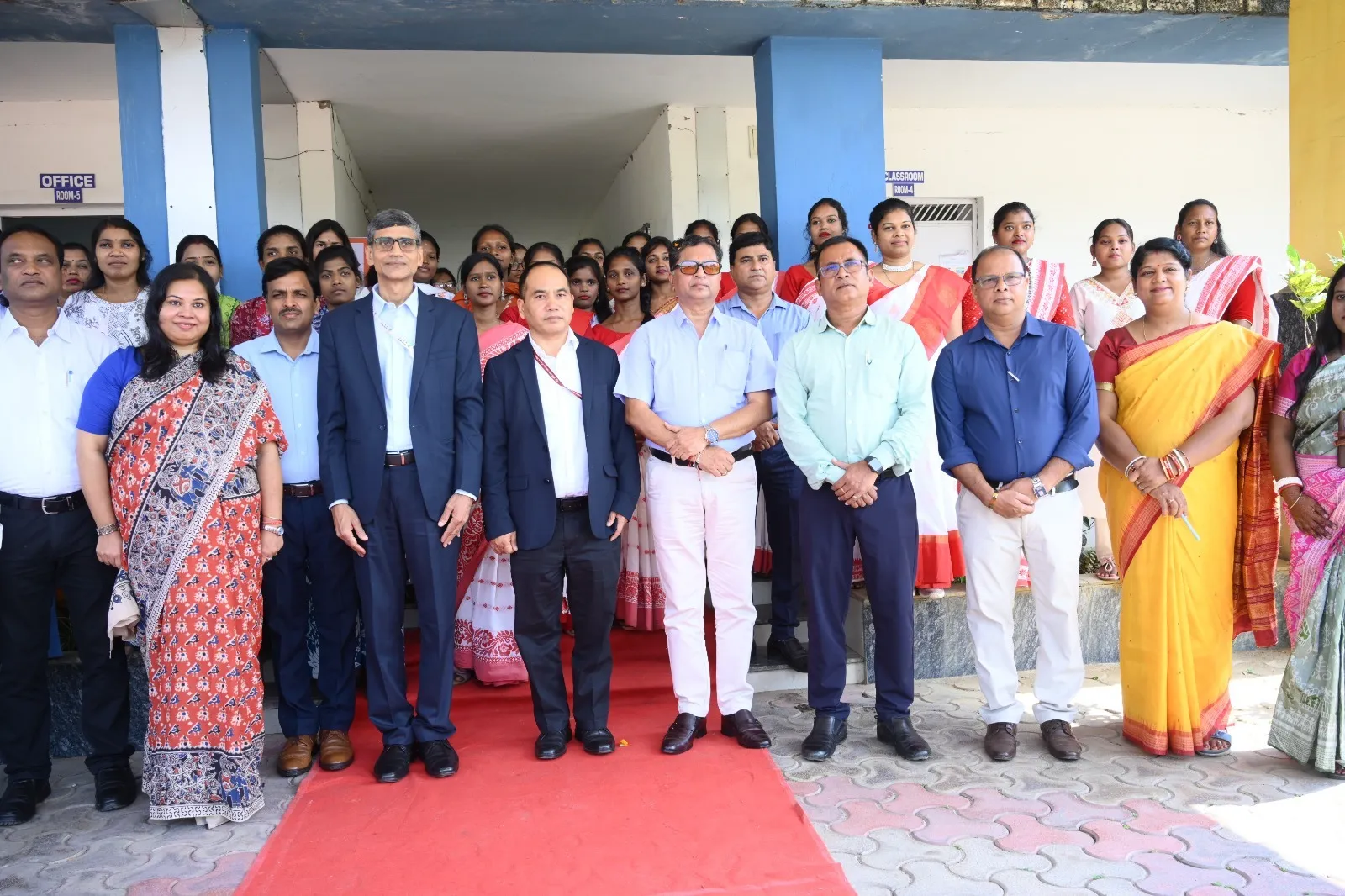
In a remarkable development, recently the NAVRATNA company SAIL, Rourkela Steel Plant (RSP) in collaboration with the National Small Industries Corporation Ltd. (NSIC) and the National Scheduled Tribes Finance and Development Corporation (NSTFDC), signed a Tripartite Memorandum of Understanding (MoU) at LBI, Rourkela, to promote skill development and sustainable livelihood opportunities for underprivileged Scheduled Tribe (ST) youth of Sundargarh district and nearby areas.
The MoU was signed by Mr. O.P. Singh, Senior General Manager (TTDV & SBU Head), NSIC Ltd.; Mrs. Bismita Das, Assistant General Manager, NSTFDC; and Mr. Tapankumar G. Kanekar, Chief General Manager (TS & CSR), RSP. The signing ceremony was held in the presence of Mr. T. Roumuan Paite, CMD, NSTFDC, and the Joint Secretary, Ministry of Tribal Affairs, Government of India, along with senior officials from the participating organisations.
As mentioned in the MoU, under this initiative, vocational skill development training will be provided to tribal youth in six trades, namely Self-Employment Tailoring, Assistant Beautician, Assistant Computer Operator, Bread and Bakery Manufacturing, Mushroom Farming, and Electrician Training. The programmes are aimed at equipping beneficiaries with practical, market-oriented skills to enhance their employability and facilitate self-employment and income generation.
The key highlight of this initiative is its focus on women's empowerment, with more than 60% of the beneficiaries being women. By enabling access to vocational training and livelihood opportunities, the programme seeks to strengthen their economic independence and contribute to the socio-economic development of tribal communities.
Through this collaborative initiative, NSIC, NSTFDC and RSP reaffirm their commitment to inclusive skill development, tribal welfare, entrepreneurship and sustainable livelihood generation. The partnership is expected to create meaningful opportunities for underprivileged tribal youth and support their journey towards economic self-reliance.
.webp)