



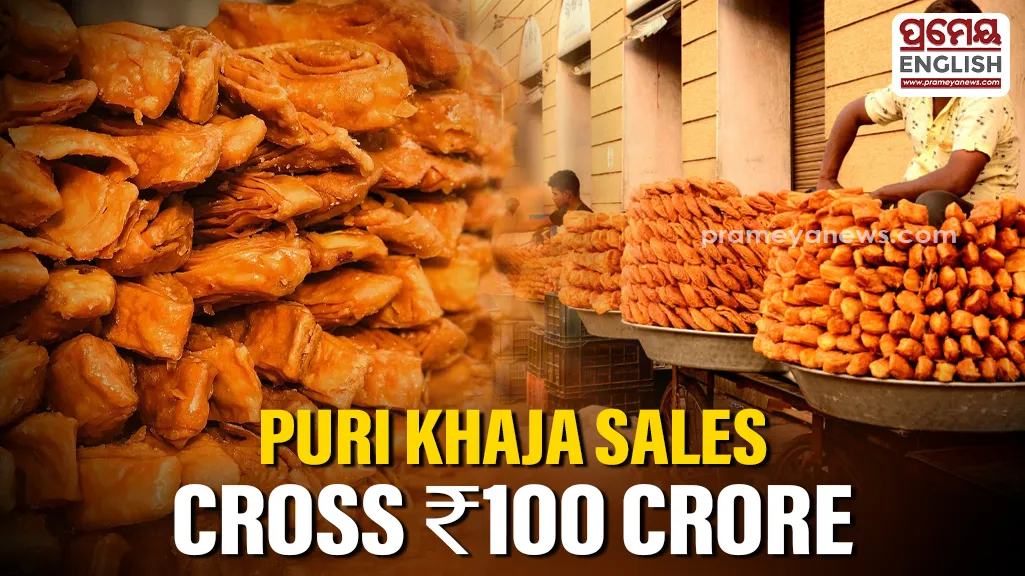
Puri, Jul 27: Puri's iconic Khaja, the crispy layered sweet closely associated with Lord Jagannath's Mahaprasad, witnessed record-breaking demand during this year's Rath Yatra, with an estimated ₹100 crore worth of Khaja sold in just ten days, according to traders and local estimates. The overwhelming sales have once again highlighted the sweet's popularity while reviving calls for a Geographical Indication (GI) tag to protect its unique identity.
Every year, thousands of devotees visiting Puri carry Khaja back home as a cherished souvenir and sacred offering. During this year's Rath Yatra, pilgrims purchased Khaja from the Srimandir Anand Bazaar, the Adapa Mandap Anand Bazaar, and hundreds of shops that lined the Grand Road, city lanes, and the Puri-Bhubaneswar highway. Compared to previous years, the number of Khaja outlets reportedly tripled, with traders stocking large quantities even before the festival began to meet the expected surge in demand.
With more than 30 lakh devotees visiting Puri during the nine-day Rath Yatra, Khaja sales reached unprecedented levels. Many pilgrims bought between 2 kg and 5 kg of the sweet to take home for family and friends. Premium Khaja prepared with pure ghee at reputed shops fetched around ₹400 per kg, while roadside vendors sold lower-grade varieties at inflated prices ranging from ₹200 to ₹300 per kg, despite such products usually retailing for ₹100 to ₹150 per kg.
However, concerns were raised over unethical business practices during the festival. Some roadside vendors allegedly marketed ordinary Khaja as "Kalia Bhoga", misleading unsuspecting pilgrims into believing they were purchasing sacred Mahaprasad. The practice has drawn criticism from local residents, who say it undermines the sanctity of the Jagannath tradition and exploits the faith of devotees.
Deva Pradhan, a Khaja trader on the beach road, said he had stocked nearly ₹10 lakh worth of Khaja for the festival and generated sales of around ₹20 lakh before the Niladri Bije ritual. After accounting for transportation and labour costs, he estimated his net profit at more than ₹7 lakh, reflecting the lucrative business generated during the annual festival.
Temple sources and traders estimate that over ₹40 crore worth of Khaja Mahaprasad was sold at the Srimandir Anand Bazaar and Adapa Mandap Anand Bazaar alone during the Rath Yatra. The Khaja prepared inside the temple and offered to Lord Jagannath is especially prized for its distinctive aroma, taste, and religious significance.
Despite its global popularity and deep association with Odisha's Jagannath culture, Puri Khaja is yet to receive a Geographical Indication (GI) tag. Although efforts to secure the recognition were initiated a few years ago, the proposal has reportedly remained pending. Traders and cultural enthusiasts believe GI status would not only safeguard the authenticity of Puri Khaja but also promote it internationally as one of Odisha's most treasured culinary and cultural heritage products.