
.webp)
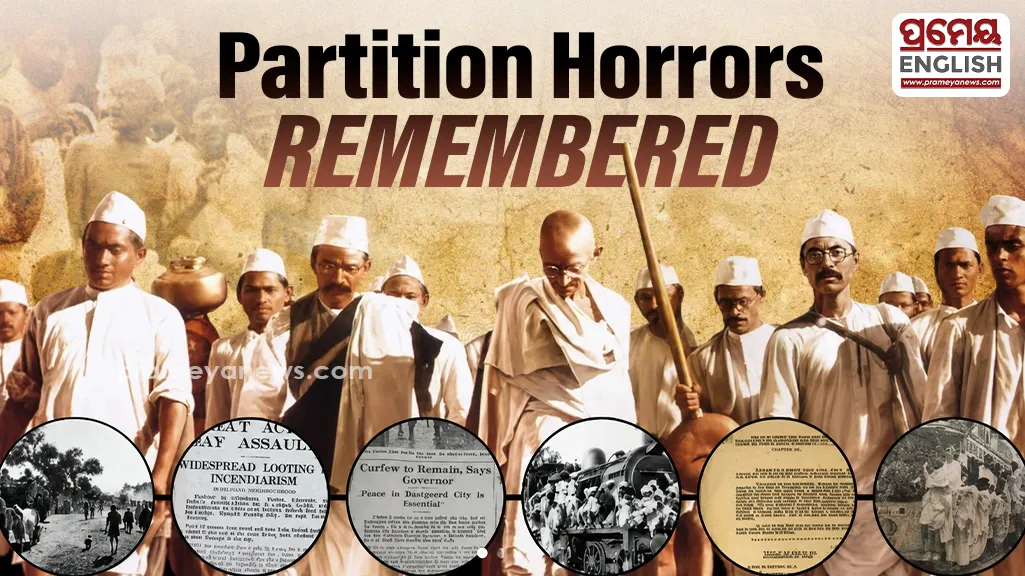
New Delhi, August 14: India observes Partition Horrors Remembrance Day, or Vibhajan Vibhishika Smriti Diwas, on August 14 every year to remember the suffering, displacement and loss of life endured by millions of people during the Partition of India in 1947.
The day is observed a day before Independence Day, when India celebrates its freedom from British rule. While August 15 marks the birth of an independent India, August 14 is dedicated to remembering one of the most painful chapters in the country's history.
What happened during Partition?
In 1947, British India was divided into two independent dominions—India and Pakistan. The partition resulted in the creation of new borders and triggered one of the largest mass migrations in modern history.
Millions of Hindus, Muslims and Sikhs were forced to leave their homes and move across the newly created borders. Families were separated, homes and businesses were abandoned, and countless people lost their lives amid widespread communal violence.
People who had lived in their ancestral homes for generations were suddenly compelled to undertake long and dangerous journeys in search of safety. Trains, roads and refugee camps became symbols of the enormous humanitarian crisis that followed Partition.
The exact number of people who died remains disputed, but historians generally estimate that hundreds of thousands to around a million people lost their lives in the violence. Millions more were displaced.
Why is August 14 observed?
The Government of India announced in 2021 that August 14 would be observed as Partition Horrors Remembrance Day.
The objective is to remember those who suffered and lost their lives during Partition and to preserve the stories of the people who experienced the tragedy.
The day is not intended as a celebration. Instead, it is a day of remembrance, reflection and awareness. Through the observance, people are encouraged to understand the devastating consequences of communal hatred, violence and division.
Remembering the victims and survivors
Partition was not merely a political event that changed borders. It profoundly affected ordinary people. Families lost relatives, homes, property and livelihoods. Many survivors carried memories of the violence and displacement throughout their lives.
For subsequent generations, stories passed down by grandparents and parents have kept those memories alive. Old photographs, letters, documents and personal belongings continue to serve as reminders of the lives that were disrupted in 1947.
Government institutions and cultural organisations mark the day through exhibitions, seminars, discussions, documentaries and other programmes that highlight the experiences of Partition survivors.
A reminder for future generations
Partition Horrors Remembrance Day also carries a broader message. By remembering the suffering caused by communal violence, the observance seeks to encourage social harmony, unity and peace.
August 14 therefore represents a moment of reflection before the celebrations of Independence Day begin. It reminds the nation that freedom came at a tremendous human cost for millions of people.
As India marks Partition Horrors Remembrance Day, remembering the past is not only about revisiting a painful chapter of history. It is also about ensuring that the stories of those who suffered are not forgotten and that future generations learn from the consequences of hatred, violence and division.
.webp)