

.webp)


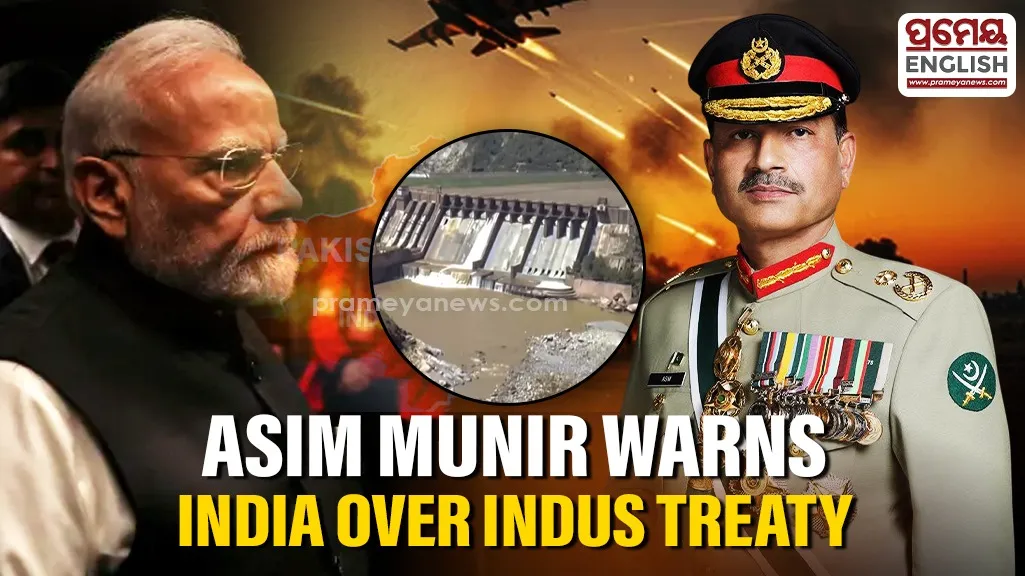
Pakistan threatens military retaliation over suspended river sharing agreement
Pakistan Army Chief General Asim Munir has officially issued stark warnings to India regarding the suspended Indus Waters Treaty. Speaking at the 276th Corps Commanders Conference in Rawalpindi, top military leadership clearly declared their absolute readiness to take all necessary measures to protect Pakistani river shares. This newly aggressive stance heavily escalates ongoing India-Pakistan water dispute frictions over essential natural resources.
Brokered by the World Bank in 1960, this historic river-sharing agreement survived three major wars before India put it in abeyance following the tragic April 2025 Pahalgam terror attack.
Escalating Threats Over Water Resources
Generals at the Rawalpindi headquarters reinforced previous national security directives that treat any diversion of river channels as a direct act of war. Munir explicitly threatened to launch missiles to destroy any new dams built by India on western rivers. Since agriculture heavily drives the Pakistani economy, unrestricted flow from the Himalayas remains critical for their national survival and agricultural output. Leaders in Islamabad continually view Indian control over upstream rivers as an existential threat to their domestic food security.
Blame Shifts toward Neighboring Borders
Military commanders also used the high-level conference to blame neighboring Afghanistan for harboring dangerous anti-state actors. They formally accused Indian proxy groups of operating from Taliban-controlled territory to destabilize vulnerable border regions. As bilateral relations remain completely frozen, constant threats of nuclear brinkmanship and missile strikes severely complicate international mediation efforts.
New Delhi has strongly condemned this highly aggressive posturing from the hostile neighboring country, swiftly dismissing the military statements as completely irresponsible nuclear sabre-rattling. Top Indian foreign ministry officials consistently insist that relentless cross-border terrorism makes bilateral cooperation fundamentally impossible right now. Until both nuclear-armed nations find some common diplomatic ground, the daily fate of millions of citizens relying on these vital Himalayan rivers hangs delicately in the balance.
.webp)