

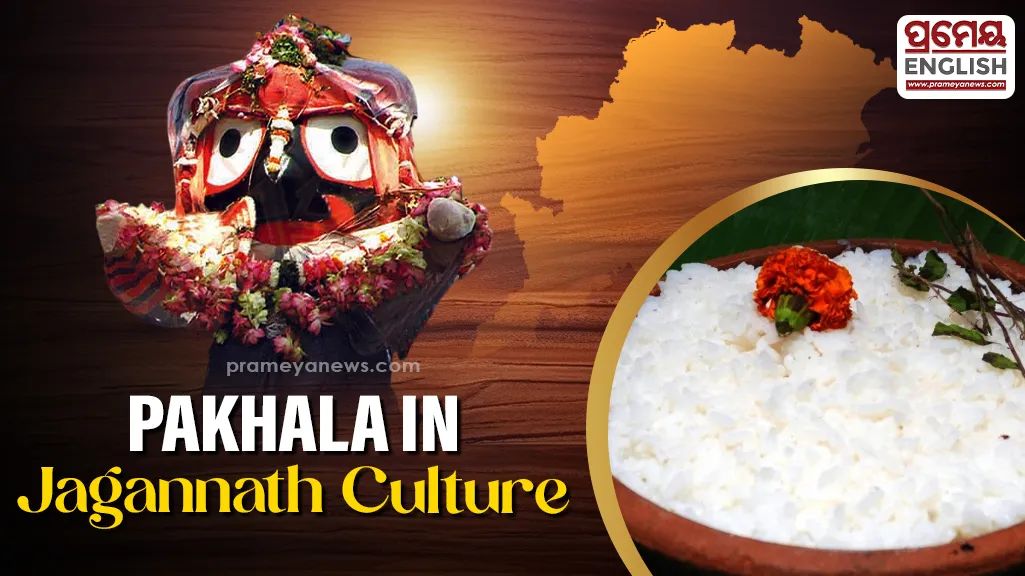
Puri, March 20: Pakhala, the traditional fermented rice dish, continues to hold a special place in Odia culture and devotion. A popular folk song by Kabichandra Kalicharan Pattnaik describes pakhala as “jeebana dhana” (treasure of life), reflecting the deep emotional and cultural connection Odias share with this humble dish.
The tradition extends to Lord Jagannath, the revered deity of Odisha, who is offered different varieties of pakhala throughout the year as part of temple rituals. Unlike the common household preparation, the pakhala served in the Jagannath Temple follows unique rituals and recipes.
Temple records and research indicate that offerings such as sweet pakhala, ghee pakhala, curd pakhala, water pakhala, and fragrant pakhala are prepared based on specific rituals and occasions. According to Jagannath culture researcher Dr. Bhaskar Mishra, the tradition of offering pakhala dates back several centuries. An inscription at the Pataleswar Temple within the Jagannath Temple premises mentions that pakhala was offered as early as the 12th century during the Ganga dynasty.
Temple servitor Bishwanath Samantara informed that during the Madhyahna Dhupa (midday ritual), 11 pots of fragrant pakhala are offered to the Lord. Similarly, during Sandhya Dhupa (evening ritual), 23 pots of water pakhala and two smaller pots are served. The Badasinghara Bhoga (night offering) includes 11 pots of sweet pakhala.
Special curd pakhala is also prepared on certain occasions, notably before Rath Yatra, where ingredients like curd, ginger, and ghee-roasted cumin are used, without adding chili.
All varieties of pakhala are served in earthen pots, accompanied by items like kanji and banana fritters. The temple kitchen is equipped with three dedicated pits for pakhala preparation, where rice is fermented after cooking.
While Pakhala Divas has gained popularity in recent years, temple servitors maintain that for Lord Jagannath, pakhala remains an integral offering throughout the year.