

.webp)

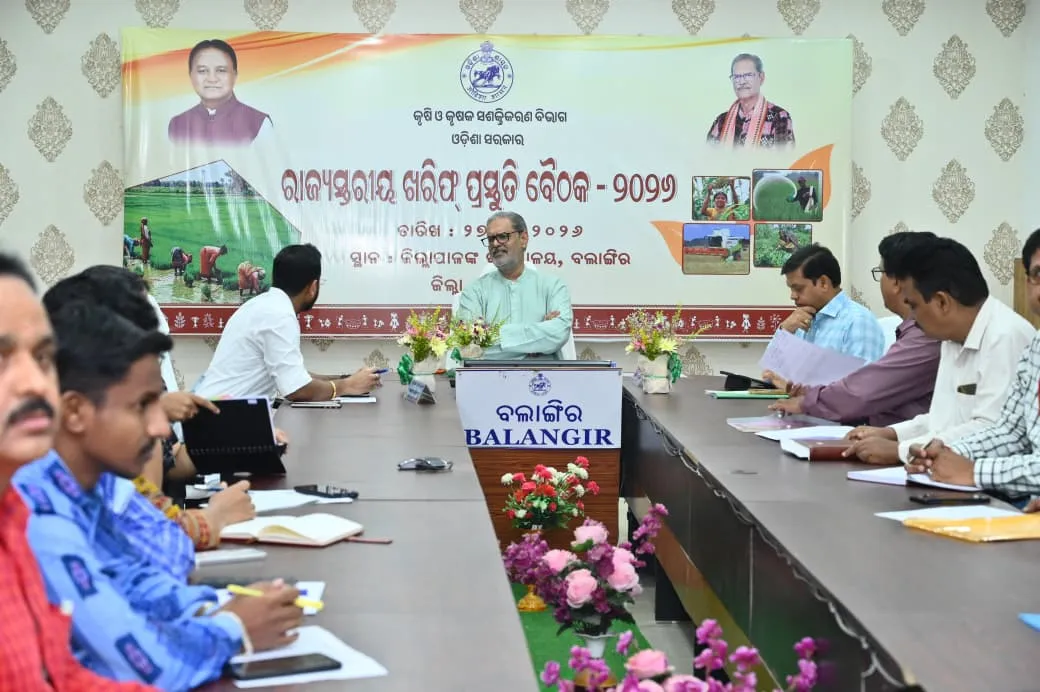
Bhubaneswar/Balangir, MAY 27: In the wake of the India Meteorological Department’s forecast of below-normal South-West monsoon rainfall and potential El Niño impacts in the State, Deputy Chief Minister Kanak Vardhan Singh Deo on Wednesday chaired a high-level virtual review meeting to deploy a comprehensive Kharif 2026 crop contingency and preparedness strategy.
Addressing district administrations via video conference, the Singh Deo, who also holds the and Agriculture & Farmers' Empowerment portfolio, issued a directive for all departments, district authorities, and research institutions to work in absolute coordination to safeguard farmers' interests during the upcoming season.
The Managing Director of Odisha State Seeds Corporation (OSSC) has been directed to ensure timely distribution of certified seeds by the first week of June 2026, prioritizing remote and vulnerable districts.
In areas vulnerable to rain deficits, authorities have been directed to ensure an adequate supply and focus on short and medium-duration paddy, pulses, oilseeds, and millet seeds.
District teams have been asked to actively promote crop diversification in upland and rainfed areas. In the event of a delayed monsoon, a Community Nursery Approach will be adopted.
The OSSC has been asked to maintain an adequate reserve stock of paddy, pulses, and oilseed seeds to handle any weather-related exigencies.
Similarly, the Deputy CM directed MARKFED, PACS, and LAMPCS to ensure seamless, last-mile fertilizer delivery to farmers. Uninterrupted supply must be maintained by fertilizer companies despite global market uncertainties.
District Collectors have been instructed to closely supervise fertilizer distribution. The state will enforce zero-tolerance measures against black marketing, hoarding, and illegal diversion of fertilizers.
Field teams have been directed to promote balanced and integrated nutrient management based on individual Soil Health Cards, alongside green manuring and water conservation practices.
Singh Deo also asked the officials to maximize farmer enrollment under the Pradhan Mantri Fasal Bima Yojana (PMFBY). To minimize the financial burden on cultivators, the State Government is bearing the complete premium of the farmer's share (up to 2 hectares per farmer), requiring only a token validation fee of ₹1/- per application.
District teams will accelerate and complete their Farmer Registry targets. Registration is mandatory for farmers to seamlessly access benefits under PM-KISAN, CM-KISAN, subsidized fertilizer/seed purchases, and government procurement.
It was decided in the meeting that the Odisha University of Agriculture and Technology (OUAT), through its Krishi Vigyan Kendras (KVKs), will provide real-time, location-specific, weather-based agro-advisories. OUAT will also extend technical support for pest management and stress-tolerant crop varieties.
Crop advisories will be prominently displayed on LED screens at both district and state levels to maximize reach while district contingency teams will remain fully active throughout the Kharif season. Field officers are mandated to regularly visit villages, interact directly with farmers, and conduct extensive awareness programs regarding dry-spell preparedness.
The meeting was attended by the Agriculture and Farmers’ Empowerment Secretary Sachin Ramchandra Jadhav, Co-operation Secretary Rajesh Pravakar Patil, OUAT Vice Chancellor Dr. Pravat Kumar Roul, Agriculture & Food Production Director Shubham Saxena, Horticulture Director Kalunge Gorakh Waman, IMD Bhubaneswar Director Dr. Manorama Mohapatra, Balangir Collector Gourav Shivaji Isalwar and other senior departmental officers.
.webp)