



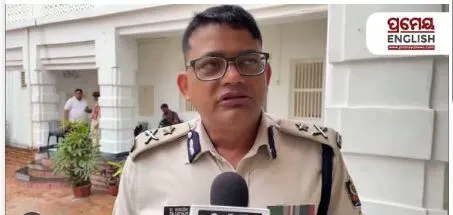
Bhubaneswar/Puri, August 5: Odisha Police's integrated security strategy, backed by advanced technology, scientific crowd management and coordinated policing, ensured the smooth and incident-free conduct of Rath Yatra 2026 in Puri, Inspector General of Police (Central Range) Dr. Satyajit Naik said on Wednesday.
Speaking to reporters, Dr. Naik described the annual Rath Yatra as one of the world's most complex recurring public events, requiring extensive planning, seamless inter-agency coordination and unwavering commitment from all stakeholders. He said the successful management of the festival demonstrated how modern policing, disaster preparedness and community participation can effectively safeguard millions of devotees during large-scale religious gatherings.
 "For Odisha Police, Rath Yatra is not merely a law-and-order assignment but a mission of public service," Dr. Naik said. "Every officer understands that behind every security arrangement lies the responsibility of ensuring every devotee, irrespective of age or background, can participate in Lord Jagannath's sacred journey safely and with dignity."
Highlighting the humanitarian role played by police personnel, he said officers assisted elderly pilgrims, reunited missing children with their families, provided first aid to those in distress and guided visitors unfamiliar with Puri. These efforts reflected the force's guiding principle of "Service Before Self," he added.
Dr. Naik noted that managing the annual festival poses unique challenges as millions of devotees converge on the temple town over several weeks, navigating narrow roads, heritage infrastructure and high-profile visits. To address these complexities, preparations for Rath Yatra 2026 began months in advance with security audits, vulnerability assessments, crowd simulation exercises, route inspections and comprehensive contingency planning.
An integrated command and control system brought together Odisha Police, the district administration, intelligence agencies, fire services, the Health Department, disaster response forces, the Shree Jagannath Temple Administration and other stakeholders, enabling coordinated decision-making and swift responses to emerging situations.
Technology played a crucial role in strengthening security arrangements. Dr. Naik said Artificial Intelligence-enabled CCTV surveillance, drone-based aerial monitoring, GPS tracking of supervisory officers, secure digital communication networks, electronic access control systems and cyber surveillance significantly enhanced situational awareness during the festival.
 He added that social media platforms were monitored round-the-clock to identify misinformation and emerging concerns while also being used to disseminate verified advisories. "Technology was not a substitute for human judgment but a force multiplier that strengthened decision-making and enabled preventive action before situations escalated," he said.
 Scientific crowd management measures included sector-based policing, real-time crowd density monitoring, regulated pedestrian movement, dedicated emergency evacuation corridors and separate ambulance routes. Special arrangements were also made for senior citizens, women, children and persons with disabilities to ensure safe and convenient movement.
Security was implemented through a multi-layered system extending from highways and city entry points to the temple precincts and the three chariots. Bomb Detection and Disposal Squads, Dog Squads, Quick Response Teams and intelligence personnel remained deployed at strategic locations throughout the event.
Dr. Naik said disaster preparedness was another major focus area, with contingency plans developed for stampedes, fires, medical emergencies, cyclonic weather and other potential threats. Multi-agency mock drills involving police, health authorities and disaster response agencies were conducted to ensure readiness for any emergency.
 He also acknowledged the support of temple servitors, volunteers, NCC and NSS cadets, civil society organisations and local residents, whose cooperation contributed significantly to the successful conduct of the festival.
Effective public communication was another key pillar of the security strategy. Through public address systems, multilingual advisories, official social media platforms, traffic bulletins, digital information displays and regular media briefings, Odisha Police ensured devotees received timely and accurate information.
"This transparent communication strategy minimised confusion, encouraged compliance with public advisories and effectively countered misinformation, thereby strengthening public confidence," he said.
Reflecting on the broader significance of the event, Dr. Naik said Rath Yatra 2026 offered valuable lessons for governments and law enforcement agencies worldwide. He said the experience highlighted the importance of meticulous planning, technology-enabled policing, scientific crowd management, proactive communication and strong community engagement in managing mega public events.
He added that the peaceful completion of Rath Yatra 2026 was the result of collective efforts by Odisha Police, the civil administration, disaster response agencies, healthcare professionals, temple authorities, volunteers and millions of disciplined devotees.
"By successfully managing one of the world's largest religious congregations, Odisha has not only preserved an ancient spiritual tradition but also demonstrated a globally relevant model of people-centric policing and integrated public safety that can serve as a benchmark for managing mega public events," Dr. Naik said.