
.webp)


Bhubaneswar, October 12: Reliance Jio once again proved its network dominance, as it delivered the highest network availability and the highest 239.24 Mbps average download speed in and around Balasore, in the latest Independent Drive Test (IDT) results published by Telecom Regulatory Authority of India (TRAI), recently.
Jio’s 4G and 5G network superiority was evident from the fact that its average download speed recorded during the IDT was more than triple that of its nearest competitor.
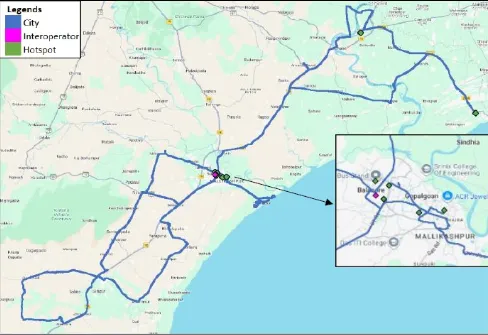
As part of the Independent Drive Test, TRAI conducted drive tests across city drive covering 345 Kms, in and around Balasore, from August 18 to 20.
Also: Greener highways: NHAI plants 5.20 lakh saplings across Odisha in four months
TRAI assessed mobile network quality across Balasore, Januganj, Mallikashpur, Remuna, Fuladi, Soro, Markona, Anantapur, Gopalpur, Jamujhadi, Gandibed, Santaragadia, Seragarh, Nilagiri, Amarda Road, Darada, Jamsuli, Chalanti, Nampo, Jaleswar, Baharda and Baliapal. It also evaluated real-world conditions at seven busy hotspots including Balasore Bus Stand, Chandaneswar Temple, Government District Hospital – Balasore, Jaleswar Railway Station, KKS Women’s College, Balasore Main Market and Max Mall in and around Balasore town to reflect stationary user experience.
As per the results, Reliance Jio delivered the highest 239.24 Mbps average download speed, followed by Airtel with 67.10 Mbps, VIL with 24.65 Mbps and BSNL with 8.18 Mbps average download speed. Jio also maintained a robust average upload speed of 16.28 Mbps.
Leading another key network performance indicator, Jio recorded exemplary network availability of nearly 100 percent. Significantly, Jio also recorded the least call drop of less than 0.7 percent among all service providers, during the test conducted by TRAI.
As per the latest telecom subscription data, published by TRAI, Jio leads in the wireless, wireline and fixed wireless access (FWA) segments in Odisha with over 1.86 crore mobile subscribers and over 8.21 lakh JioFiber and JioAirFiber home broadband subscribers in the state, fueled by its extensive 4G and 5G network.
.webp)