


Odisha Craft Odyssey publishes bilingual research on local appliqué artisans
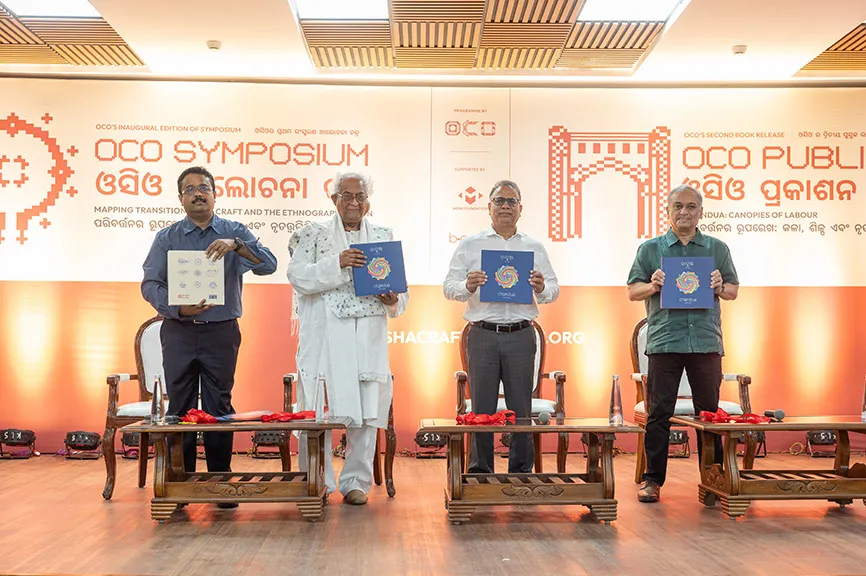
Bhubaneswar recently witnessed the release of Chandua: Canopies of Labour, an in-depth bilingual publication capturing the living appliqué traditions of the region. Odisha Craft Odyssey formally launched this bilingual text on September 20 during the valedictory session of their 2026 symposium at the Odisha Research Centre Auditorium. This work places the spotlight directly on the makers, recording the complex knowledge and deep physical effort required to sustain these renowned crafts. Historically, villages like Pipili have served as the heartbeat of this colorful textile art, intertwining deeply with the Jagannath temple culture and regional identity.
Nine months of rigorous field research form the foundation of this publication. Researchers visited 45 distinct craft clusters and engaged directly with more than 255 artisans. Editors Premjish Achari and Sibdas Sengupta compiled the 2026 edition in both Odia and English. Research fellow Madhulika S. Naidu and archivist fellow Raj Maurya gathered extensive archival material and field data to track how these techniques evolve. The resulting text carefully records specific terminology, raw materials, shifting cultural contexts, and daily working processes that define modern appliqué production.
Documenting working realities
Sandeep Hota, co-founder of BEADS and OCO advisory board member, explained that the team wanted to look past just the final visual product. He noted that connecting with the communities allows researchers to build a grounded understanding of the people shaping the practice. By capturing their lived experiences, the book elevates the makers rather than just treating the craft as a static object.
Bridging art and anthropology
Government officials and cultural figures attended the symposium's closing event. Additional Chief Secretary Vishal Kumar Dev served as the chief guest. Indian designer and Padma Bhushan awardee Rajeev Sethi also joined as the guest of honour. The day-long event, titled Mapping Transitions: Art, Craft, and the Ethnographic Turn, hosted various panels examining how institutions and researchers can better support local knowledge systems.
Three specific panels drove the discussions throughout the symposium. The first session focused on artists acting as ethnographers to reimagine local knowledge systems. Another panel explored how institutions can build stronger bridges connecting art, craft, and anthropology. Finally, the third conversation centered entirely on the appliqué artisans themselves, debating their agency, adaptation, and evolution in a modern market. Experts like Jeebesh Bagchi, Anupam Roy, and Monisha Ahmed led these vital conversations, questioning the traditional boundaries separating fine art from functional craft. Ultimately, this new publication represents a long-term initiative by OCO to elevate the voices, economic realities, and visibility of local craftspeople across the region.