



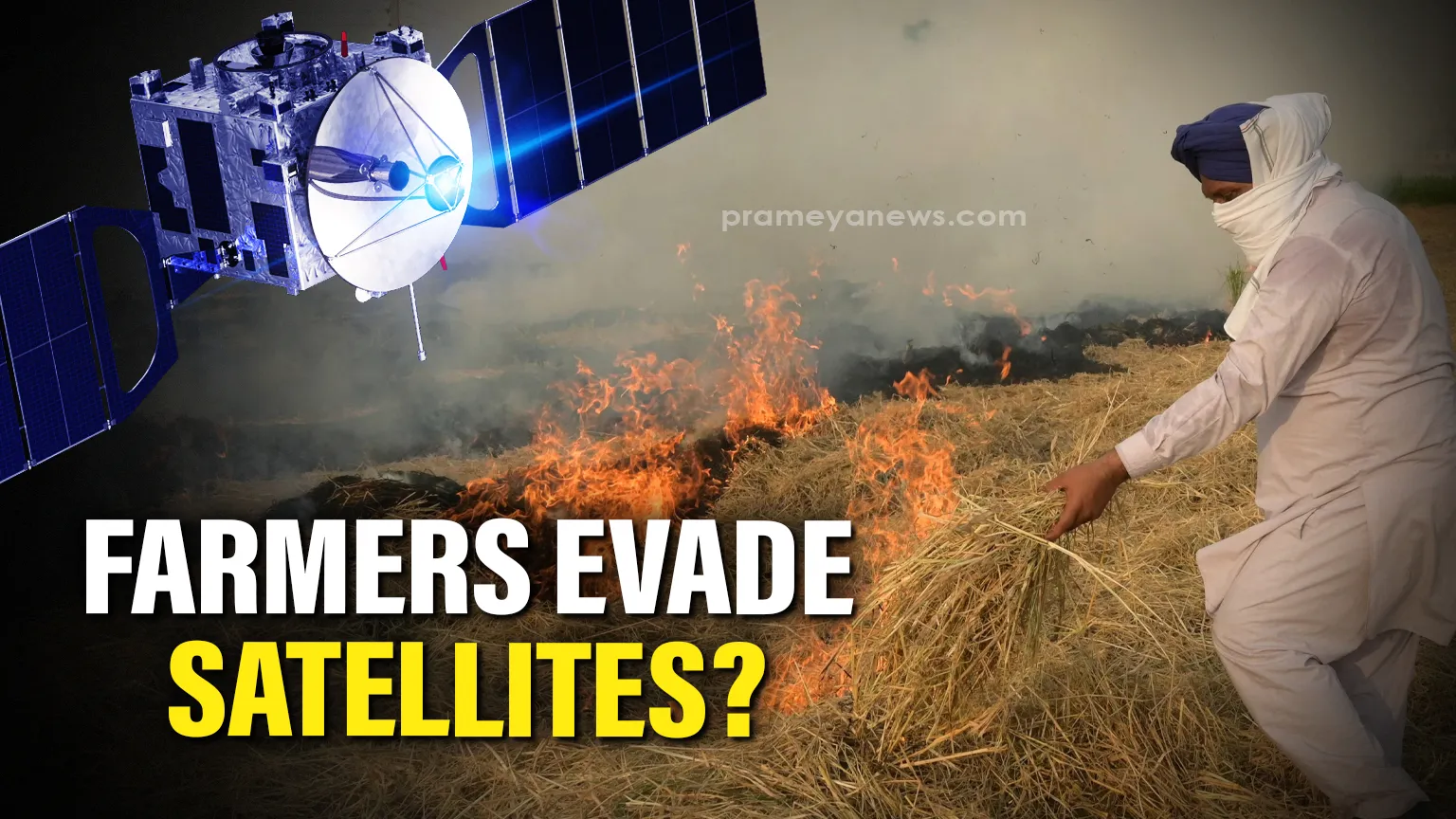
The "Hide and Seek" Game: How Farm Fires Are Evading Space Detection
There is a strange paradox occurring in North India this winter. While official government data claims that incidents of stubble burning have dropped drastically, the choking smog enveloping Delhi-NCR suggests the exact opposite. How can the air be so toxic if the fires have supposedly stopped?
New findings by India’s premier space agency, ISRO, alongside observations from NASA experts, have cracked this code. It appears that farmers in Punjab and Haryana have figured out the schedule of monitoring satellites and are timing their field fires to avoid being caught.
The 5 PM Evasion Tactic
The government relies heavily on "polar-orbiting" satellites to count fire incidents. These satellites are like patrolling guards—they do not watch the earth continuously. Instead, they pass over the region at specific times, usually scanning around late morning and early afternoon (between 10:30 AM and 1:30 PM).
According to a study by researchers at the Space Applications Centre (ISRO), farmers have realized this "blind spot." In 2020, most farm fires peaked around 1:30 PM. However, the 2024 data shows a deliberate shift. Farmers are now waiting until the satellites have passed, igniting their fields around 5:00 PM. By the time the satellites return, the fires are often out or less intense, meaning the official count remains low while the smoke output remains high.
NASA Backs the Findings
Hiren Jethva, a scientist associated with NASA, supports this theory. He points out that while fire counts are down, the amount of smoke (aerosols) in the atmosphere has not decreased. In fact, based on aerosol levels, 2025 is shaping up to be the third-worst year for pollution in the last decade and a half.
Jethva utilized data from geostationary satellites—which orbit higher and watch constantly—to identify this discrepancy. His data indicates that stubble burning in Punjab has actually spiked compared to previous years, but because the fires happen in the late afternoon, the government’s primary tracking tools are missing them entirely.
A Gap in the System
The implication is worrying. Official reports cited a 90% reduction in fire incidents, leading to self-congratulatory statements from the Environment Ministry. However, ground reports confirm that local officials and farmers are well aware of the satellite schedules.
This "cat and mouse" game means that while the statistics look cleaner, the air remains hazardous. Until monitoring systems are updated to track fires 24/7, the true extent of the stubble burning crisis—and the resulting pollution—will remain hidden in the evening shadows.