
.webp)


Bhubaneswar, Oct 11: As the nine sacred nights of Navaratri begin, devotees turn to Maa Shailputri, the first form of Goddess Durga worshipped during the festival. Revered as the daughter of the mountains, the goddess represents strength, stability and a deep connection with nature. Her worship marks not only the beginning of a religious observance but also an invitation to reflect on faith, resilience and the possibility of renewal.
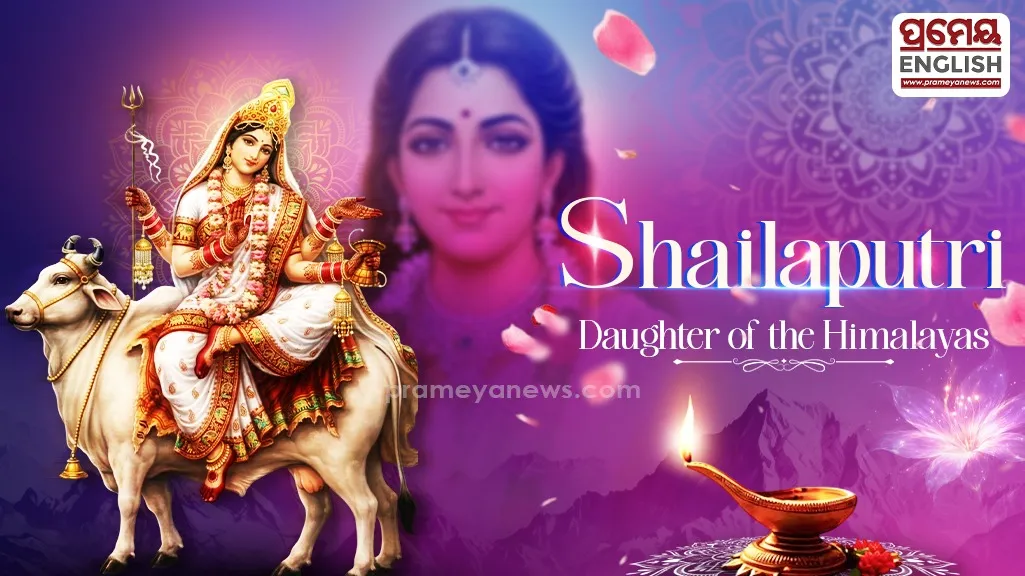
The name Shailputri is derived from the Sanskrit words shaila, meaning mountain, and putri, meaning daughter. According to Hindu tradition, she is the daughter of Himavan, the personification of the Himalayas, and is identified with Parvati, the consort of Lord Shiva. She is commonly depicted riding a bull, holding a trident in one hand and a lotus in the other.
Her imagery carries a symbolism that extends beyond religious representation. The mountain evokes endurance and steadfastness, while the lotus is associated with purity and spiritual growth. Together, these symbols offer a vision of strength that remains grounded even amid change.
A Goddess rooted in nature
Maa Shailputri's association with the mountains offers a meaningful starting point for understanding the relationship between spirituality and the natural world. Mountains have long held a special place in India's religious imagination, representing permanence, power and the meeting point between the earthly and the divine.
At a time when environmental concerns, climate change and the protection of natural resources have become pressing public issues, this association also invites contemporary reflection. The goddess's traditional identity as the daughter of the mountains can serve as a cultural lens through which to consider humanity's relationship with the environment.
Such a connection is interpretive rather than a direct prescription from religious texts. Yet it offers an opportunity to explore how inherited cultural symbols can encourage conversations about respect for nature and responsibility towards the world that sustains life.
Strength in Stability
The first day of Navaratri is traditionally associated with the worship of Maa Shailputri. In devotional interpretations, she embodies a foundational form of Shakti, or divine feminine energy.
Her significance lies partly in the idea that strength is not always expressed through dramatic acts of courage. It can also be found in patience, consistency and the ability to remain steady through uncertainty. Like a mountain weathering the changing seasons, resilience often develops through the quiet work of enduring difficulties and beginning again.
For devotees, this understanding can make the first day of Navaratri an occasion to renew their commitments, reflect on personal challenges and seek the strength to move forward.
The significance of a new beginning
Navaratri is observed in different ways across India, with regional variations in rituals, customs and forms of worship. For many devotees, however, its opening day represents a spiritual reset—a time to turn towards prayer, discipline and introspection.
The worship of Maa Shailputri sets the tone for the nine-day journey. It reminds devotees that meaningful transformation begins with a firm foundation: clarity of purpose, faith and the willingness to take the first step.
In everyday life, new beginnings rarely arrive without uncertainty. They may involve rebuilding relationships, pursuing long-delayed ambitions or finding the courage to change established habits. The symbolism associated with the first day offers a framework for viewing these moments not simply as departures from the familiar but as opportunities for growth.
Navaratri's first day, therefore, is more than the opening of a festival. It is an opportunity to renew faith, reconsider our relationship with nature and recognise that every meaningful journey begins with a single, deliberate step.
.webp)