



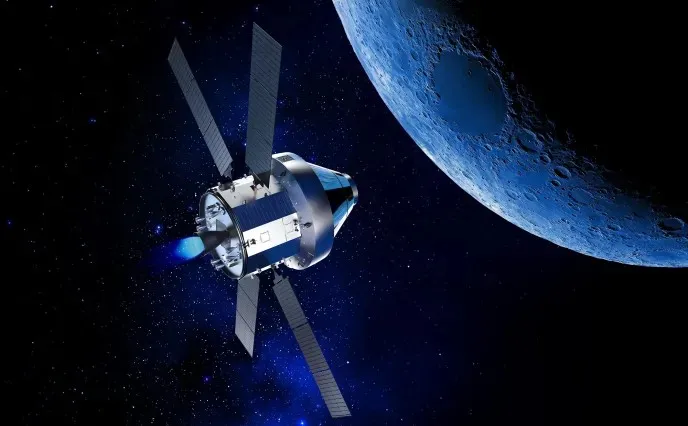
NASA celebrates major progress as Artemis II nears lunar arrival
NASA’s ambitious return to lunar exploration achieved a milestone this week as the Orion spacecraft crossed the halfway point of its journey toward the moon. This mission represents the first time humans have ventured toward our celestial neighbor in over five decades, marking a shift from low-Earth orbit operations to deep-space discovery. Engineers confirmed that all systems remain functional as the crewed capsule maintains its trajectory.
Tracking Progress via Deep Space Network
Ground teams at the Jet Propulsion Laboratory are utilizing the Deep Space Network to maintain constant communication with the four-person crew. This network of massive antennas across the globe ensures that telemetry and health data flow back to Houston without interruption. Navigational checks show the spacecraft is performing exactly as predicted during this outbound phase.
Safety and Life Support Validation
Testing the internal environment remains a top priority during this transit. Unlike the uncrewed Artemis I flight, this mission focuses on how the Orion life support systems handle the biological demands of a human crew. Astronauts are monitoring radiation levels and cabin pressure to ensure the vessel can sustain life during the high-velocity swing around the lunar far side.
Next Phase: Lunar Insertion
Approaching the moon requires precise engine burns to enter the intended free-return trajectory. Once the crew completes the loop, gravity will naturally pull the spacecraft back toward Earth for a high-speed reentry and splashdown in the Pacific Ocean.