

.webp)
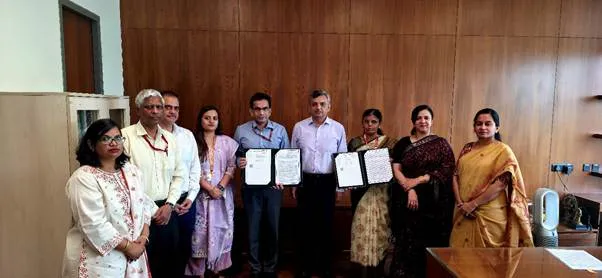
New Delhi, April 24: The Indian Pharmacopoeia Commission (IPC) has signed two Memoranda of Understanding (MoUs) with the Pharmaceuticals & Medical Devices Bureau of India (PMBI) and the National Institute of Pharmaceutical Education and Research (NIPER), Hajipur in order to strengthen drug quality assurance, research collaboration and pharmacovigilance.
The Ministry of Health and Family Welfare in a release stated that the MoU between IPC and PMBI aims to enhance the quality assurance framework for medicines distributed through Pradhan Mantri Bhartiya Janaushadhi Kendras (PMBJKs). Under the agreement, PMBI may submit randomly selected batches of Jan Aushadhi medicines to IPC for quality testing.
The collaboration will also promote the use of the National Formulary of India (NFI) across PMBJKs to ensure rational use of medicines. In addition, it seeks to strengthen pharmacovigilance by displaying the Pharmacovigilance Programme of India (PvPI) QR code and toll-free helpline number at these centres to encourage reporting of adverse drug reactions and improve patient safety, the Ministry stated.
IPC and PMBI will also jointly organise sensitisation, awareness and training programmes for pharmacists and stakeholders on rational use of medicines, pharmacovigilance, ADR reporting tools, and the role of pharmacists in safeguarding public health.
The MoU between IPC and NIPER Hajipur focuses on collaboration in research, academic exchange and capacity building in pharmaceutical sciences and healthcare products.
The partnership will include joint research programmes on impurity profiling, including genotoxic impurities such as nitrosamines, and their correlation with adverse drug reaction data to establish pharmacopoeial limits.
It will also focus on the development of analytical methods, quality control protocols and reference standards for biologics, biosimilars and emerging cell and gene therapy products for inclusion in the Indian Pharmacopoeia.
Both institutions will collaborate on training programmes, workshops and seminars, along with faculty exchange initiatives and sharing of analytical facilities. Internship and fellowship opportunities, as well as joint publication of research papers and training materials, will also be part of the collaboration.
.webp)