
.webp)


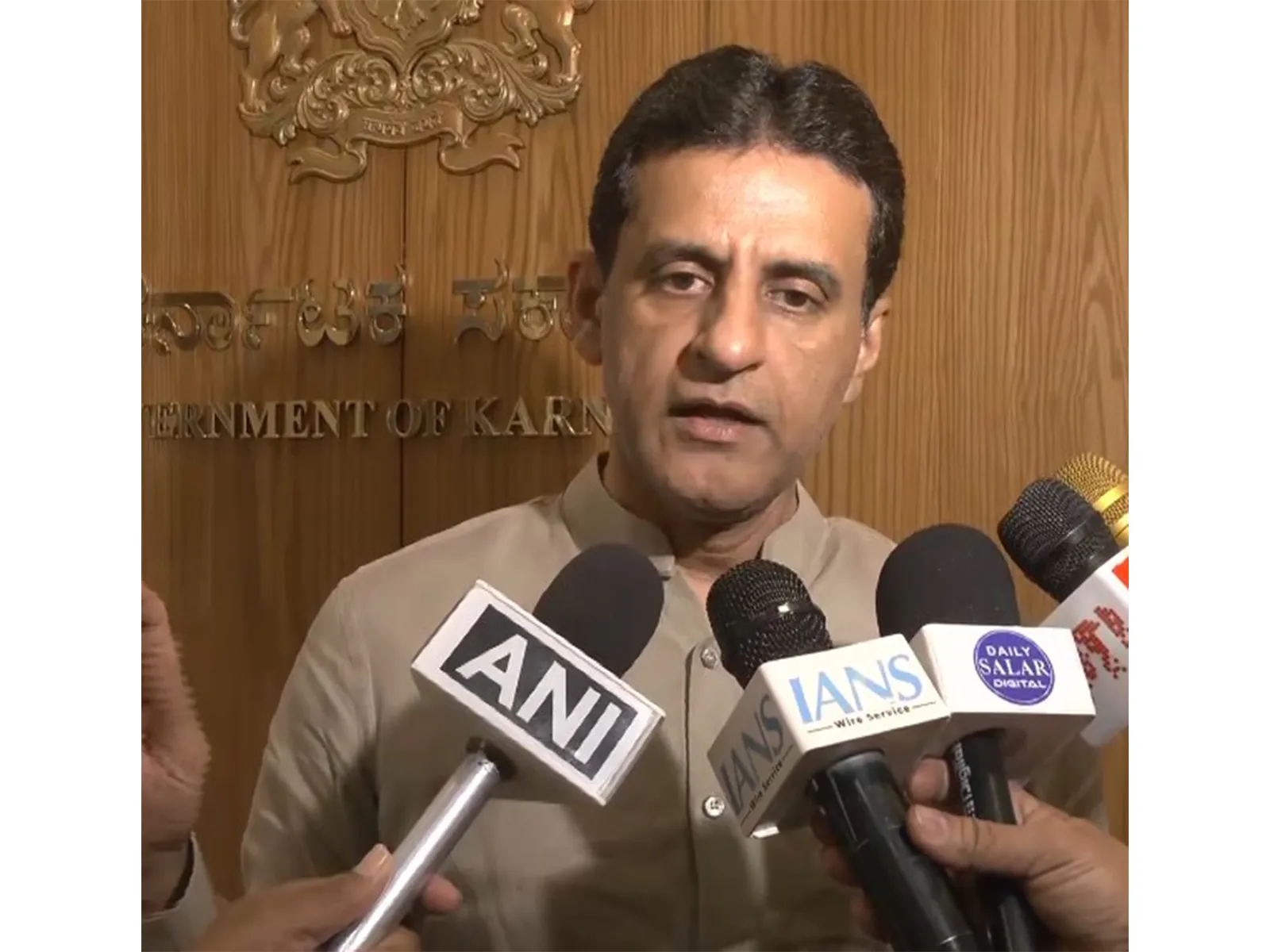
Bengaluru, Nov 9: Amid the row over Ethanol blending percentage in petrol in Karnataka, state minister Rizwan Arshad on Monday claimed that the oil marketing companies (OMCs) have avoided answering the fundamental question of how much ethanol they blended in petrol in their joint statement.
Speaking to reporters, Arshad said the OMCs' response to the state's findings focused entirely on technical matters, asserting that the state government firmly stood by its test results showing blending of up to 31.2 per cent.
"They (OMCs) have avoided answering the core, fundamental question that we asked: how much did you blend? Did you blend E20 or higher than that?...The Karnataka government firmly stands by the tests we conducted and the results we brought before the public. We strongly maintain that our test results show that you blended ethanol up to E31.2," he said.
He said the state used the same scientific testing methodology specified by the OMCs, adding that when the government approached the companies with 63 samples and sought the ethanol percentage, the results were not provided properly. "It was only then, out of compulsion, that we took the assistance of a third-party laboratory, one that is NABL-accredited and ISO-certified. The NABL accreditation agency itself is run by the Government of India," he said.
Arshad demanded that the Centre put in place a third-party testing system, citing a conflict of interest in the government testing its own fuel.
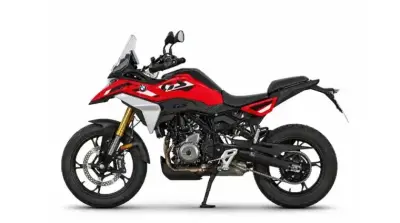
Questioning the pace of ethanol blending, he said, "When a company like BMW says their vehicles aren't made for E30, are you experimenting on consumers?"
He said the state stands "by the people and for the people" and will keep asking questions on ethanol blending.
In a press note issued by the Department of Food, Civil Supplies, Consumer Affairs and Legal Metrology under Arshad's leadership, the government alleged that every voice raising concerns on E20 has been made to step back. It claimed that SIAM wrote to the Union Petroleum Ministry on July 28, 2026, flagging chloride and sulphur in E20 fuel and damage to vehicle parts, but withdrew the letter within a week amid pressure from the Centre.
It also pointed to huge automakers stating in manuals that using fuel other than E10 would void the warranty. It added that the Attorney General told the Supreme Court that E20 was still an experiment, only for his office to issue a clarification later.
"The pattern is clear: question the policy, and you are silenced. Industry bodies and companies may step back under pressure, but the Government of Karnataka will not," the note said.
The statement refuted the claim that sampling did not follow the Motor Spirit and High Speed Diesel Order, 2005, as "completely false". Every sample was drawn by officers empowered under Clause 7, every label was jointly signed by the authorised officer and dealer as required under Clause 8(3), and density was recorded on the spot in the prescribed proforma, the statement said.
It said that the initial 63 samples were first given to the OMCs' own labs at IOCL, BPCL and HPCL, but not one report stated the ethanol percentage, despite IS 17021:2018 laying down procedures for testing ethanol content. Samples were then sent to NABL-accredited and ISO-certified labs.
Testing 56 samples in their own labs is at most self-monitoring, the state said, adding that compliance has to be confirmed by a third party.
About density readings, it said that density was recorded and signed at collection, and lab results show similar densities. Since blending is a "controlled and automated process" at refineries and depots, as per the OMCs' own statement, the blend is decided at the six terminals serving Karnataka, not at the pump. The dealer only sells what the tanker delivers, and excess ethanol is a failure at source, it said.
"When oil companies test their own fuel in their own laboratories and declare themselves compliant, they are acting as both the accused and the judge. That is a clear conflict of interest," the government said, demanding that fuel testing be moved to an independent, transparent system.
Arshad will soon convene a meeting of all OMCs to discuss steps to protect consumers, the note added.
This follows assertions by the Department of Food, Civil Supplies, Consumer Affairs and Legal Metrology, Government of Karnataka, which claimed that motor spirit sold at specific retail outlets in the state contained between 26 per cent and 31 per cent ethanol.
Public sector oil marketing companies (OMCs) Indian Oil Corporation Limited (IOCL), Bharat Petroleum Corporation Limited (BPCL) and Hindustan Petroleum Corporation Limited (HPCL) have also rejected claims by the Karnataka government that petrol sold at certain retail outlets in the state contains 26–31 per cent ethanol, as per a release by the OMCs.
The three OMCs asserted that E20 petrol supplied nationwide complies with Bureau of Indian Standards (BIS) specification IS 17021, rejecting the Karnataka government's claim that petrol sold at certain retail outlets in the state contains 26–31 per cent ethanol.
The Ministry of Petroleum and Natural Gas has said all 893 samples of E20 petrol drawn from public sector OMCs across 27 states and Union Territories conformed to prescribed quality standards. (ANI)
.webp)