
.webp)


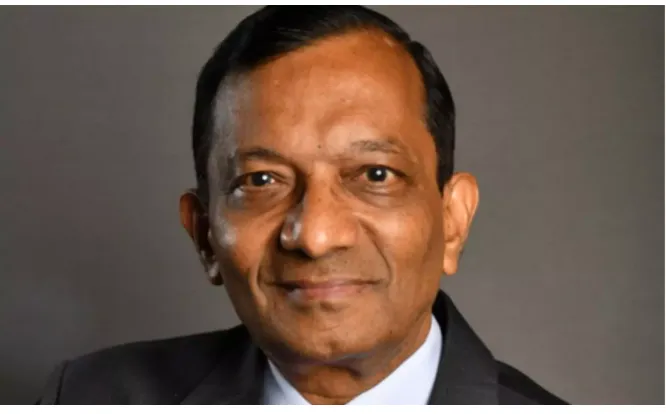
In a post on X, Goenka said India’s decision to open the space sector to private players five years ago was driven by two key objectives — enabling the Indian Space Research Organisation (ISRO) to explore new frontiers and creating opportunities for private industry to expand its capabilities.
“Now comes the real test: scaling up. We have set ourselves an ambitious target of 50 launches a year by 2030,” Goenka said.
He stressed that achieving a target of such magnitude would require coordinated efforts by both the government and private sector.
“A goal of this scale cannot be achieved by one organisation alone. Government and private industry have to build this future together,” he said.
Goenka highlighted the rapid expansion of India’s private space ecosystem over the past five years. From having only a handful of startups, the country now hasmore than 450 space startups, operating across areas including launch services, satellite development, space applications and other emerging technologies.
“Five years ago, when India opened up its space sector, we had two clear objectives: enable ISRO to conquer new frontiers and empower our private industry to scale up,” he said.
According to Goenka, progress is now visible on both fronts. He described ISRO’sEOS-05 missionas a major achievement, while noting that it represents only the beginning of India’s broader ambitions in space.
The private sector, meanwhile, has begun moving beyond prototype development, with an Indian private company successfully demonstrating the capability to launch a rocket into orbit.
Goenka said the next major challenge would be to scale up operations and develop the infrastructure, technology and capabilities required to support a substantially higher launch frequency.
Reiterating the 2030 target, he said India’s goal of50 launches a yearwould depend on sustained collaboration between the government and private industry as the country seeks to establish itself as a major global space power.
.webp)