

.webp)


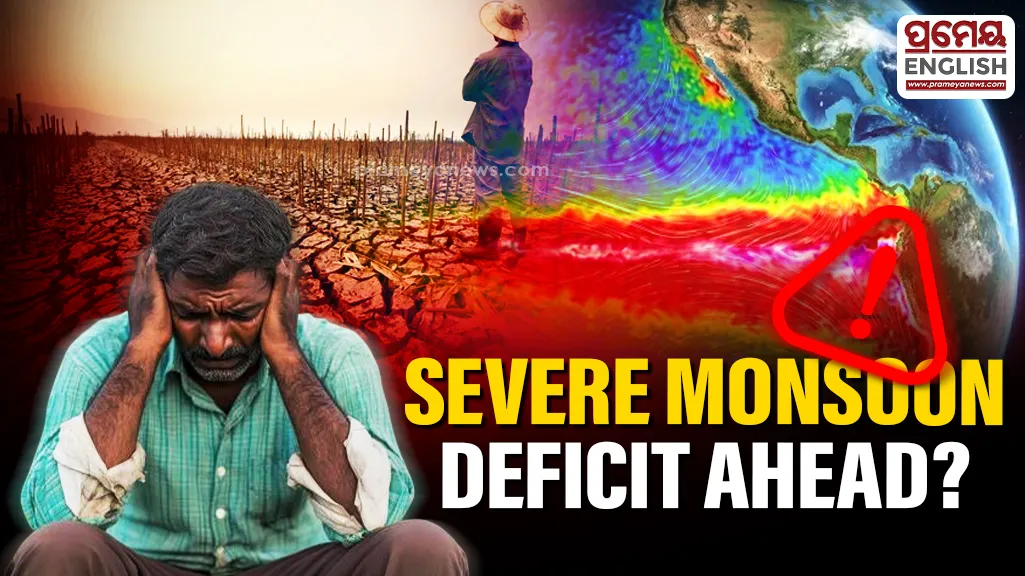
Drying skies threaten Indian agriculture as El Nino strengthens
Meteorological projections indicate that India is entering its driest summer season in over a decade. Fresh data from the India Meteorological Department (IMD) shows that the vital southwest monsoon will likely yield only 90 percent of its normal rainfall between June and September. Shockingly, weather experts calculated a 60 percent probability of an outright deficient season. This warning represents a fourfold increase over historical averages, which usually hover around 16 percent.
Pacific Ocean conditions are driving this sudden shift. The natural atmospheric engine known as the Walker Circulation has stalled. This disruption allows a massive pool of warm water to accumulate in the central and eastern Pacific, pulling crucial rain clouds away from the South Asian subcontinent. Global space agencies, including NASA, confirm that subsurface heat reservoirs are intensifying, signaling a strong El Nino phase.
2026 MONSOON RAINFALL PROJECTIONS BY REGION
|
|
|
|
|
|
|
|
|
|
|
|
|
|
|
Agrarian communities across the central belt face immediate danger. The rain deficit will directly hit the Monsoon Core Zone, which spans from Gujarat to the eastern coast. Odisha remains particularly vulnerable during these dry cycles, as coastal districts frequently battle erratic rain distribution that disrupts local paddy cultivation and delays the crucial kharif sowing window. Approximately 60 percent of Indian cultivators operate entirely without artificial irrigation networks. These fields rely completely on seasonal precipitation to grow staple crops like rice, pulses, and oilseeds.
Climatologists note that the domestic maritime environment will offer no relief this year. In previous decades, a phenomenon called the Indian Ocean Dipole (IOD) acted as an atmospheric counterweight, pushing moisture back toward India to neutralize Pacific warming. This specific interaction saved Indian crops during the intense 1997-98 El Nino cycle. Current modeling shows a completely neutral IOD for the rest of the year, leaving the subcontinent without a natural buffer.
September remains the most critical period for field survival. Crops enter their sensitive grain-filling stage during this month, requiring steady moisture to convert nutrients into harvestable yields. An intensifying El Nino peaking late in the season could trigger widespread crop failures, causing food prices to rise sharply across local markets.
.webp)