
.webp)


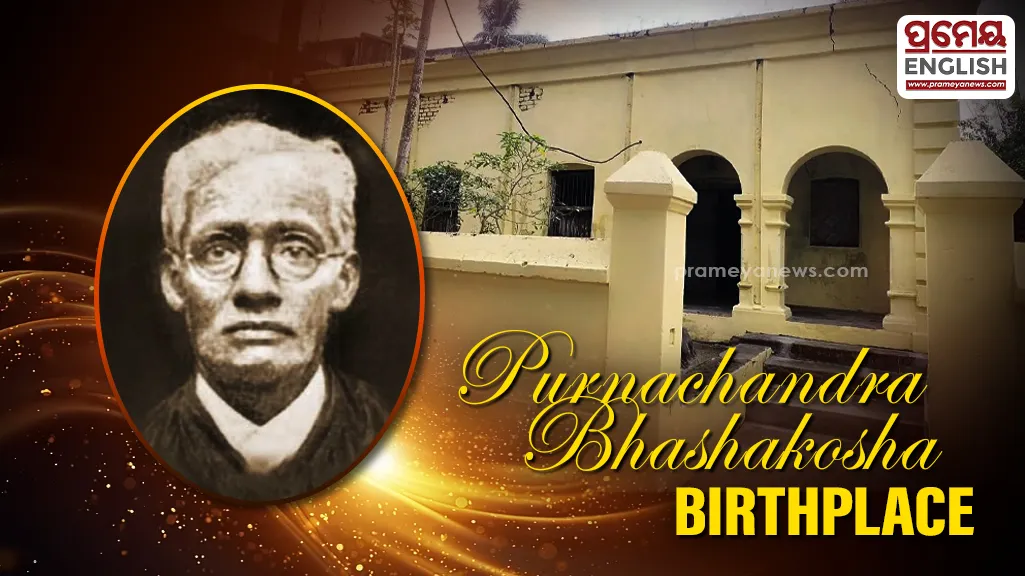
Puri, Jan 13: At a time when Odia ‘ashmita’ or pride is the talk of the town, heritage enthusiasts and members of Puri Heritage Walks (PHW) under its 17th edition, visited Nuagaan (which includes Biswanathpur), felt extremely proud on Sunday, seeing the birthplace of the renowned Odia lexicon Purnachandra Bhashakosha. It was learnt that its compiler, Gopal Chandra Praharaj, composed the entire dictionary while residing in his farmhouse in his village.
During PHW’s Satyabadi Tour, the participants visited various “sashana” villages of Satyabadi block and closely observed several ancient temple complexes. Setting out from Puri in the morning, they first reached Biswanathpur village under Jaipur gram panchayat of Satyabadi and offered prayers to Shri Gopinath Deb. After the original ancient temple had fallen into ruins, the deity is now inside a newly-built temple “Rekha Deul”a style.
Temple priest Brundaban Dikshit said that the idol worshiped here is actually the most ancient Madan Mohan idol of the Puri Srimandir. Earlier, during the Chandan Yatra festival, Madan Mohan used to come to the Chandan Pushkarini (sacred tank) located in this village to participate in the ceremonial “chapa khela”. It is believed that during the 16th Century, during “Chandan Yatra”, the idol of Mahaprabhu was once lost in a tank here and was later recovered. Since then, the deity has been worshiped here in the form of Shri Gopinath.
According to the historical accounts narrated by villager Soumyaranjan Mishra “the Swadeshi Movement was initiated from the “Swarajya Pushkarini” of this village under the leadership of Krupasindhu Hota. In commemoration of this event, Swarajya Day is observed here every year on Jyestha Shukla Dwitiya. After visiting the temples of Shri Nilakantha Mahadev and Maa Jayadurga and viewing the five beautiful and pristine tanks of the village, the members moved on to the next village.
History reveals that the village deity, Lord Biswanath Mahadev, was established by Biswanath Ray, the brother of the then king Narasingha Deva. The village derived its name Biswanathpur from the name of this deity. Within the Mahadev temple compound, there is also a shrine housing an ancient idol of Maa Harachandi. The main festival of the village, “Chandan Yatra”, is celebrated for twenty-one days, and another festival known as “Ahihara” is observed on Magha Purnima.
Reaching Athaisha Gram, a group of 28 villages established by Gajapati Kapilendra Dev, the participants visited the temple of Lord Siddha Balaram Deb and studied several ancient idols, including those of Gajapati Kapilendra Deva, located within the temple premises. Subsequently, they proceeded towards Biragobindapur village. After offering prayers at the ancient Durga Madhava Temple situated in Biragobindapur Shasana—established in the seventeenth century by Govinda Vidyadhar, minister of Gajapati Prataparudra Deva—they visited Lord Biswanath Mahadev at the end of the village. They also closely observed several ancient idols located nearby and, after offering prayers to Maa Dakshinakali, concluded the heritage walk.
Former district culture officer of Puri Prafulla Kumar Samantaray joined the walk as a guest. He shared his experiences from his tenure with the members and expressed the view that such heritage walks are an effective means to survey and document heritage monuments scattered across different villages.
The heritage walk was successfully conducted under the guidance of heritage researcher and advisor of the walk Debi Prasanna Nanda, with Sanjay Kumar Baral as the convener, Dr. Kumar Aurojyoti, Ashoka Manjari Nayak and pandit Sidharth Acharya as the co-coordinators, and with the cooperation of around 15 members, including Jyotsna Mohapatra, Priyankar Maharana, Biswamohan Sahoo, Taranisen Pattanaik, and Soumendra Mishra.
.webp)