



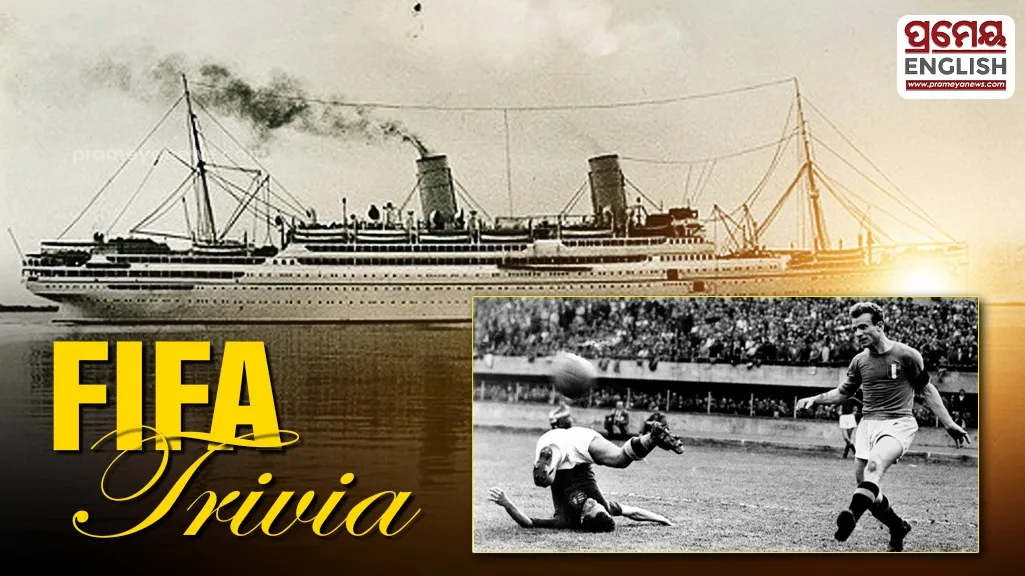
Vintage football accounts reveal surprising secrets behind early tournaments
Memorable moments from early international football tournaments often blend athletic brilliance with absolute absurdity. Long before modern multi-million dollar logistics and standardized team kits, players and organizers relied on sheer willpower and quick thinking to keep the global game alive. Two specific incidents from the pre-war era showcase exactly how unpredictable international sports used to be.
Emergency Kit Repairs on the Pitch
Italian forward Giuseppe Meazza provided one of the most humorous moments in international sports history on June 16, 1938. Italy faced Brazil in a tense semi-final match at the Stade Vélodrome in Marseille. During the second half, a foul on Silvio Piola inside the box gave Italy a crucial penalty kick.
As Meazza stepped up, the overstretched elastic waistband on his shorts snapped entirely, causing them to slip down to his knees. Refusing to stop play and risk losing focus, the twenty-seven-year-old captain held his shorts up with his left hand, executed his trademark stutter-feint, and smoothly slipped the ball past Brazilian goalkeeper Walter. Reports suggest Walter was laughing so hard at the sight that he failed to dive. Amused teammates quickly surrounded Meazza to shield him from spectators until support staff brought out a replacement pair. This decisive goal secured a 2-1 victory, sending Italy to the final where they successfully defended their global title.
High Seas Training Quarters
Eight years prior to Meazza's wardrobe malfunction, the entire tournament structure relied on a single Italian passenger ship. The maritime vessel SS Conte Verde acted as a floating sports hotel in June 1930, transporting European teams across the Atlantic Ocean for the inaugural tournament in Uruguay.
Athletes adapted to unusual preparation methods during the two-week crossing. Squads ran continuous laps around the upper wooden decks and completed conditioning routines inside lower-deck gymnasiums. Any errant pass meant the football was lost to the sea forever. This collective voyage effectively saved the first tournament from cancellation when widespread financial depression made individual travel impossible