

.webp)


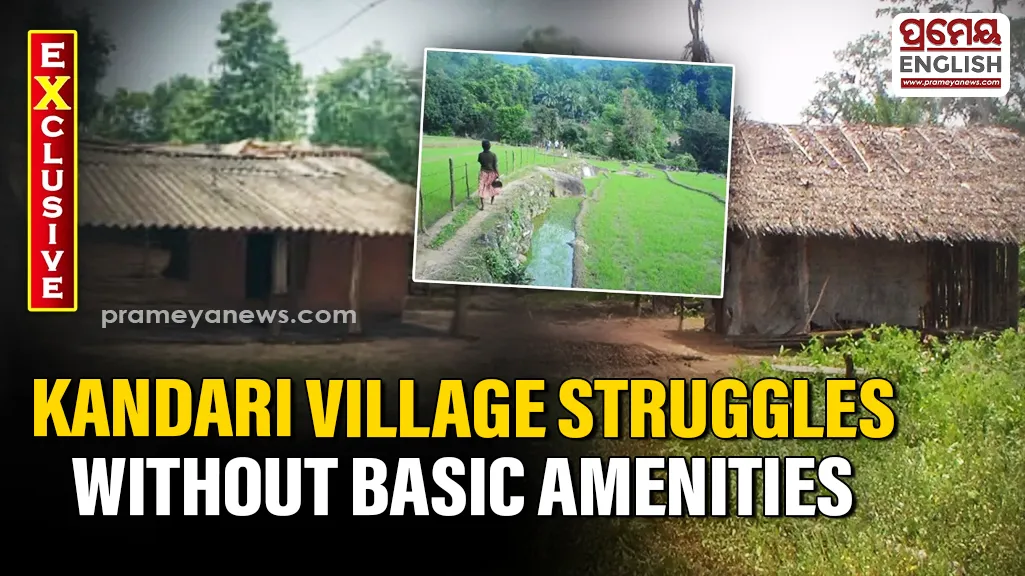
Daringbadi, Jul 22: Surrounded by dense forests, rugged hills and difficult terrain, Kandari, a remote tribal village in Daringbadi block of Kandhamal district, continues to remain cut off from basic infrastructure decades after India's Independence. With no motorable road, electricity, school or healthcare facility, the village remains untouched by the benefits of development.
Located under Sidupadar ward of Partamaha Gram Panchayat, Kandari is home to just 12 tribal families. The village lies about 22 km from the panchayat headquarters, but the final 5 km journey from Sindupadar can only be completed on foot through dense forests and hilly paths. During the monsoon, the muddy and uneven trail becomes extremely dangerous, further isolating the settlement.
Although villagers have received forest land titles under the Forest Rights Act through the Srirampur Range of Kotagarh Forest Division, the absence of a proper road continues to affect every aspect of their lives. Residents have to trek several kilometres through forests to reach Durikupuda to buy essential commodities and daily necessities.
Agriculture remains the primary source of livelihood. Farmers cultivate turmeric, pigeon pea, black gram, paddy, finger millet, maize and other crops on hilly land. However, transporting produce to markets is a major challenge, preventing them from earning fair prices despite good harvests.
The lack of infrastructure has also severely impacted education. Kandari has neither a school nor an Anganwadi centre. Children, regardless of age, must walk nearly 5 km through forests and hills to attend school. The journey becomes even more hazardous during the rainy and winter seasons, forcing many children to miss classes or discontinue their education.
Healthcare is another major concern. Since no road connects the village, ambulances cannot reach it. In medical emergencies or during childbirth, patients are carried manually for about 5 km to Sindupadar, from where an ambulance transports them to Daringbadi. Villagers say such delays can prove life-threatening during emergencies.
The village also remains without electricity and government housing. Most families live in mud and tile houses and depend on kerosene lamps, candles or moonlight after sunset. Safe drinking water under the Basudha Scheme and other essential civic amenities are still out of reach.
Residents have urged the government to prioritise the construction of an all-weather road, saying it would transform their lives by improving access to education, healthcare, markets and other basic services.
Responding to the issue, Daringbadi Block Development Officer (BDO) Pritiranjan Rath said all eligible villagers have been included in the housing survey. He stated that beneficiaries would receive government housing after verification is completed and assured that steps would also be taken to provide other essential infrastructure and basic amenities to the village.
.webp)