



Rourkela, June 30: National Institute of Technology Rourkela (NIT Rourkela) researchers have developed a smart wound dressing that prevents infections, minimises pain during removal, and promotes faster healing.
In cases of injuries that require repeated dressing changes, patients usually suffer from the trauma and discomfort associated with them. The innovative wound dressing developed by Prof. Prasoon Kumar, Assistant Professor, Department of Biotechnology and Medical Engineering, addresses this under-recognised challenge.
Due to its affordability, absorbency, and ease of usage, cotton gauze bandage is most commonly used for wound dressing. It is widely used to absorb blood and wound exudates and ointment applications.
However, these conventional dressings are not capable of preventing infections or managing discomfort. Another limitation of the traditional cotton gauze is that it sticks to the wound surface and damages newly formed tissue when dressing is changed. Additionally, it also increases the susceptibility to infections.
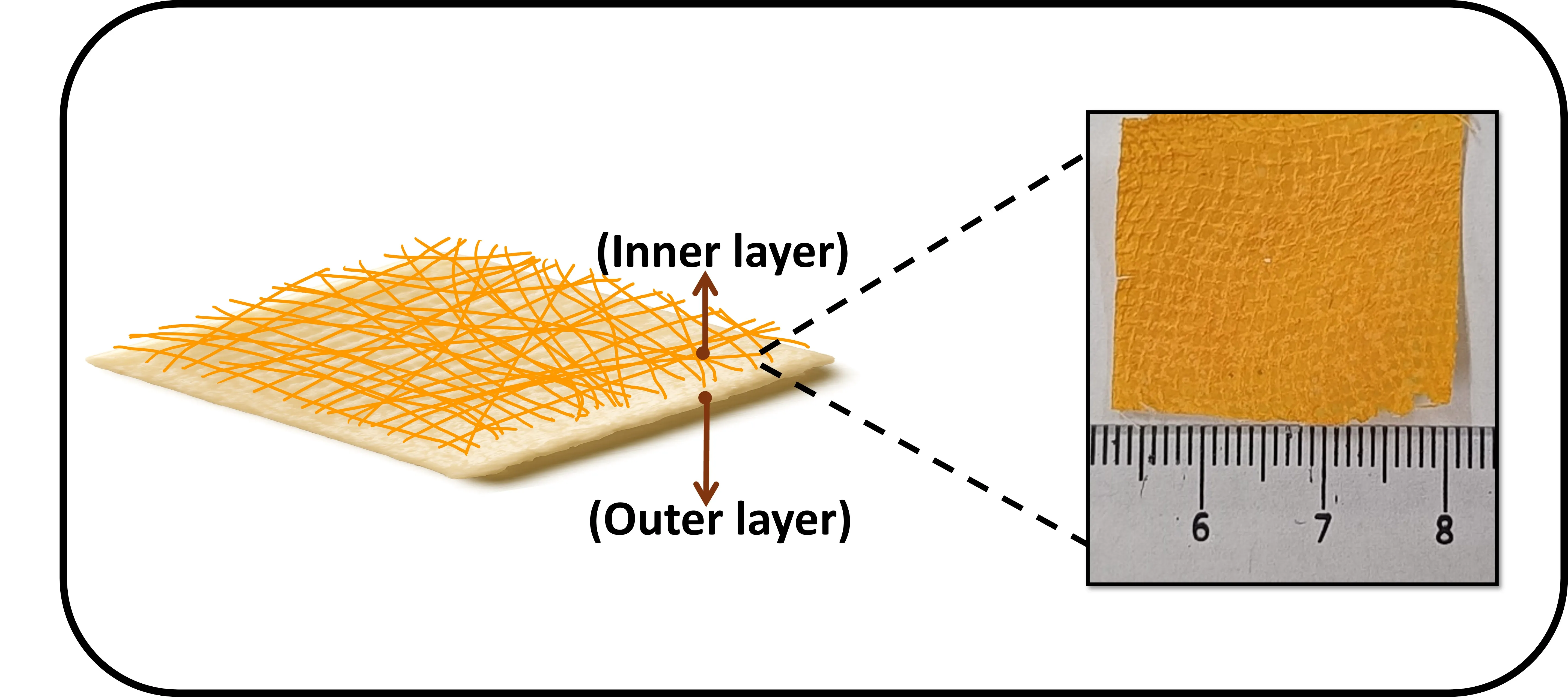
To address these limitations, NIT Rourkela researchers have developed a smart cotton gauze dressing that integrates chitosan-coated cotton gauze with an electrospun nanofibrous layer.
This layer is filled with curcumin, a natural compound known for its antimicrobial properties. Placed between the wound and gauze, this layer minimizes adhesive’s direct contact with the wound thereby reducing the risk of tissue damage during gauze removal.
These curcumin-filled nanofibers slowly release the medication onto the wound and maintain sustained drug delivery. This approach helps maintain a sterile wound environment while reducing dependence on repeated gauze changes and additional medications.
Speaking about the developed smart wound dressing Prof. Prasoon Kumar, said, “In our laboratory tests, we have found that the developed dressing effectively reduces wound adhesion compared to commonly used cotton gauze dressings. The sustained release of cumin from the nanofibrous layer provides antibacterials protection and nanofibrous layer itself supports cellular growth and tissue regeneration.”
Key features of the developed dressing include:
• Less painful removal and reduced damage to newly formed tissue during repeated dressing changes
• Nanofibrous layer to support cellular growth and tissue regeneration
• Antibacterial protection through Sustained delivery of curcumin release
• Maintenance of a cleaner and infection-resistant wound environment
• Simple, scalable, and cost-effective fabrication methods
Speaking about the cost-effectiveness of the developed wound dressing Prof. Kumar said, “Cotton Gauze Bandage Roll (10 cm × 4 m) costs around INR 30 and our advanced smart bandage of similar size will cost around INR 50-60 when fabricated at a commercial scale”
The findings of this research have been published in the prestigious Emergent Materials journal in a paper co-authored by Prof. Prasoon Kumar along with Prof. Devendra Verma, Associate Professor, Prof. Earu Banoth, Assistant Professor and research scholars Swagatika Barik, Rika Rani Pradhan, Shikha Tripathi, Samadrita Roy from the Department of Biotechnology and Medical Engineering, NIT Rourkela.
Supported by the ANRF-PAIR Grant (Grant No. ANRF/PAIR/2025/000026/PAIR) and SERB-SRG Grant (Grant No. SRG/2021/000859), this research is a major step towards the development of advanced medical treatments.
As the next step, the research team plans to file a patent for the developed technology and explore potential industry collaboration opportunities for clinical trials.