


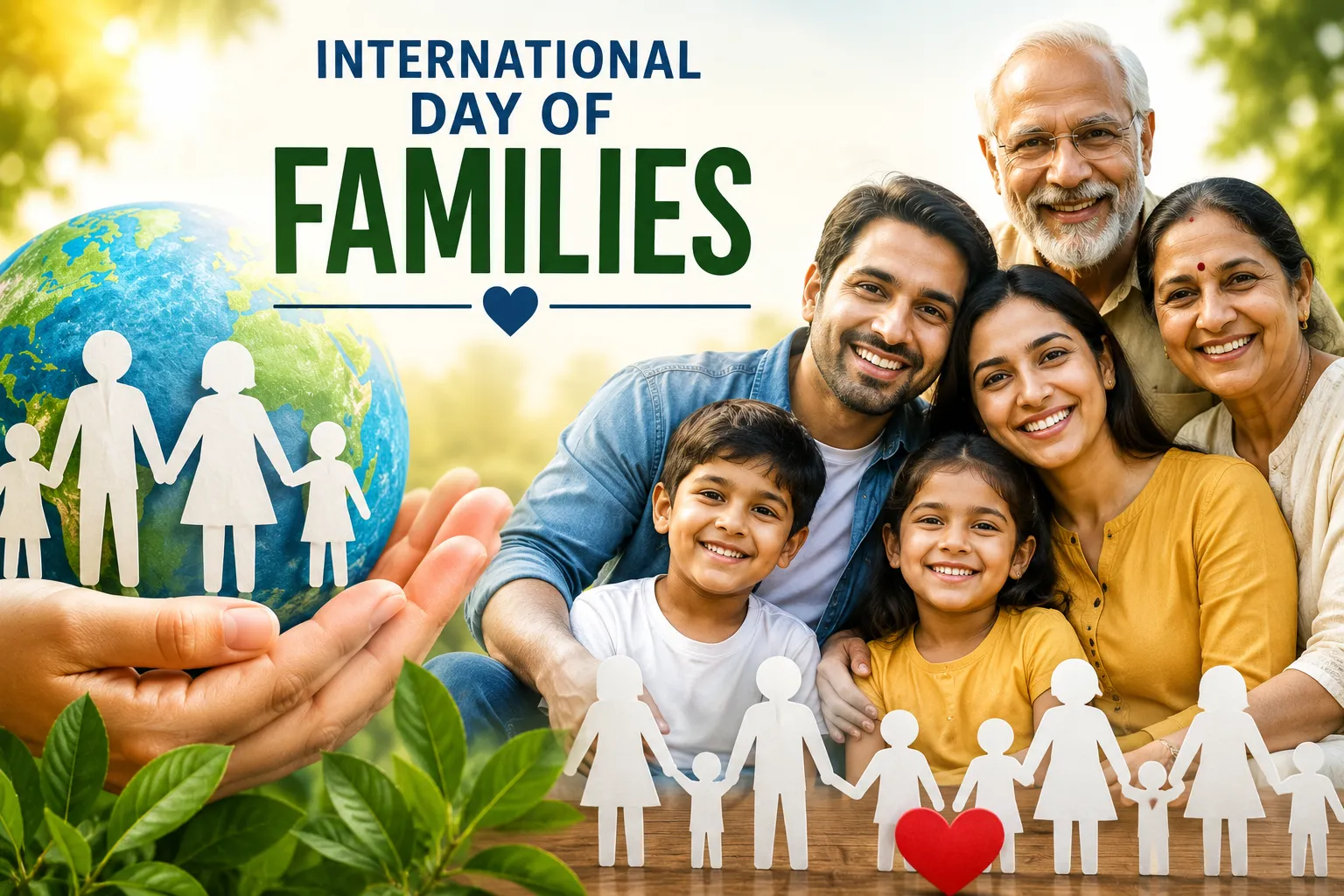
Bhubaneswar, May 15: The joint family system is gradually disappearing from society, with traditional relationships and emotional bonds fading under the growing influence of nuclear families. Relations once deeply rooted in Indian family culture — such as uncle, aunt, elder brother’s wife, maternal uncle and aunt — are now increasingly replaced by the generic terms “uncle” and “aunty.”
In today’s urban lifestyle, families are largely limited to parents and a single child, with household sizes shrinking to three or four members. Earlier, families comprising 15 to 20 members living together under one roof were common, but such joint families have now become rare. Experts believe that employment opportunities, children’s education, and the aspiration for a modern city lifestyle have significantly contributed to this social transformation.
The decline of joint families is also affecting children’s upbringing. In many working households, both parents remain occupied with jobs, forcing children to spend most of their time under the supervision of domestic helpers. Social observers say this deprives children of emotional warmth and family bonding, pushing many toward excessive dependence on mobile phones to overcome loneliness.
The impact is equally visible among senior citizens. While younger generations move to cities with their spouses and children for employment, elderly parents are often left behind in villages or isolated within cities. Many aged parents struggle to manage daily life alone, with some even lacking support during illness or emergencies.
Concerns are also rising over crimes targeting elderly citizens. Taking advantage of their isolation and vulnerability, anti-social elements have reportedly attacked senior citizens for money and valuables in several incidents.
According to Nishakar Rout, secretary of the Sahid Nagar Senior Citizens’ Association, modern families have become increasingly self-centered, weakening the traditions, brotherhood, and emotional ties that once defined joint family culture. He noted that even in the capital city, there are instances where sons and daughters-in-law stay separately from their elderly parents despite living in the same house built by them.
Social experts warn that the erosion of joint family values is gradually distancing younger generations from emotional relationships and responsibilities toward elderly parents, raising serious concerns over the future of family bonding and social support systems.