


ଓଡ଼ିଆ | ENGLISH
ଓଡ଼ିଆ | ENGLISH
T20
T20

Indigenous Weather Drone Completes First Trials to Better Predict India’s Heatwaves

India’s NIOT has tested a high-altitude drone to enhance heatwave and air quality predictions. This indigenous tech supports Mission Mausam in building a climate-resilient nation through precise atmospheric data
Published By : Satya Mohapatra | May 14, 2026 6:48 AM
Indigenous Weather Drone Completes First Trials to Better Predict India’s Heatwaves

New high-altitude drone technology promises precision heatwave forecasts nationwide

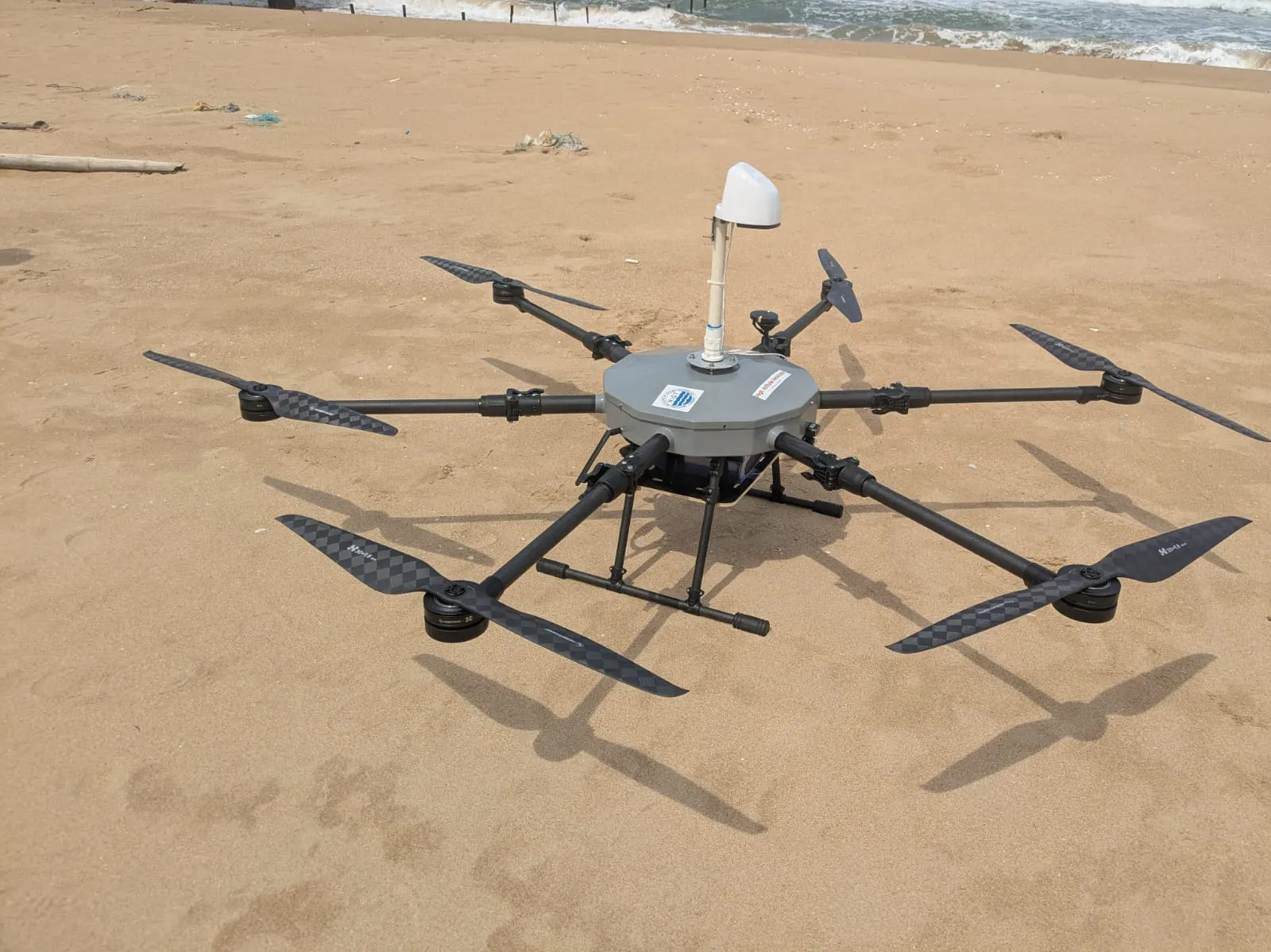
India’s National Institute of Ocean Technology (NIOT) successfully completed the first field trials of a specialized high-altitude drone (HAD) designed to sharpen weather forecasting and heatwave alerts. This indigenous unmanned aerial system reached an altitude of four kilometers above the Andhra Pradesh coastline, marking a significant milestone for the federal Mission Mausam initiative.

Cutting-Edge Coastal Monitoring

Built with a lightweight carbon fiber frame, the HAD drone can sustain flight for an hour while carrying a sophisticated payload of scientific sensors. These instruments monitor air quality and pollution levels, feeding critical data into numerical weather models. This localized data collection helps meteorologists understand atmospheric layers that larger satellites often miss.

Mission Mausam Goals

This technological leap falls under the broader ₹2,000 crore Mission Mausam project, which aims to make the nation "weather-ready." The government plans to deploy a fleet of these drones to bridge data gaps in tropical weather patterns. By 2026, the Ministry of Earth Sciences intends to improve short-range forecast accuracy by nearly 10 percent, specifically targeting extreme events like cloudbursts and intense lightning.

Local Impact

For decades, Indian meteorology relied heavily on ground-based stations and international satellite data, which occasionally struggled with the unique complexities of the Indian monsoon. The shift toward home-grown drone technology allows for "nowcasting" - updates provided every hour rather than every three hours - offering vital protection for coastal states like Odisha, where sudden weather shifts frequently impact fishing and agricultural sectors. ​​​​​​​

Picture Courtesy: @MoesNIOT