



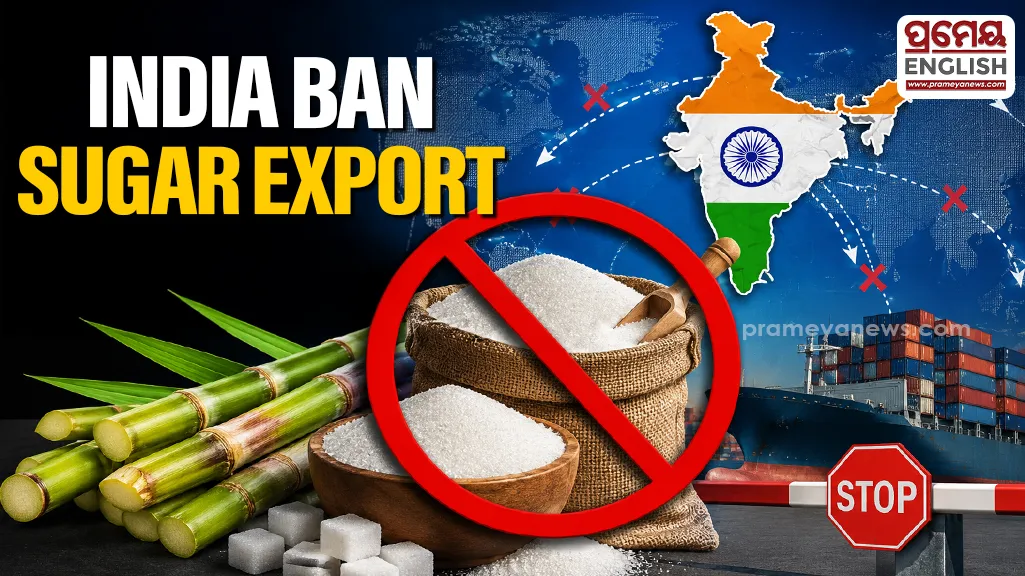
New Delhi, May 14: The Indian government has suspended all sugar exports with immediate effect, halting overseas shipments until September 30, 2026, or until further notice. The decision aims to curb domestic sugar prices at a time when food inflation remains a sensitive political and economic issue for Indian households.
The export restriction applies to both raw and refined sugar. Shipments already in transit, vessels berthed at ports, or sugar stocks handed over to customs before the ban will be allowed to proceed.
This move represents a significant policy shift. Earlier this year, India had permitted mills to export 1.59 million tonnes of sugar, anticipating that domestic production would comfortably exceed consumption. However, lower-than-expected sugarcane yields in key producing states have raised concerns that India may produce less sugar than it consumes for the second consecutive season.
Uncertainty over the monsoon, potentially weakened by developing El Niño conditions, could further affect the upcoming cane harvest, intensifying supply concerns.
Industry sources report that approximately 800,000 tonnes of sugar had already been contracted for overseas buyers, with over 600,000 tonnes shipped before the ban. The sudden halt has left traders scrambling to fulfil remaining commitments.
As the world’s second-largest sugar producer and a major exporter after Brazil, India’s export freeze has global implications. Buyers in Asia and Africa are expected to turn to Brazil and Thailand, driving up international sugar prices. Raw and white sugar futures rose immediately following the announcement.
The decision coincides with broader economic measures by the government to protect foreign exchange reserves. A day prior, India increased import duties on gold and silver to 15% from 6%, including a 10% basic customs duty and a 5% Agriculture Infrastructure and Development Cess. This follows Prime Minister Narendra Modi’s appeal urging citizens to avoid purchasing gold for a year, aiming to conserve foreign currency amid stress from the ongoing Middle East conflict.
The rupee has weakened sharply, hitting a record low of 95.75 against the US dollar, adding urgency to measures that reduce imports and protect domestic markets.
By restricting sugar exports, India aims to shield consumers from rising domestic prices and imported inflation, while global commodity markets remain volatile amid geopolitical uncertainties.