
.webp)
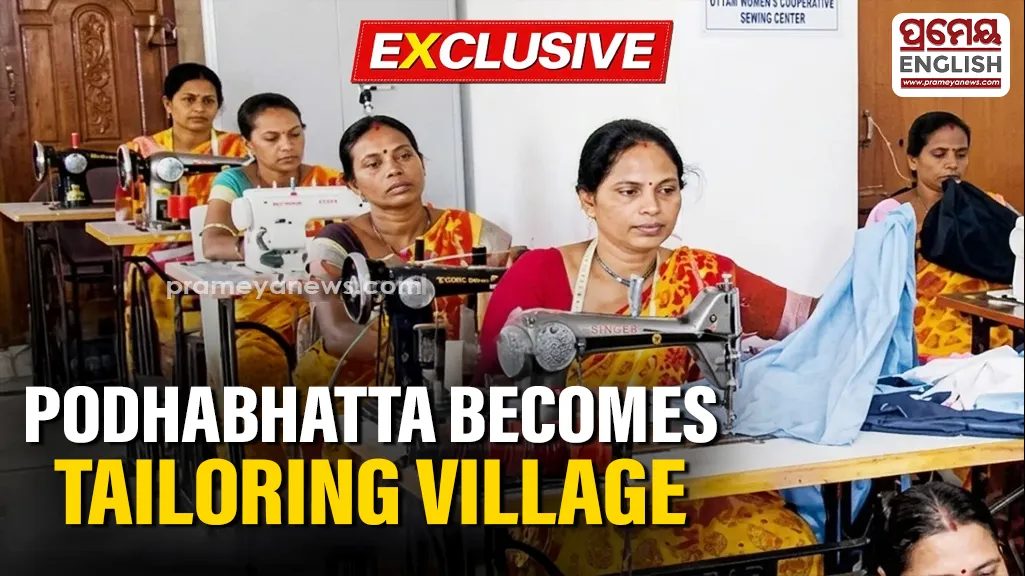
Malkangiri, July 30: In the quiet tribal village of Podhabhatta under Markapalli Panchayat in Odisha’s Malkangiri district, the rhythmic hum of sewing machines has become the sound of transformation. Once a village where many families struggled to make ends meet, Podhabhatta is today celebrated as the district’s "Tailoring Village"—a remarkable example of how skill, determination, and collective effort can empower women and reshape rural livelihoods.
What began as a small initiative has grown into a thriving enterprise. Women in the village now collectively generate an annual turnover of more than ₹50 lakh, stitching uniforms for Anganwadi centres, schools, colleges, and other institutions, while also taking custom tailoring orders. Their success has not only made them financially independent but has also inspired a new model of community-led entrepreneurship.
At the heart of this transformation is Samari Muduli, a tribal woman whose journey reflects resilience and hope. With only limited schooling, Samari once worked as a daily wage labourer to support her family. Life changed in 2016 when she received tailoring training through the Mission Shakti programme. Using a loan from her Self-Help Group (SHG), she purchased her first sewing machine and began earning a livelihood from tailoring.
Samari’s success soon inspired other women in the village. She encouraged them to undergo similar training, and together they laid the foundation for the ‘Gurupriya Tailoring Producer Group’. Today, women from three SHGs work under the producer group, sharing skills, resources, and responsibilities to meet both government and private orders.
The transformation of Podhabhatta is visible across the village. Home to around 80 families and more than 600 residents, over 50 households now own sewing machines. For many women, tailoring has become a full-time profession, providing a stable source of income and improving the financial security of their families. The steady earnings have also reduced distress migration, allowing many residents to remain in their village instead of travelling to other states in search of work.
The Gurupriya Tailoring Producer Group has become known for delivering quality work on time. Its members stitch uniforms for Anganwadi children, school and college students, along with a range of other garments. Their reputation has earned them regular government contracts as well as private orders, resulting in a business turnover of nearly ₹50 lakh annually. Over the last four years alone, the group has recorded business worth more than ₹2 crore.
The women’s achievements have been strengthened by sustained support from the district administration. Recognising their potential, the administration constructed a dedicated tailoring centre at a cost of approximately ₹10 lakh and equipped it with more than 30 modern sewing machines. The improved infrastructure has increased production capacity, enabled the women to handle larger orders, and created employment opportunities for many more villagers.
According to **District Collector Prathamesh Arvind Rajsirke**, the women of Podhabhatta have emerged as role models for the district. The administration plans to further support the initiative through advanced training, better machinery, government assistance, and improved market linkages so that the women can expand their businesses and increase their incomes.
Podhabhatta’s story is more than a tale of tailoring. It is a story of confidence stitched into every garment, of women who turned opportunity into enterprise, and of a village that has woven self-reliance into the fabric of its future. In a region once associated with limited opportunities, the village now stands as a powerful reminder that when women are equipped with skills and support, they can transform not only their own lives but also the destiny of an entire community.
.webp)