
.webp)


Extreme Paris heatwaves force major structural changes at Roland Garros
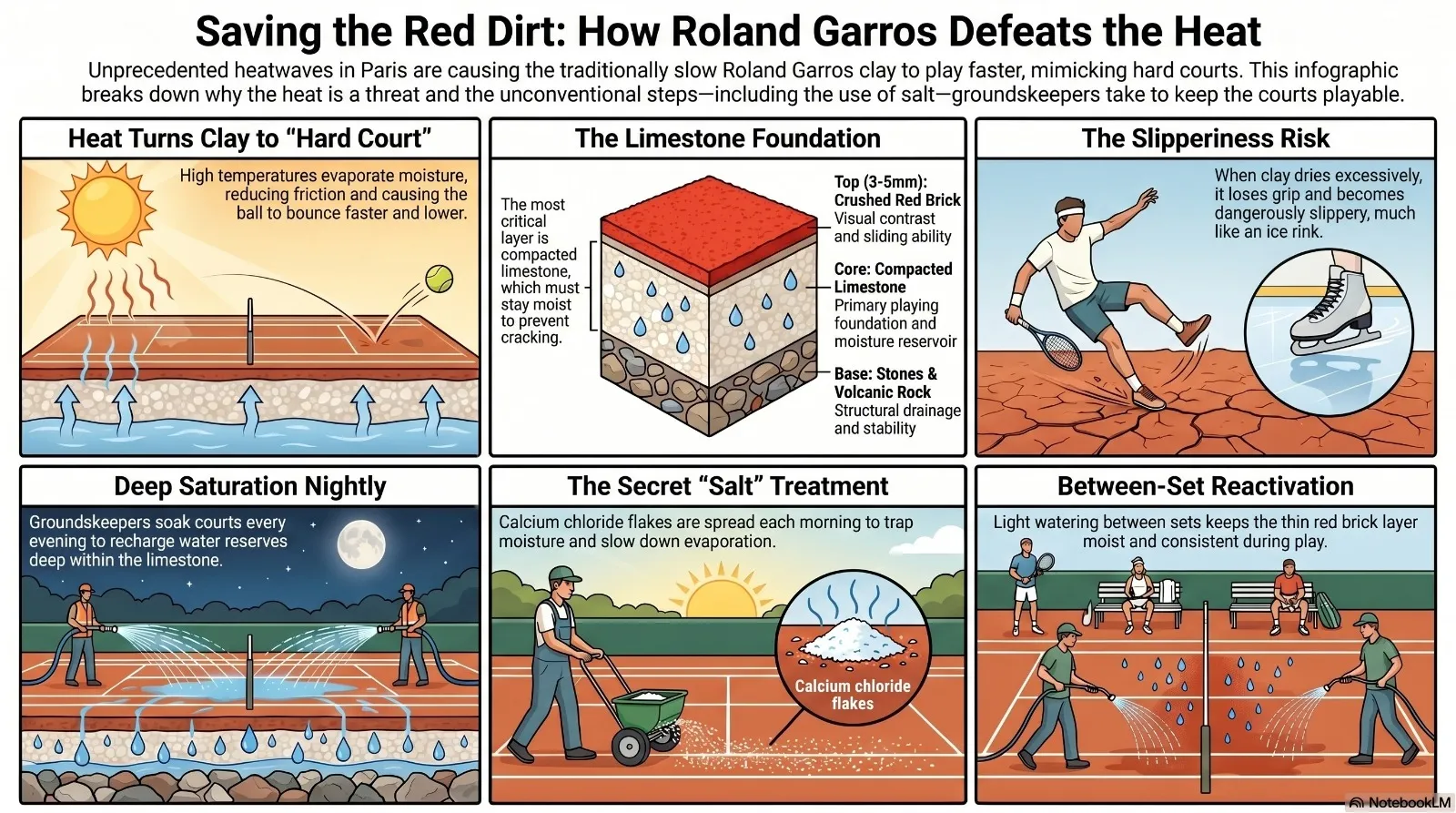
Unprecedented early-summer temperatures reaching above 35°C in Paris are forcing tournament organizers to alter their traditional court maintenance routines. This intense heatwave has dried out the classic red dirt, making the playing surface accelerate dramatically. Competitors throughout the opening week noted that the ball is moving much faster than in previous years, changing the fundamental nature of the tournament. European clay events benefit from cooler spring moisture that helps slow down tennis balls. The sudden shift toward mid-summer conditions has surprised long-time observers and altered tactical approaches on the court.
Moisture dictates how a clay court performs during a match. When high temperatures evaporate moisture from the surface, the ground turns hard and dry. This lack of moisture minimizes friction when the tennis ball bounces.
Instead of the traditional high, slow bounce that extends rallies, the ball now shoots off the ground quickly. Many players are comparing the afternoon sessions to playing on hard courts rather than European clay. This change benefits aggressive baseline hitters who rely on quick points, stripping away the defensive advantage usually enjoyed by clay-court specialists.
Spectators only see the thin top layer of crushed red brick, but the playing surface is actually a complex five-layer system. The entire setup goes nearly 80 centimeters into the ground. Large foundation stones sit at the base, followed by gravel, volcanic rock residue, compacted limestone, and the thin top layer of red brick.
Maintaining the limestone layer is the most critical task for the tournament staff. This specific layer holds moisture together and keeps the entire playing area stable. Head of court maintenance at Roland Garros, said that keeping this foundation wet is vital. If the limestone dries out completely, the upper ground can crack open, creating dangerous conditions. Overly dry brick dust makes the court feel like an ice rink, causing players to lose their footing and risk injury while sliding.
Tournament staffs have introduced unique measures to combat this extreme dry spell. Workers are soaking every court thoroughly each evening to push water deep into the limestone foundation. Workers also apply quick water sprays between sets, which is highly unusual for this Grand Slam. Evening Soaking: Restores deep moisture to the limestone foundation; Mid-Set Sprays: Cools top surface layer between intense matches; Calcium Chloride: Flake salt applied to slow down water evaporation
Groundskeepers are relying heavily on calcium chloride to save the courts. Staff spread this salt compound in flake form across the courts every morning. It was explained that the flakes melt when they touch water, helping the ground lock in surface moisture during the day. This salt application prevents rapid evaporation, keeping the courts uniform during hours of direct sunlight.
Nearly 200 staff members are working constantly across 18 tournament courts and 15 practice areas to apply these methods. Heavy rainfall earlier in May helped replenish the deep water layers, preventing immediate structural failure. Without that initial groundwater, the current heatwave would have caused severe cracking across the famous venue.
.webp)