

.webp)


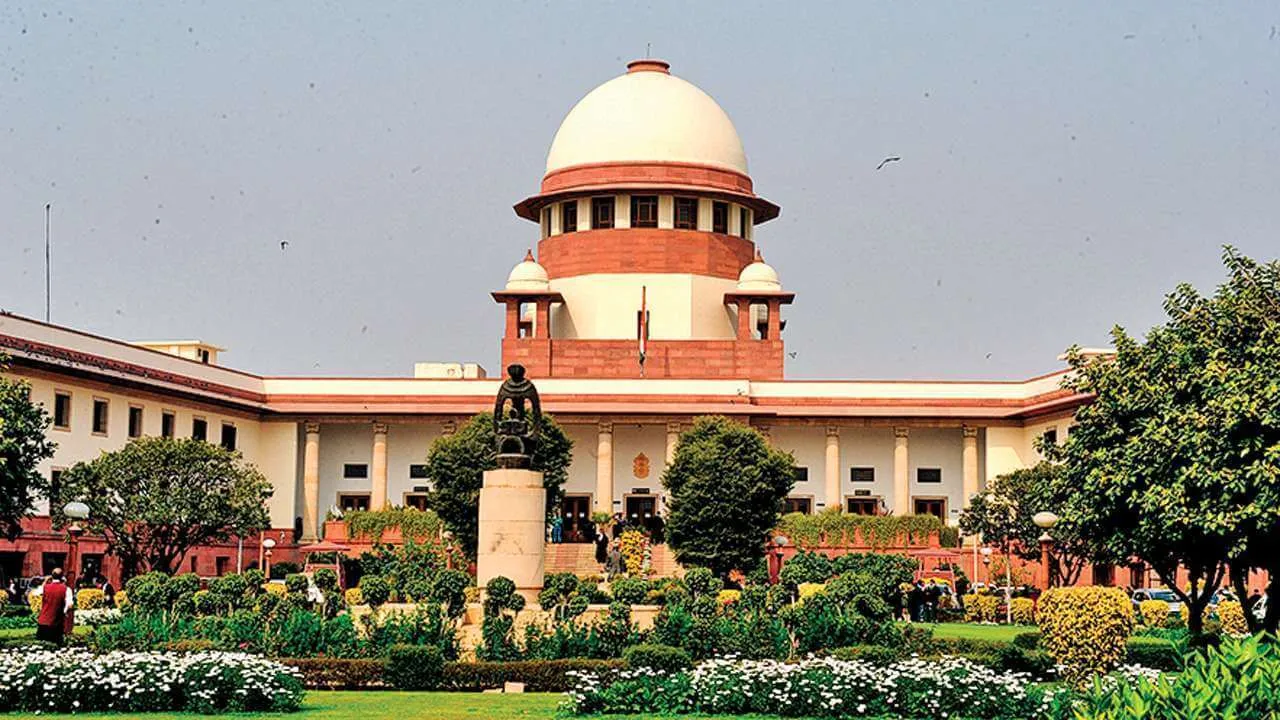
New Delhi, July 14: The Supreme Court has upheld the constitutional validity of the explanations appended to Rule 38 of the Minerals (Other than Atomic and Hydro Carbons Energy Minerals) Concession Rules, 2016 and Rule 45(8)(a) of the Mineral Conservation and Development Rules, 2017, holding that the inclusion of royalty, District Mineral Foundation (DMF) and National Mineral Exploration Trust (NMET) contributions in the sale value for computing the Average Sale Price (ASP) is a valid regulatory measure intended to prevent revenue leakage and curb manipulation of mineral prices.
A Bench of Justice JB Pardiwala and Justice KV Viswanathan dismissed a writ petition filed by Kirloskar Ferrous Industries Ltd. and another, holding that the impugned provisions neither violate Articles 14 and 19(1)(g) of the Constitution nor are ultra vires Section 9 of the Mines and Minerals (Development and Regulation) Act, 1957 (MMDR Act).
The Court held that the impugned explanations merely prescribe the methodology for computing sale value, which is one of the components used to determine the Average Sale Price, and do not alter either the nature or the rate of royalty. It observed that the mechanism adopted by the Union Government has a rational nexus with the objective of preventing evasion of royalty and other statutory dues.
According to the judgment, while royalty on iron ore is payable at 15 per cent of the Average Sale Price under Section 9 of the MMDR Act, the explanations simply clarify that payments made towards royalty, DMF and NMET are not to be deducted while calculating the sale value used to determine the ASP. The Court held that this amounts to a computational mechanism and not the imposition of a fresh levy.
Accepting the Centre's justification, the Bench noted that the ASP for iron ore is based on market transactions reported by miners themselves, making the system susceptible to manipulation.
It observed that the Union Government had placed on record charts, data and other material showing instances where miners allegedly reported higher ex-mine prices while dispatching negligible quantities and lower prices while dispatching substantial quantities, thereby depressing the weighted Average Sale Price and reducing royalty, auction premium and other statutory payments.
Holding that the methodology has a direct nexus with preventing such practices, the Court said the impugned provisions are aimed at safeguarding public revenue.
Rejecting the plea that the Rules are manifestly arbitrary, the Bench held that there was nothing capricious, irrational or disproportionate in the methodology adopted by the Government. Relying on Constitution Bench decisions and other precedents dealing with fiscal legislation, the Court reiterated that legislatures enjoy considerable latitude in framing economic policies and may adopt anti-evasion measures even if they incidentally result in hardship in individual cases.
One of the principal submissions advanced by the petitioners was that while the Central Government had removed the cascading effect for coal by excluding royalty, DMF and NMET from the calculation of actual price, it had continued the earlier methodology for iron ore.
The Supreme Court rejected the comparison, observing that coal and iron ore operate under entirely different pricing mechanisms. It noted that royalty for coal is linked to the National Coal Index, whereas the Average Sale Price for iron ore is computed on the basis of market data furnished by miners. The Bench observed that comparing the two systems would amount to "comparing apples and oranges."
The petitioners had further argued that including royalty, DMF and NMET in the sale value resulted in payment of "royalty on royalty" and effectively enhanced royalty beyond what Parliament had authorised under Section 9 of the MMDR Act.
Rejecting the contention, the Court held that the Government was competent to prescribe the components forming part of the sale value for computing the Average Sale Price as a measure to check manipulation and revenue evasion. It further held that the concept of ad valorem royalty does not prohibit adoption of such computational measures where they are intended to protect public revenue.
Emphasising judicial restraint in matters of economic policy, the Bench observed that constitutional courts should be slow to interfere with fiscal measures intended to curb tax or revenue evasion. Referring to the maxim Salus populi suprema lex (the welfare of the people is the supreme law), the Court held that individual rights may have to yield to larger public interest where measures are designed to protect the public exchequer.
The petitioners had also relied on the recommendations of the Praveen Kumar Committee and the Dr Aruna Sharma Committee, both of which had suggested removal of the alleged cascading effect. The Supreme Court held that committee reports are merely recommendatory and cannot determine the constitutional validity of statutory provisions. It independently examined the legality of the Rules and accepted the Government's reasons for retaining the existing framework.
The Bench also rejected the argument that the impugned methodology violates the proviso to Section 9(3) of the MMDR Act, which prohibits enhancement of royalty more than once in three years. It clarified that the Rules do not revise the rate of royalty but merely prescribe the methodology for computing sale value and the Average Sale Price. Consequently, the statutory restriction on revision of royalty rates was held to be inapplicable.
The litigation arose after the Central Government, despite earlier consultations and committee recommendations, decided not to amend the Rules. Kirloskar Ferrous Industries challenged the explanations appended to Rule 38 of the 2016 Rules and Rule 45(8)(a) of the 2017 Rules, contending that inclusion of royalty, DMF and NMET in the sale value created an impermissible cascading effect and resulted in payment of "royalty on royalty."
Dismissing the writ petition, the Supreme Court upheld the validity of the impugned Rules and affirmed the Centre's royalty computation framework under the MMDR regime. (ANI)
.webp)