


New Delhi, May 5 : The Delhi High Court on Tuesday decided to appoint three amicus curiae in the CBI's appeal challenging the discharge order in the Delhi excise policy case.
The Court took this step after noting that three respondents, Arvind Kejriwal, Manish Sisodia, and Durgesh Pathak, have chosen not to appear in the proceedings.
In the same manner, the Court also closed the right of a party to file its reply and listed the case for further hearing on Friday.
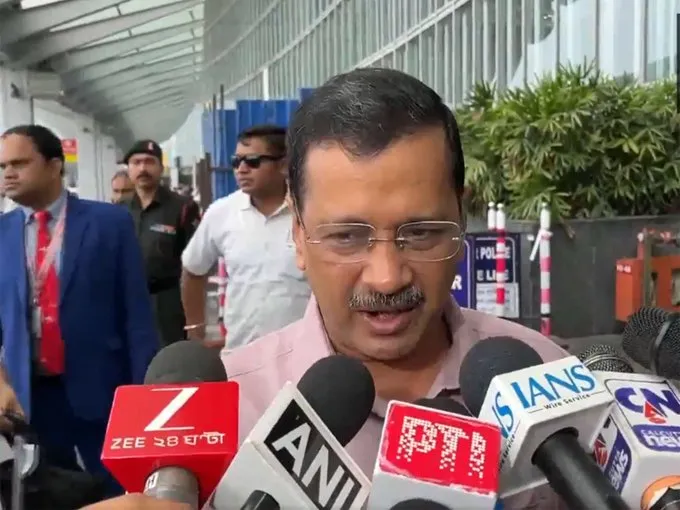
These developments come in the backdrop of Kejriwal's recent statement refusing to participate in proceedings before Justice Swarana Kanta Sharma.
In a public statement earlier this week, the AAP chief said his "hope of receiving justice" from the judge had been shaken, and he would neither appear in person nor through counsel in the case.
Referring to principles associated with Mahatma Gandhi, Kejriwal described his decision as being guided by conscience and akin to satyagraha. His statement followed the High Court's dismissal of his plea seeking the recusal of Justice Sharma from hearing the matter.
In its order rejecting the recusal request, the Court held that the allegations were based on conjecture and did not meet the legal threshold of a reasonable apprehension of bias. It emphasised that judicial proceedings cannot be influenced by perceptions alone and cautioned against attempts to question judicial impartiality without substantive material.
The Court further clarified that recusal cannot be sought merely due to perceived bias or the possibility of an unfavourable outcome. It observed that entertaining such claims without an adequate basis could undermine both judicial independence and institutional credibility.
Subsequently, Kejriwal addressed a letter to Justice Sharma stating that, while he maintained respect for the judiciary, his concerns regarding impartiality remained unresolved. He indicated that the reasoning and tone of the judgment led him to believe that his plea had been viewed as a personal or institutional criticism, making it difficult for him to expect a neutral hearing.
The High Court, however, rejected the arguments raised in support of recusal, noting that no direct nexus had been established between the alleged factors and the present case. It reiterated that professional engagements of judges' family members or participation in public events cannot, by themselves, constitute grounds for bias.
Kejriwal also indicated that he may challenge the order before the Supreme Court of India, even as he acknowledged that his decision to abstain from the proceedings could affect his legal position.
The case arises from the Delhi Excise Policy 2021-22, where the CBI has challenged the discharge of Kejriwal and other accused persons. With key respondents choosing not to participate and the Court moving to appoint amicus curiae, the matter is set to proceed further in accordance with the law on the next date of hearing.