
.webp)
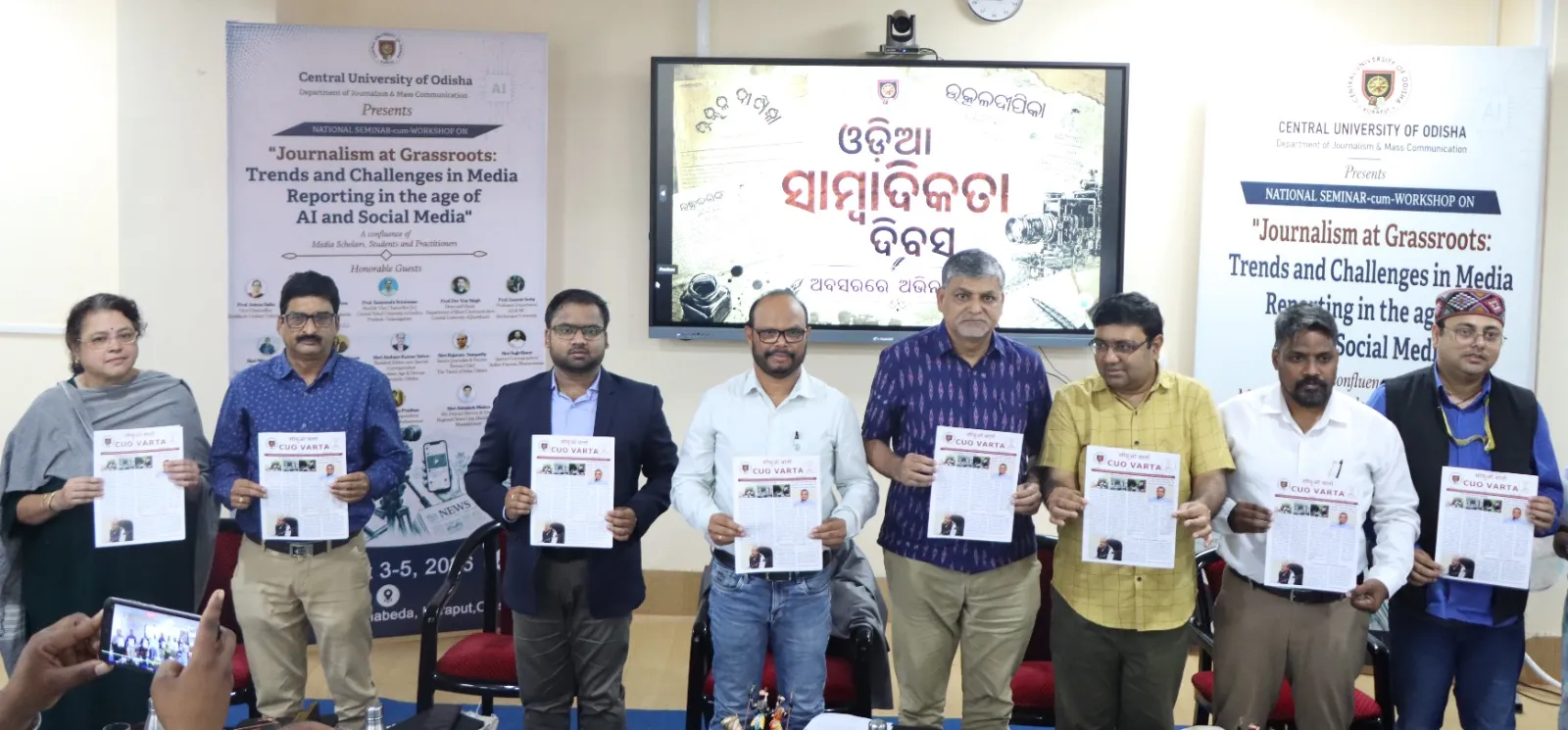
Koraput, August 4: The Department of Journalism and Mass Communication, Central University of Odisha (CUO), observed Odia Journalism Day on the second day of its three-day National Seminar-cum-Workshop on "Journalism at the Grassroots: Trends and Challenges in Media Reporting in the Age of AI and Social Media."
The event brought together journalists from Nabarangpur, Jeypore, Koraput, Sunabeda, Semiliguda, Damanjodi and Laxmipur, who joined the workshop, interacted with students, and shared their professional experiences and insights into grassroots journalism.
Dr Sourav Gupta, HOD of the Department of J & MC at the onset of the technical session informed that the Department is focusing on rural journalism and is acting as a bridge between district correspondents of Koraput and the CUO.
The rural journalists and the students of the department should engage in mutual learning which will result in exposure to the real issues in the grassroots.
The technical session featured Prof. Ganesh Sethi, Department of Journalism and Mass Communication, Berhampur University; Nilambar Rath, senior journalist; and Avinash Pani, Public Relations Officer, Chief Minister's Office.
Addressing the participants, Prof. Ganesh Sethi described journalists as the true changemakers of society.
He observed that the essence of journalism lies in rural India, where reporters work under difficult geographical and economic conditions to bring people's voices to the forefront.
He emphasized that grassroots journalists continue to play a crucial role in strengthening democracy through truthful and responsible reporting.
Sharing his experiences of reporting during the 1999 Super Cyclone, Nilambar Rath reflected on the transformation of journalism through technological advancements and increased access to information. He remarked that while technology has changed the way news is gathered and disseminated, the courage, commitment and pursuit of truth by journalists continue to distinguish journalism from every other profession.
Speaking from his experience as Public Relations Officer in the Chief Minister's Office, Avinash Pani stated that news is not merely what is issued through a press release but how it is reported and presented by journalists. While governments may suggest narratives or headlines, it is ultimately the field reporter who shapes news for the public.
He noted that although Artificial Intelligence has brought significant disruptions to media practices, it cannot replace journalists or the essence of journalism.
Concluding the technical session, Dr. Pradosh Rath, Senior Assistant Professor, Department of Journalism and Mass Communication, highlighted the remarkable transformation of journalism over the years. He emphasized that despite rapid technological changes, language newspapers continue to remain highly relevant in reaching and engaging wider sections of society.
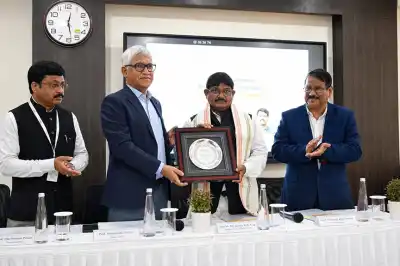
Expressing his happiness over the enthusiastic participation of journalists from the undivided Koraput region, Prof. Narasingha Charan Panda, Vice-Chancellor, Central University of Odisha, said that the interaction marked a new beginning in strengthening industry-academia collaboration in media education. He expressed confidence that students would greatly benefit from continuous engagement with practicing journalists through knowledge-sharing sessions and field-based learning.
.webp)