Bitcoin or Blockade? Why Tehran's New Maritime Toll System Is Rattling Energy Markets
Iran has introduced a $1-per-barrel cryptocurrency toll for oil tankers passing through the Strait of Hormuz. This digital payment system allows Tehran to generate massive revenue while evading international financial oversight.
Published By : Satya Mohapatra
| April 9, 2026 7:40 AM
Iran demands digital currency payments for oil tanker transit
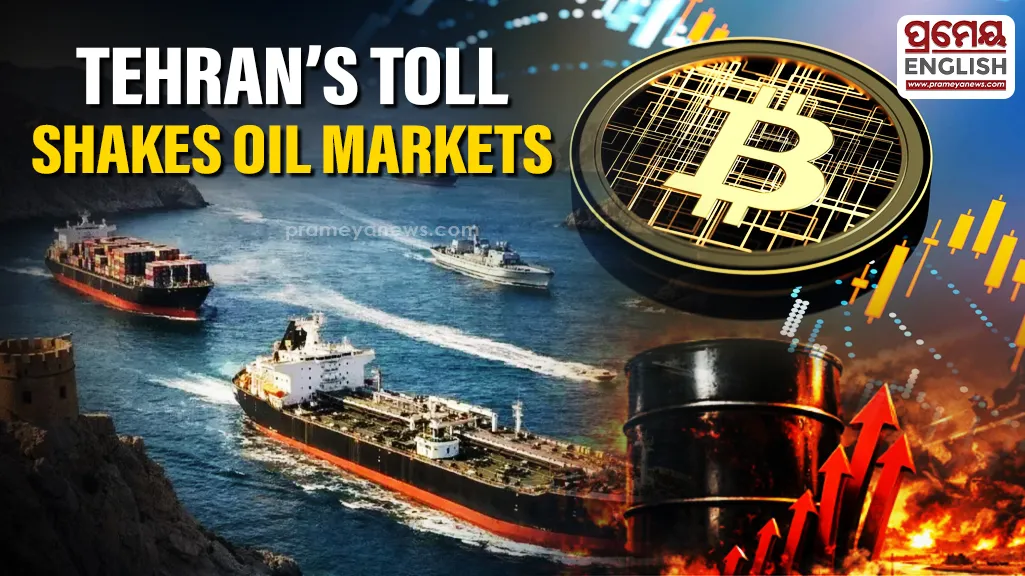
Tehran has implemented a mandatory cryptocurrency transit fee for oil tankers navigating the Strait of Hormuz, effectively turning the world’s most critical energy chokepoint into a digital toll booth.According to Hamid Hosseini, spokesperson for Iran’s Oil, Gas, and Petrochemical Products Exporters’ Union, laden vessels are now required to pay a surcharge of $1 per barrel.This fee must be settled in digital assets like Bitcoin or stablecoins to prevent financial tracking and bypass Western banking restrictions.
Operating under the oversight of the Islamic Revolutionary Guard Corps (IRGC), the new protocol requires shipping companies to submit cargo manifests and ownership data via email before entry.Once the IRGC completes its vetting process, operators receive payment instructions and are often given only seconds to complete the transaction.While empty tankers currently remain exempt, fully loaded Very Large Crude Carriers (VLCCs) face payments of up to $2 million per trip.
Geopolitical Leverage and Revenue
This fiscal maneuver comes during a fragile two-week ceasefire between Iran and the United States.Historically, the Strait of Hormuz has been a flashpoint for global tension, as nearly 20% of the world's liquid petroleum passes through its narrow waters.By institutionalizing this toll, Tehran seeks to generate an estimated $80 billion to $100 billion annually, a sum that could nearly double its traditional oil export revenue.
Global Supply Chain Impacts
Shipping firms remain cautious as radio broadcasts from the region warn that any vessel attempting passage without Iranian authorization will be targeted.While U.S. President Donald Trump has called for a "complete and safe opening" of the waterway, the introduction of a "joint venture" toll system has been floated as a potential, albeit controversial, compromise to maintain regional stability.Currently, hundreds of vessels are waiting in the Persian Gulf as the maritime industry adjusts to this unprecedented digital tax.
With Inputs from Public Dpmains, Lloyd's, tentative data from 1st March till end of March 2026


.webp)

.webp)